


























Emtrain Logo

New York Sexual Harassment Prevention Training Built to Actually Improve Culture

Realistic workplace behavior training that meets New York law.

Emtrain’s New York harassment prevention training is built to meet state and NYC legal requirements while addressing the real behaviors that drive harassment, discrimination, and retaliation claims.

Why New York Employers Choose Emtrain Over Others?

Workday Partner Badge Large
G2 Mid Market Leader in Ethics and Compliance Learning
Harassment Prevention raining. Best Support Quality Of Support
Harassment Prevention Training Easiest Admin
G2 High Performer Winter 2025

Let's Talk

Let us show you how you could save 5% guaranteed reduction on ER Claims

How it Works

This approach builds shared language across your workforce and gives managers practical tools for early intervention.

New York-Compliant Training That Also Scales Across All 50 States

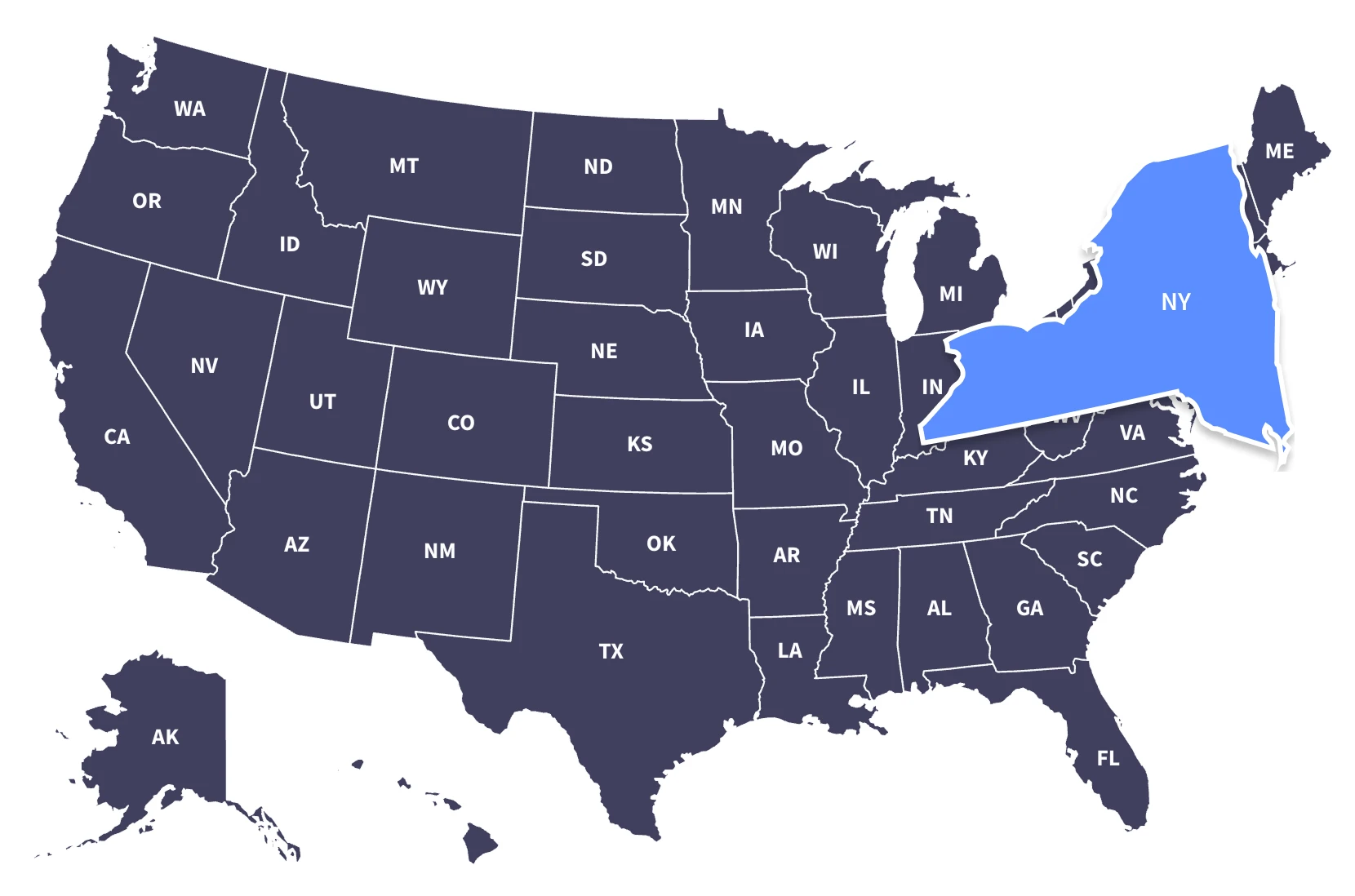
NY Harassment Training Highlight Map

Many New York employers operate across multiple states—or manage remote and hybrid teams. Emtrain provides a centralized harassment training platform that tracks completion, supports audits, and updates content automatically as regulations change.

Whether your workforce is based in NYC, across New York State, or nationwide, every employee completes the right training, at the right time, with the right documentation.

Did You Know?

Built by Experts, Backed by Law

All of our content is authored and reviewed by employment lawyers and industry experts from Ogletree Deakins, DLA Piper and other global law firms. Our content team is also led by our CEO Janine Yancey, a former employment litigator and workplace investigator who is a certified expert witness on harassment training in both state and federal courts.

The Most Complete Harassment Training Course with over 30+ Lessons in 30, 60, or 120 minute time intervals

All Emtrain packages include our entire suite of 100+ microlessons and our unique, in-course employee sentiment surveys. Customize your course with all the lessons below that fit your organization’s needs. 

Respect is a Skill

An introduction to the purpose and goals of this course. Also, an introduction to the concept that team dynamics are influenced by peoples’ culture skills.

An introduction to 2nd part of Preventing Workplace Harassment 13.

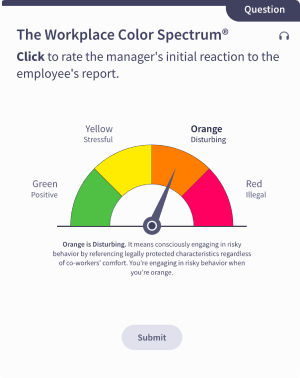
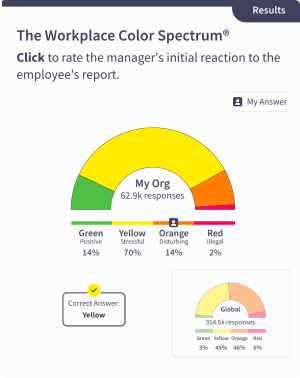
A refresher of the legal framework for workplace harassment and Emtrain’s Workplace Color Spectrum®, providing a shared language to color code conduct, not people.

This lesson explains the Workplace Color Spectrum and how it can help managers and employees understand and categorize their conduct — and the conduct of others.

Workplace harassment always involves conduct or comments relating to “protected characteristics.” But what are they, and which ones apply in my workplace?

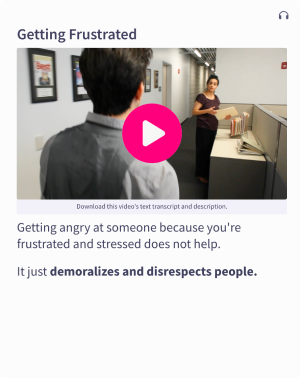
Help your employees understand, identify, and stop aggressive, bullying behavior in the workplace.

Teach learners about the different types of harassment and how “quid pro quo” is different than “hostile work environment”.

A hostile work environment always involves “unwelcome conduct.” This lesson addresses how to determine when conduct is legally considered “unwelcome.”

Red conduct is illegal and negatively impacts work culture. Help employees determine what it looks like and how to know when conduct is crossing the line from orange to red.

This lesson explains the reach of workplace harassment laws, who is protected, and who can be liable for harassing conduct.

Help prevent potential problems by familiarizing yourself with some typical situations that can result in harassment or employee conflict.

There are a few common situations that seem to regularly lead to claims of harassment. By learning to recognize these situations, we can mitigate conflict and harassment, helping maintain a healthier workplace culture.

In most harassment situations, someone outside the conflict knows what’s going on. How do you go from being a passive bystander to an upstander who takes action to de-escalate the problem and uphold respectful norms of behavior?

This lesson helps learners recognize ageist comments and actions, emphasizing that age is a legally protected characteristic and treating someone differently because of it is a workplace issue.

We all talk about our personal lives at work, and it’s easy to cross the line from chatter to negative gossip. This lesson teaches people to identify and stop gossip situations as quickly as possible to prevent harm to co-workers.

This lesson clarifies the limits of workplace speech, helping employees understand the difference between First Amendment rights and their responsibility to align speech with corporate values.

Help learners understand how generational differences, shaped by life experiences, can lead to workplace conflict and disrespect in today’s multigenerational workforce.

This lesson highlights the importance of treating employees with disabilities, including mental health conditions, with empathy and respect. It offers guidance for addressing performance concerns, reducing friction, and collaborating with HR to provide proper support.

Our laws and policies are designed to ensure equity and a level playing field between people, regardless of their race, gender, age, etc. And that includes all aspects of the employee experience, including processes and systems and how they’re applied to people.

As more people are working remotely, digital communications have become a crucial tool. Learn the best practices for digital communications whether email, instant messaging, etc., while preserving a respectful workplace.

This lesson explores family status as a protected characteristic and emphasizes the importance of being empathetic and flexible with working parents. It highlights the need to avoid stereotypes and assumptions, fostering a supportive and inclusive workplace.

Equip employees with the knowledge and tools to create a respectful and inclusive workplace for trans, non-binary, and gender non-conforming colleagues. This lesson focuses on understanding gender diversity, using appropriate language, and fostering a supportive environment where everyone feels valued and respected.

Everyone has a need to belong, leading to “in-groups” and “out-groups” in the workplace, based on shared identities and communities. This lesson helps learners recognize these dynamics and promote inclusivity to reduce friction.

Some states protect employees based on their physical size. This lesson reminds everyone to be respectful of others, regardless of their weight or appearance.

Religion is a protected characteristic, and it’s important to be respectful and inclusive of the spiritual and religious practices of our co-workers — even if you do not personally share the same beliefs.

Neurodiversity reflects how individuals process information differently, often causing unintended friction between neurotypical and neurodivergent people. This lesson fosters understanding and supports an inclusive workplace for neurodiverse employees.

Help employees understand that their behavior, actions, and words must align with the law as well as our organization’s values, rules, and policies — regardless of personal beliefs.

Harassment is about someone in power making a less powerful person feel disrespected, marginalized, etc. It’s important to learn how to use power to minimize disrespect and promote a respectful workplace environment.

Making assumptions about people based on their legally protected characteristics will often alienate people and create conflict, including people feeling like they are experiencing harassment.

Veterans are legally protected but often face bias and harassment due to assumptions about their military service. This lesson helps learners recognize and address inappropriate workplace conduct toward veterans.

Racial harassment is a common workplace complaint. Referencing someone’s race risks offending or making them feel “othered,” especially when they already feel marginalized.

Employees have a right to raise a concern or complaint without fear of retaliation. This lesson teaches learners about when a situation, and a management action crosses the line and may give the appearance of retaliation.

When you see inappropriate, biased, or harassing behavior in your workplace you have an obligation to speak up and be a part of the solution. Upstanders are responsible for helping to maintain a healthy workplace culture.

A strong manager is a role model for respectful behavior and considers the workplace experience of everyone on the team. Strong managers also address inappropriate behavior before it creates conflict and potential claims.

Managers shape workplace culture by modeling respect and addressing behavior issues. This lesson highlights their role as the employer’s “eyes and ears” in handling people and harassment concerns.

This lesson teaches employees how and where to report concerns of harassment, and outlines the employer’s investigation process when concerns are reported. All employers must have their own harassment prevention policy to highlight in this lesson. For employers who lack a policy, Emtrain provides a harassment prevention policy template that can be used to create an employer policy.

Deep HRIS Integrations

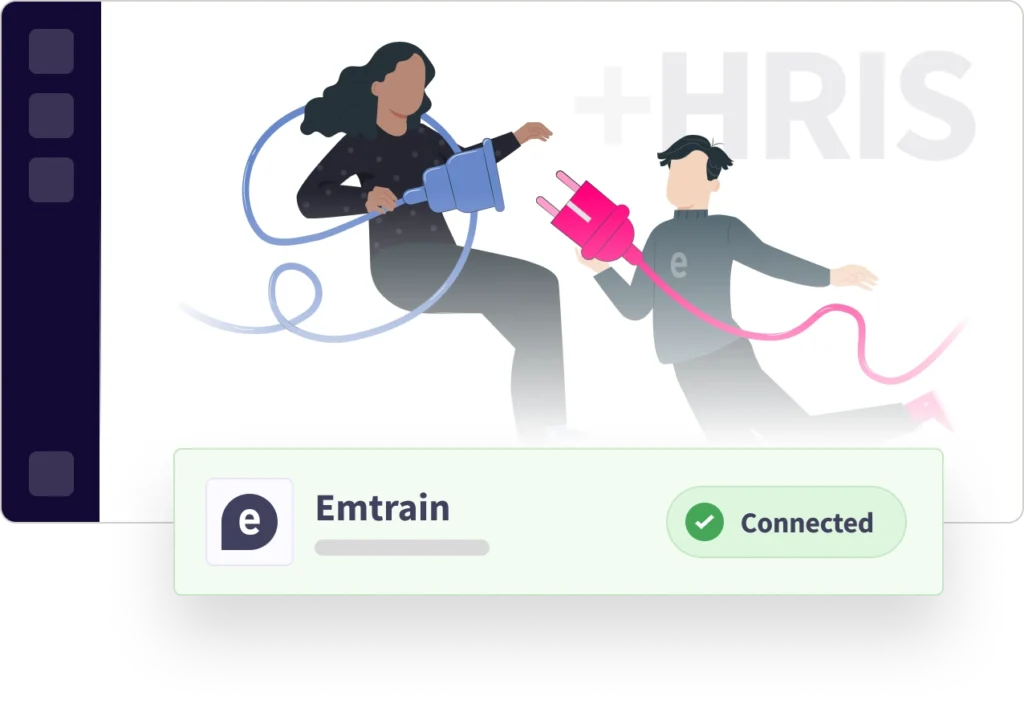
Our HRIS integrations streamline your implementation. Automatically sync data and import employees from your HR system directly into Emtrain’s platform in just a few clicks.

Some immediate benefits include:

BambooHR Logo
Zenefits logo
Gusto Logo
Okta-logo
Workday Logo
Servicenow logo
Vanta Logo
Notion Logo
One Medical Logo
Salesforce Logo
Rippling Logo
Workday Partner Badge Large

Emtrain’s direct integration with Workday ensures your employee roster data is always accurate and up to date, and you can manage training, completions, and reporting directly in your HRIS. As a Silver Innovation Partner, you can be sure managing your training assignments will be effortless as your workforce evolves.

Your Training. Your LMS.

Deliver Emtrain’s award winning training content in your team’s Learning Management System. Emtrain courses are compatible with hundreds of LMS providers via our SCORM offering.

Workday Logo
Docebo Logo
Seismic Logo
Degreed Logo
Talent LMS Logo
Absorb Logo
Workramp Logo
Cornerstone Logo
Supported File Types:

Frequently Asked Questions

What is sexual harassment training in New York? +

Sexual harassment training in New York is mandatory workplace training designed to educate employees and supervisors on sexual harassment laws, prevention strategies, reporting procedures, and employer responsibilities. This training helps businesses comply with New York State sexual harassment prevention laws and ensure a safe, inclusive workplace.

Who is required to take sexual harassment prevention training in New York? +

All employers in New York, regardless of size, must provide annual sexual harassment prevention training to all employees, including part-time, seasonal, and temporary workers. This applies to businesses operating in both New York State and New York City.

What does New York’s sexual harassment training include? +

New York’s harassment prevention training must cover:

  • Definitions and examples of sexual harassment in the workplace
  • Information on retaliation protections
  • How to report sexual harassment
  • Investigation procedures employers must follow
  • Bystander intervention strategies
  • State and federal harassment laws
When must new employees complete their harassment prevention training? +

While New York State law does not specify a deadline for new hires, best practices recommend providing workplace harassment training as soon as possible. Many employers integrate training into onboarding to ensure compliance from day one.

How often must employees complete sexual harassment training in New York? +

Employees must complete annual sexual harassment prevention training to remain compliant with New York’s harassment policies. Employers should track completion and provide updated training materials each year.

Is sexual harassment training in New York available online? +

Yes! Employers can use online harassment training programs that meet the state’s requirements. Virtual compliance training allows businesses to efficiently train remote, hybrid, and on-site employees while ensuring full compliance.

What are the penalties for non-compliance with New York’s harassment training requirements? +

Failure to comply with New York State’s harassment training laws can result in legal action, fines, and employer liability in harassment claims. Additionally, non-compliance can damage workplace culture, employee trust, and brand reputation.

How does New York City’s sexual harassment training law differ from the state law? +

In addition to state requirements, New York City’s Stop Sexual Harassment Act applies to employers with 15 or more employees and includes additional provisions like:

  • A written sexual harassment policy distributed to all employees
  • Record-keeping requirements for training completion
  • Specific training content on rights and responsibilities under NYC laws
How can employers ensure their harassment training is compliant? +

Employers should use a state-approved sexual harassment training program that aligns with New York State’s model training guidelines. Partnering with a compliance training provider like Emtrain ensures your program is legally compliant, engaging, and effective.

Where can I find sexual harassment training for New York employees? +

Emtrain offers New York-compliant sexual harassment training that meets both New York Sate’s and New York City’s  regulations. Our interactive courses provide real-world scenarios, legal guidance, and workplace best practices to create a culture of respect and compliance.

Get started today! Learn more about Emtrain’s training solutions.

What our clients have to say

Ready to Reduce Harassment Claims with Training?

Designed for New York employers with multi-state workforces.