
Emtrain logo

Concept

Reprisal Definition

Reprisal, also known as retaliation, occurs when an employee faces negative consequences for reporting misconduct, harassment, discrimination, or exercising their rights under employment laws. It can include termination, demotion, exclusion, or subtle workplace hostility. Reprisal undermines trust, discourages transparency, and erodes workplace morale—making it one of the most critical risks HR, compliance, and people leaders must address.

Emtrain is the only compliance training provider that guaranteed to reduce ER claims

Emtrain’s harassment training course is engaging, interactive, and designed to spot and reduce EEO risk.
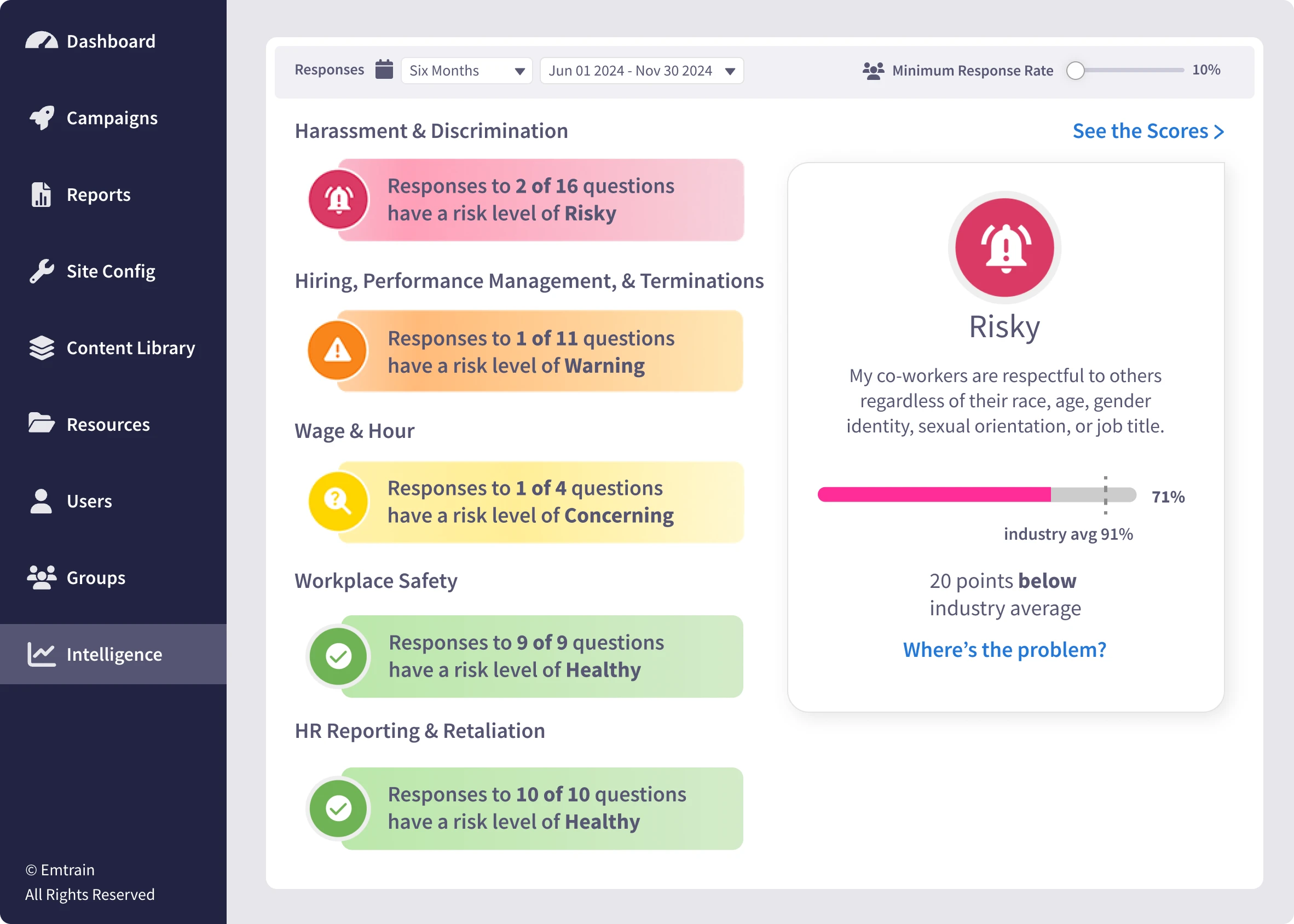
HR & People Risk Areas Dashboard

Courses and Mircolessons that cover Reprisal

Course-Canadian-Workplace-Harassment Training

Preventing Workplace Harassment Training — Canada

Harassment training up to Canadian standards.
Course
CAN
Respect
Course-Global-Harassment-Prevention-Training

Preventing Workplace Harassment Training — Global

Special training for non-U.S. based employees.
Course
intl
Respect
Course-Preventing-Workplace-Harassment-Training-India

Preventing Workplace Harassment Training — India

Designed for India’s PoSH statutory requirements for harassment training.
Course
IND
Respect

Additional Information on Reprisal

Reprisal vs. Retaliation: What’s the Difference?

While the terms reprisal and retaliation are often used interchangeably, there are subtle distinctions that matter for compliance and HR leaders:

  • Reprisal is commonly used in government, compliance, and whistleblower protection contexts. It describes any adverse action taken against someone who reports or participates in investigating misconduct. Examples include isolating, reassigning, or limiting access to resources after someone reports an issue.
  • Retaliation is the term most frequently used under employment and civil rights laws—such as Title VII, ADA, and EEOC guidelines—and typically refers to punishing someone for filing a complaint, opposing discrimination, or participating in an investigation.

In practice, both terms describe harmful behavior that discourages employees from speaking up. The key takeaway is that reprisal focuses on institutional or managerial response to protected activity, while retaliation emphasizes personal or employment-based punishment.

Historical Context: Why It Matters

The distinction between reprisal and retaliation is more than linguistic—it reflects how workplace protections have evolved through history. Since the passage of landmark laws such as Title VII of the Civil Rights Act (1964) and the Occupational Safety and Health Act (OSHA, 1970), employees have been legally protected from retaliation when reporting unethical or unsafe behavior. These laws use the term retaliation to define employer actions that punish employees for asserting their rights under civil rights and workplace safety statutes.

Meanwhile, in government and compliance contexts, reprisal became the term of choice under frameworks like the Whistleblower Protection Act (1989), which shields employees who expose misconduct or fraud within federal agencies. Together, these legal traditions reinforce the same principle: employees must be free to raise concerns without fear of punishment—whether it’s called retaliation or reprisal.

Despite decades of protection, fear of speaking up persists. According to the U.S. Equal Employment Opportunity Commission (EEOC), over 50% of all discrimination charges now include retaliation claims. This enduring trend highlights how both terms—reprisal and retaliation—represent a shared and ongoing challenge for modern organizations: creating workplaces where trust and transparency outweigh fear.

How to Recognize Reprisal in the Workplace

Reprisal can appear in subtle or overt ways, often following a report of harassment, bias, or other misconduct. In employment law, these behaviors may be defined as retaliation, while in broader organizational culture and compliance contexts, they constitute reprisal. Both harm trust, discourage ethical behavior, and signal that speaking up is unsafe. Common signs include:

  • A sudden negative performance review after an employee raises a concern.
  • Being reassigned, isolated, or excluded from team projects.
  • Losing advancement opportunities or receiving reduced hours.
  • Experiencing social ostracism or being labeled as “difficult.”
  • Witnessing others being punished for supporting a coworker who reported an issue.
  • An employee reports harassment and is subtly reassigned or isolated by their manager.
  • After raising concerns about financial mismanagement, an employee is excluded from key meetings.
  • An employee requests a disability accommodation and experiences reduced performance reviews.
  • A team member provides honest feedback in a review, only to be sidelined from future projects.
  • An employee voices inclusion issues and feels a shift in tone or opportunities.

Consider the example in the video below: an employee in a warehouse reports a coworker for inappropriate behavior, and instead of addressing the offender, management alters the reporter’s schedule to avoid the harasser. This is not protection—it’s reprisal. These moments send a damaging message that speaking up results in punishment, undermining workplace trust.

What You Can Do: Responding to and Preventing Reprisal

Preventing reprisal requires an intentional, proactive approach that prioritizes safety, fairness, and leadership accountability.

  1. Establish Safe Reporting Channels: Create confidential options for employees to raise concerns, such as hotlines, digital tools, or HR liaisons. Encourage employees to report issues early and often.
  2. Implement Preventing Harassment Training: Courses like Preventing Workplace Harassment Training empower employees to understand how and where to report concerns and what protections exist against retaliation.
  3. Reinforce Inclusion and Accessibility: Programs such as Disability Inclusion: Building into Your Company Culture and Fostering DEIB in Hybrid Workplaces teach employees how inclusive communication and equitable treatment reduce the likelihood of reprisal.
  4. Train Managers for Empathy and Neutrality: Teach managers how to show empathy to their employees and not retaliate. 
  5. Communicate Zero-Tolerance Policies: Ensure that every employee understands retaliation is prohibited. If your organization lacks a harassment prevention policy, Emtrain provides a harassment prevention policy template to help establish one.
  6. Leverage Data Analytics: Platforms like Emtrain Risk Intelligence offer actionable insights to detect cultural patterns of risk, identify potential reprisal hot spots, and measure trust and safety sentiment.
  7. Strengthen Whistleblower Protections:
    Implement Emtrain’s Whistleblower Training to cultivate a culture where employees feel empowered to report misconduct early. This course explains who qualifies as a whistleblower, what protections apply under federal and state law, and how to report concerns safely. By proactively training both employees and managers, organizations reduce legal exposure while reinforcing integrity and trust.

Best Practices: For Preventing Reprisal and Building a Speak-Up Culture

  • Empower Transparency: Create systems that reward honesty and ethical behavior.
  • Model Leadership Accountability: Managers should be the first to demonstrate non-retaliatory practices.
  • Use Continuous Learning: Annual and ongoing training maintains awareness and reinforces compliance.
  • Audit Reporting Processes: Regularly assess your HR and compliance response systems.
  • Protect Whistleblowers: Reference protections under the U.S. Office of Special Counsel and EEOC Retaliation Guidance.

Final Thoughts

Preventing reprisal isn’t just about legal compliance—it’s about fostering a respectful, transparent, and resilient culture. HR managers, compliance officers, and people leaders have a shared duty to ensure employees feel safe to report, trust leadership, and believe in fairness. Through proactive learning, consistent leadership behavior, and ongoing Emtrain analytics, your organization can turn risk into trust and accountability.

Video Scenario: When Protection Fails
A warehouse worker whistles at a woman coworker—a clear act of harassment. Another bystander, witnessing the misconduct, reports the incident to their manager to protect the coworker and uphold respect. Instead of addressing the harasser’s behavior, the manager changes the bystander’s schedule to separate them from the offender. This action—punishing the reporting employee rather than confronting the harassment—is a direct example of reprisal.

In this case, the bystander who acted responsibly experiences retaliation for doing the right thing. This scenario illustrates why organizations must train managers to respond correctly, uphold policy integrity, and protect those who report concerns. Emtrain’s Preventing Workplace Harassment Training explicitly covers this issue, ensuring that both bystanders and leaders understand how to respond ethically and lawfully.

Frequently Asked Questions

Any negative action taken against an employee for reporting issues or participating in investigations.
Yes, employees are legally protected from retaliation for participating in protected activities.
Ensure post-reporting interactions remain neutral, documented, and transparent.
Report it immediately through designated HR or compliance channels. Under EEOC and OSHA protections, employees are legally safeguarded from retaliation.

Culture Forward Companies That Choose Emtrain

Okay, you got this far.
Let’s get compliant.

Search all Emtrain Resources

Search Emtrain’s course and microlesson selections, blog, resources, video libraries, and more.