




Protecting Hearing Before Damage Becomes Permanent
In many work settings, loud noise is so common that it’s easy to overlook the long-term risks it poses. Because noise-induced hearing loss develops gradually and without immediate pain, employees often underestimate the importance of consistent hearing protection until permanent damage has already occurred. Loud Noise Environments helps learners recognize when everyday sound exposure becomes hazardous and why proactive ear protection is essential for long-term health and quality of life.
Microlesson Description
The Loud Noise Environments microlesson provides practical guidance for identifying hazardous noise levels and using hearing protection correctly. Learners gain a clear understanding of how sound intensity is measured, when exposure exceeds safe limits, and why environments like server rooms, data centers, and equipment areas can pose hidden risks. The lesson explains the differences between earplugs, earmuffs, and dual protection, demonstrates proper fitting techniques, and reinforces the importance of wearing protection continuously. By the end of the lesson, learners understand how cumulative exposure causes irreversible damage—and how simple protective habits can preserve hearing for life.Key Concepts
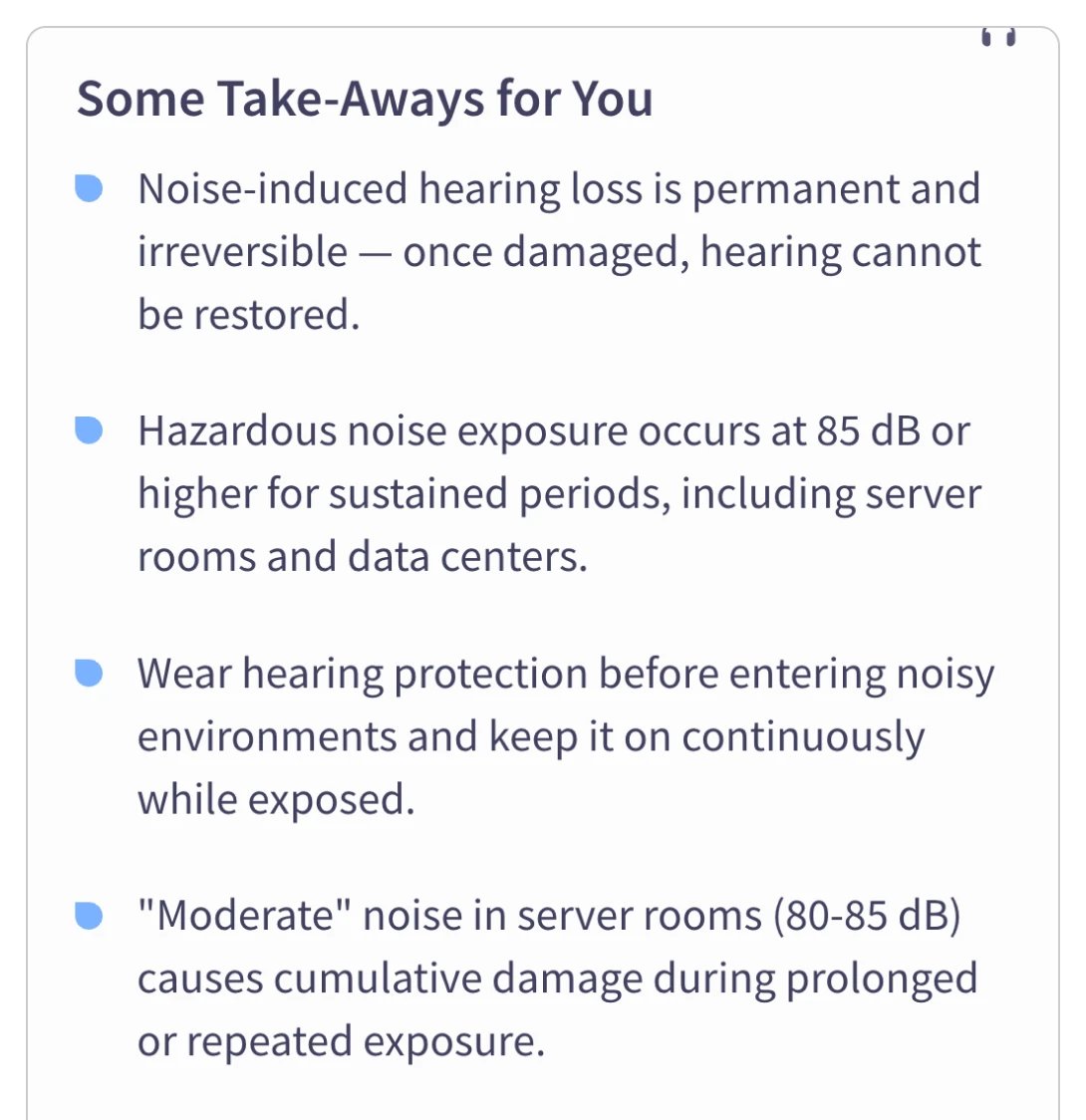
- Noise-induced hearing loss is permanent and irreversible
- Hazardous exposure begins at 85 dB for sustained periods
- Louder noise shortens the time required to cause hearing damage
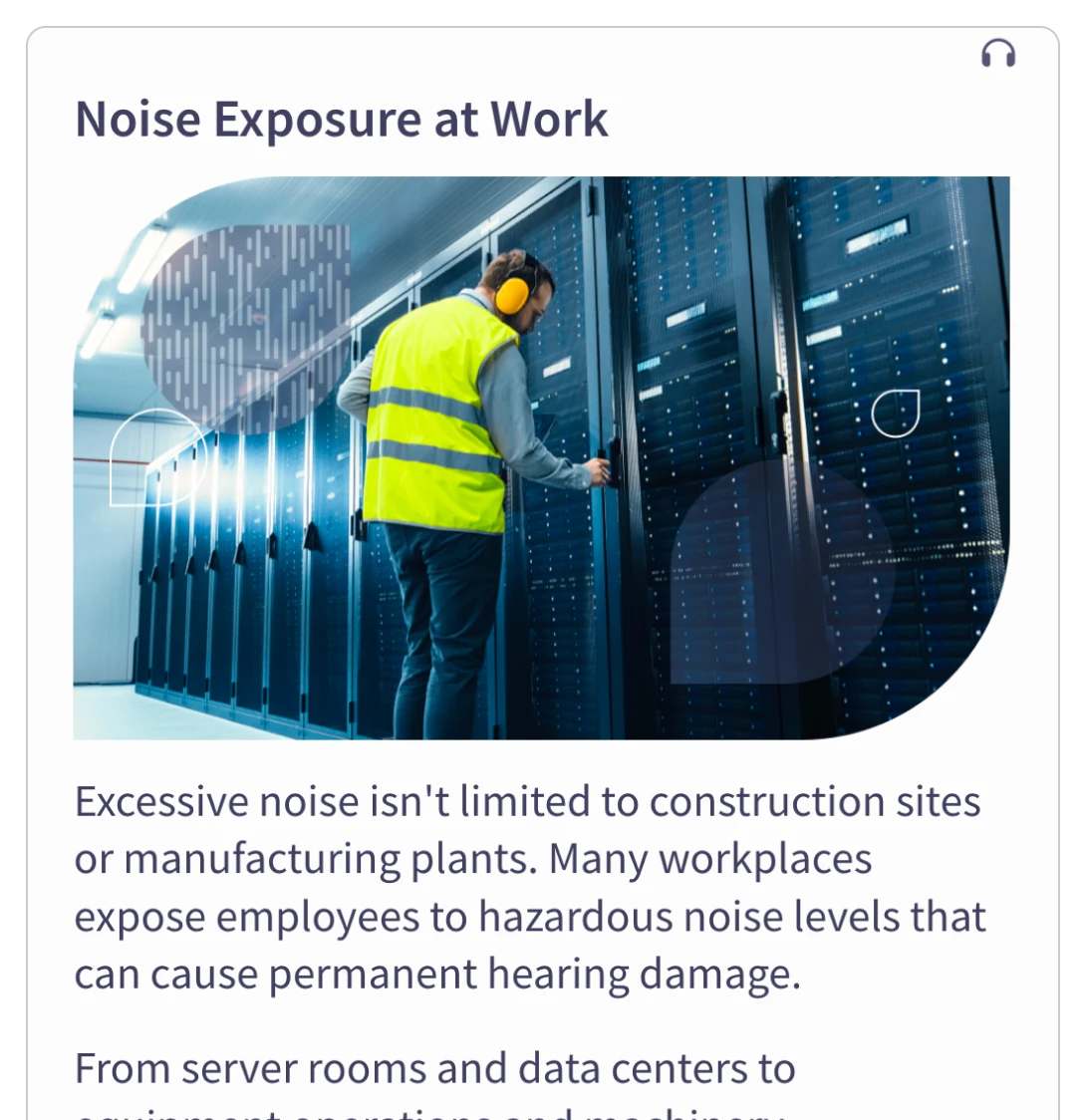
- Server rooms and data centers often reach hazardous levels without feeling “painfully loud”
- Moderate noise (80–85 dB) causes cumulative damage over repeated exposure
- Hearing protection must be worn before entering noisy environments
- Proper fit is critical for earplugs and earmuffs to work effectively
- Persistent ringing, muffled hearing, or ear discomfort are warning signs that must be reported
Microlesson Features
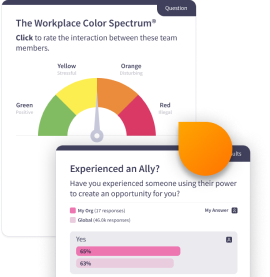
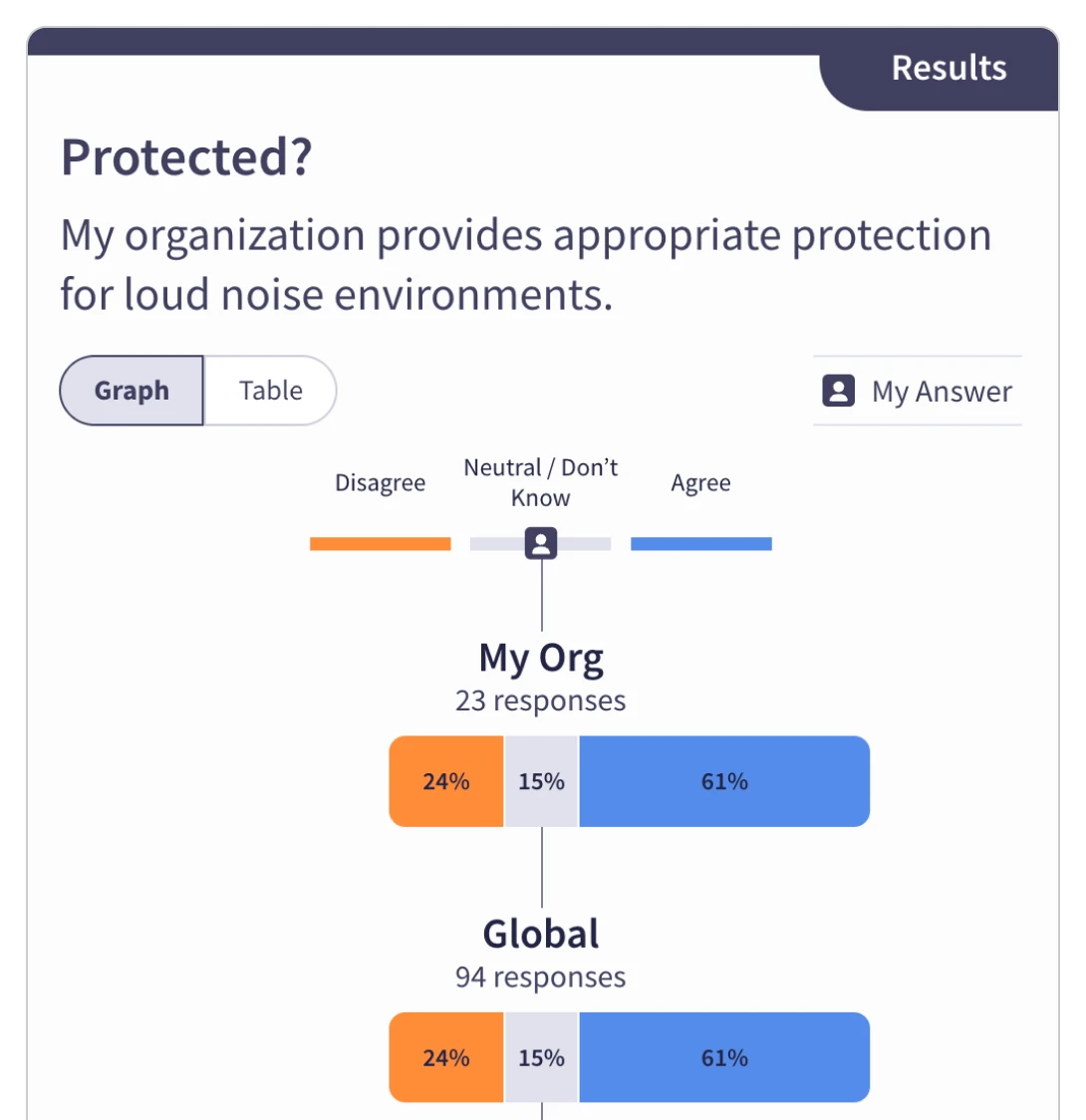
- Employee sentiment pulsing questions that provide leaders with insights into their workforce's core cultural competencies
- Emtrain's Expert Answers tool, enabling employeees to submit anonymous questions about sensitive issues.
- Rich, contemporary video scences illustrating key concepts through realistic scenarios
- A data driven, skill-based approach to eLearning that establishes a shared language for employees.
Related Resources
Related Trainings
Frequently Asked Questions
Below are answers to common questions that employees and managers have about this topic. These FAQs provide a preview of what you’ll learn in this microlesson and why it matters.
Q
Why is noise-induced hearing loss considered so dangerous?
Noise-induced hearing loss is permanent and irreversible. Once hearing is damaged, it cannot be restored, and the damage often occurs gradually without immediate symptoms.
Q
At what noise level is hearing protection required?
Hearing protection is required when noise exposure reaches 85 decibels (dB) or higher for sustained periods, such as during an 8-hour workday.
Q
Can moderate noise levels really cause hearing damage?
Yes. Noise levels between 80–85 dB, such as those found in server rooms, can cause cumulative hearing damage when exposure is prolonged or repeated.
Q
How can I tell if my work environment is too loud?
If you need to raise your voice to be heard from three feet away, experience ringing or muffled hearing afterward, or feel ear discomfort, the noise level may be hazardous.
Q
What types of hearing protection are available?
Common options include foam earplugs, earmuffs, and dual protection using both together for extremely loud environments. Custom-fit protection may also be used in high-noise roles.