
Home » Concepts » Discrimination & Harassment » FMLA (Family Medical Leave Act)
The Family and Medical Leave Act (FMLA) is a federal law that grants eligible employees up to 12 weeks of unpaid, job-protected leave within a 12-month period for qualifying family and medical reasons. These include serious health conditions, childbirth, adoption, or caregiving responsibilities for immediate family members. FMLA ensures continued access to group health insurance and prohibits retaliation for exercising these rights. It empowers employees to balance personal well-being and family obligations without risking job security.
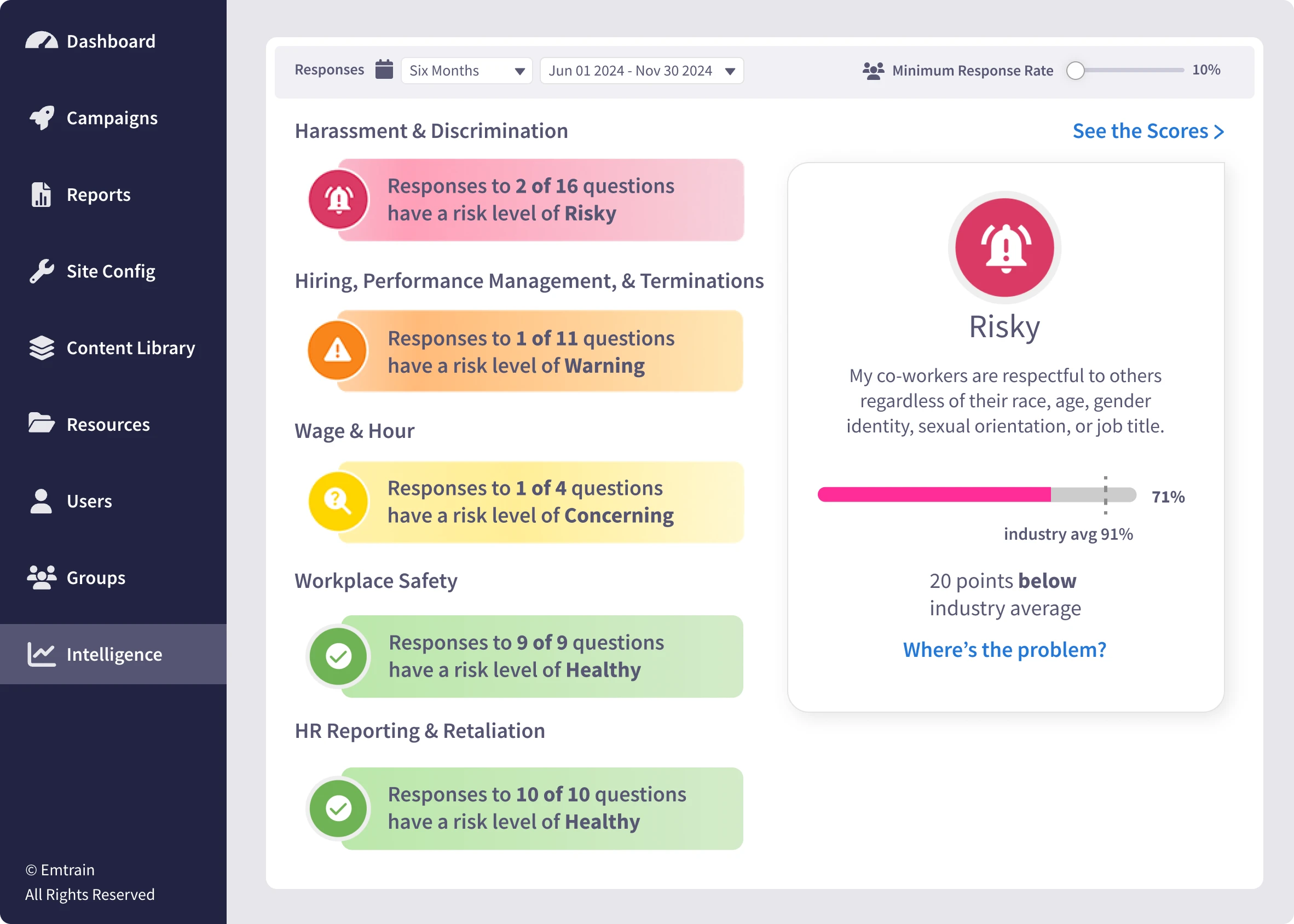
Emtrain’s harassment training course is engaging, interactive, and designed to spot and reduce EEO risk.
Enacted in 1993, the FMLA was a groundbreaking piece of U.S. labor legislation, designed to address the growing tension between professional obligations and personal health or caregiving responsibilities. Prior to its passage, employees could be terminated for taking time off due to illness or family needs. Over three decades later, the FMLA remains a cornerstone of workplace protection—yet new challenges such as remote work, pandemic recovery, and mental health leave have expanded its interpretation. Modern leaders must now navigate FMLA alongside evolving mental health standards and ADA compliance to safeguard employee well-being and organizational integrity.
As covered in Emtrain’s article, The Rise of Mental Health Leave, today’s workforce faces unprecedented levels of stress and burnout. Employers are increasingly recognizing mental health as a valid reason for FMLA leave, supported by the U.S. Department of Labor’s acknowledgment of mental health conditions as qualifying serious health issues. This shift highlights a broader cultural transformation—where emotional well-being and psychological safety are considered essential to organizational success. HR leaders must ensure policies and training reflect this change, blending empathy with compliance.
FMLA often overlaps with other workplace laws, such as the Americans with Disabilities Act (ADA). These laws work hand in hand to ensure fair treatment for employees facing health challenges, while providing guidance for HR professionals managing leave and accommodations. Through Emtrain’s Disability Protections (ADA) Training, managers gain practical tools for recognizing, documenting, and responding lawfully to these situations, fostering an inclusive culture that balances compliance and care.
Every HR or compliance team will eventually encounter real-world situations that test the boundaries of empathy and legal understanding. These examples illustrate how proper FMLA knowledge—and the right workplace culture—can prevent risk and build trust.
For HR Managers and Compliance Officers, maintaining FMLA compliance requires more than awareness—it demands consistent, proactive communication and training. Teams can strengthen their compliance strategy by integrating emotional intelligence and legal awareness into everyday operations.
Start by providing targeted learning through Emtrain’s Disability Protections (ADA) Training, which helps managers handle leave requests lawfully. To foster empathy-driven leadership, supplement with microlessons and video lessons such as Helping a Coworker on a Bad Day and Power of Empathy and Mental Health Awareness. Stay informed through Emtrain’s The Rise of Mental Health Leave, and ensure your leave policies align with ADA standards for inclusive care.
Building a compliant and compassionate leave culture requires a strong foundation of process, training, and transparency. Rather than relying solely on legal checklists, organizations can use FMLA as a vehicle for trust and equity.
Begin by maintaining consistent documentation of all leave communications and medical certifications to ensure fairness and protect against liability. Conduct manager training to help leaders recognize FMLA-eligible situations and prevent inadvertent bias. Implement return-to-work protocols that allow for flexible reintegration when necessary. Use Emtrain’s behavioral analytics tools to identify potential risk areas and address patterns before they escalate. Finally, stay aligned with federal resources like the U.S. Department of Labor’s FMLA Guide and EEOC’s Disability Guidance for up-to-date compliance direction.
FMLA is no longer simply a compliance requirement—it’s a benchmark of an organization’s humanity. HR Managers, Compliance Officers, and People Leaders who understand the emotional and legal dimensions of FMLA build trust, reduce turnover, and enhance morale. By leveraging Emtrain’s training and behavioral data insights, organizations can transform FMLA from a legal safeguard into a cultural strength that sustains engagement and loyalty.
After an employee returns from mental health leave, a colleague greets her warmly, expressing excitement to have her back. Without realizing, the team member immediately asks for pending reports. The returning employee gently explains that she’s still transitioning and has upcoming doctor appointments. Instead of pressing for deliverables, the team member listens, shows understanding, and reassures her to take all the time she needs to ease back into work. This brief moment of empathy captures the true spirit of FMLA compliance—balancing operational needs with compassion and human understanding.