
Employee engagement is often treated as something organizations measure.
Send an annual survey. Calculate an engagement score. Compare it with last year. Identify a few areas for improvement.
Measurement matters. But there is a fundamental limitation to this approach:
Measuring employee engagement doesn’t create employee engagement.
Employee engagement is shaped every day—when a manager gives feedback, when an employee decides whether to speak up, when someone feels recognized for their work, when a team navigates conflict, or when an employee gets an opportunity to learn a new skill.
Gallup defines employee engagement as employees’ involvement and enthusiasm in their work and workplace. Its latest data shows that only 31% of U.S. employees were engaged in 2025, and engagement remained at 31% through the first half of 2026.
So perhaps the better question isn’t simply:
How do we measure employee engagement?
It’s:
How do we create more opportunities for employees to engage—and learn from what those interactions tell us?
That’s where employee training can play a much larger role.
Instead of treating training as a one-way exercise employees complete, organizations can use learning to create an ongoing conversation with their workforce.
Employees encounter realistic workplace situations. They consider what they would do. They answer questions. They practice skills. They share their perceptions of what happens in their workplace.
Those interactions can help organizations understand what’s driving employee engagement—and identify the skills and actions that could improve it.
What Is Employee Engagement?
Employee engagement describes the degree to which employees are involved in and enthusiastic about their work and workplace. It goes beyond whether someone is simply satisfied with their job.
An employee might be satisfied with their compensation, schedule, or benefits without feeling particularly connected to their work.
Engagement is deeper.
Engaged employees tend to feel that their work matters, understand what’s expected of them, have opportunities to contribute and develop, receive meaningful feedback and recognition, and feel connected to the people around them.
That’s why employee engagement is closely connected to everyday workplace experiences.
Consider a few simple questions:
- Does my manager listen to my ideas?
- Can I give someone constructive feedback without damaging the relationship?
- Will my contributions be recognized?
- Can I raise a concern without retaliation?
- Do I feel included in decisions that affect my work?
- Do I know how to navigate conflict with a colleague?
These aren’t abstract HR concepts. They’re interactions employees experience every week.
And they’re exactly the kinds of interactions organizations can influence.
Why Is Employee Engagement Important?
Employee engagement isn’t simply about making work more enjoyable.
It is associated with meaningful business outcomes.
Gallup’s large-scale engagement research has linked higher engagement with stronger productivity, profitability, retention, customer outcomes, and lower absenteeism and safety incidents.
There is also an important management component.
Gallup reports that managers account for at least 70% of the variance in team engagement.
That should change how organizations think about improving engagement.
An engagement problem isn’t necessarily solved by another survey, a new benefit, or a company-wide initiative.
Sometimes the problem is much closer to the employee.
- A manager doesn’t give useful feedback.
- Employees don’t feel recognized.
- People don’t feel comfortable disagreeing.
- A team has normalized disrespectful behavior.
- Employees don’t believe speaking up will change anything.
Those are workplace skills and behaviors.
And skills and behaviors can be developed.
The Traditional Employee Engagement Model
Employee engagement surveys are valuable tools.
They can help organizations measure employee perceptions, track changes over time, identify barriers, and give employees a voice in workplace decisions.
But a survey is ultimately a measurement event.
A common process looks something like:
Survey → Score → Dashboard → Action Plan
The organization learns that recognition scores declined.
Or employees don’t feel connected to leadership.
Or a particular department reports lower engagement.
That’s useful information.
But then comes the harder question:
Why?
And after that:
What should we do about it?
Gallup itself emphasizes that surveys become valuable when leaders actually respond to what employees tell them; collecting feedback without meaningful follow-through can undermine engagement rather than improve it.
Organizations therefore need to think beyond measurement.
A Different Approach: Create, Understand, and Improve Employee Engagement
Employee engagement shouldn’t happen once a year.
Organizations have opportunities to create meaningful employee interactions throughout the year—including interactions that are already happening through workplace training.
That creates a different model:
Create → Engage → Listen → Understand → Act → Improve
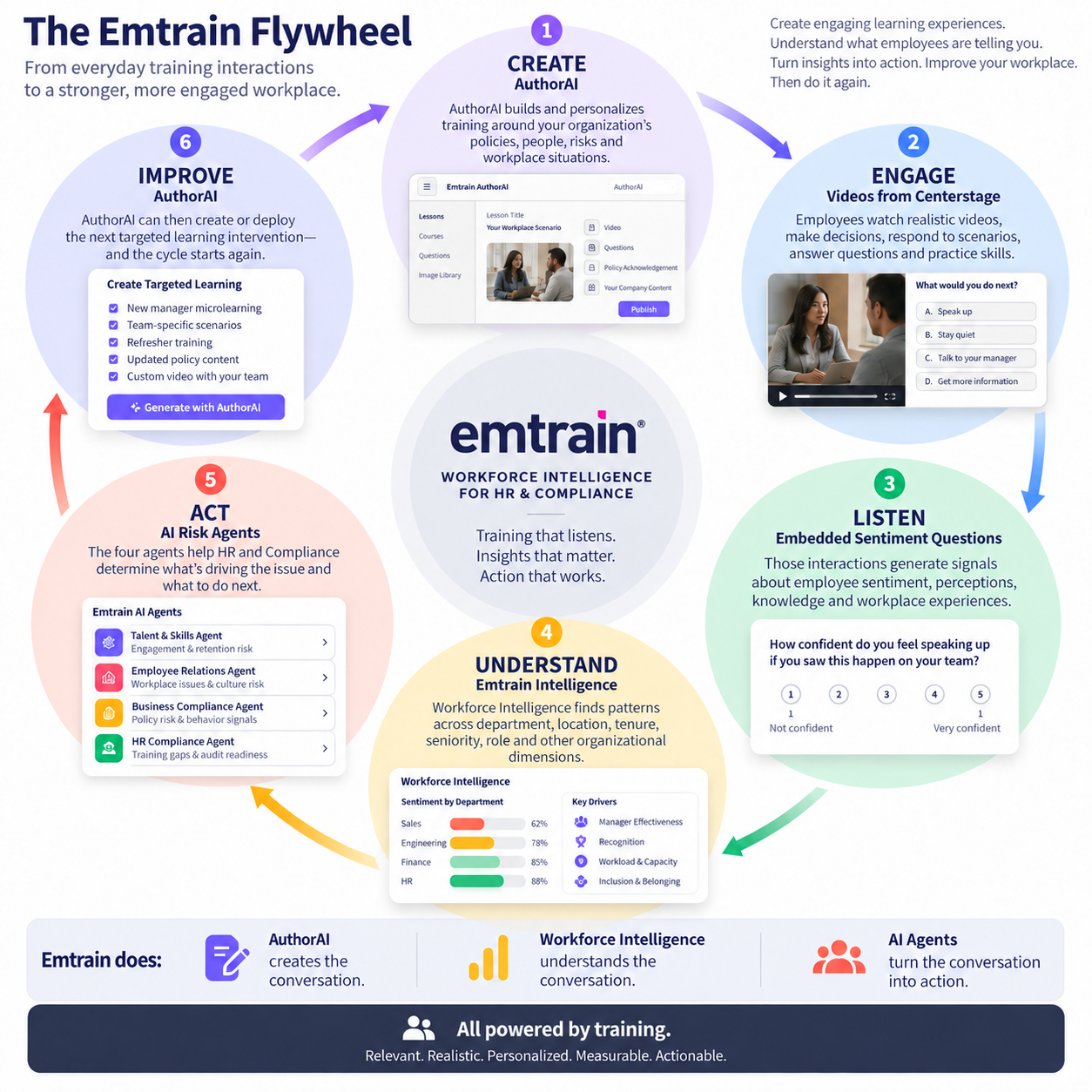
At Emtrain, we’re building around three connected capabilities:
- AuthorAI helps create engaging employee experiences.
- Workforce Intelligence helps organizations understand what employee interactions reveal.
- AI Agents help HR and Compliance turn those insights into action.
Here’s what that looks like in practice.
1. Create Employee Engagement Through Better Learning
Most employees have experienced bad workplace training.
Read some text.
Click Next.
Watch a generic video.
Answer an obvious multiple-choice question.
Confirm completion.
That’s technically an employee interaction.
It isn’t necessarily an engaging one.
Training becomes more meaningful when employees recognize their workplace in the experience.
Make workplace training relevant
Imagine an organization is struggling with feedback between managers and employees.
Instead of presenting a slide that says:
Employees should provide constructive feedback.
Show employees a realistic meeting where a manager asks for feedback and everyone stays quiet.
Then ask:
What would you do?
Now the employee has to interpret a workplace situation.
That’s fundamentally different from asking them to memorize a policy.
Emtrain’s learning model already uses video-based workplace scenarios and microlessons built around specific situations and skills. Its microlessons are designed as short, targeted learning experiences that can be assembled into broader curricula.
Personalize the experience
Relevance can go further.
With AuthorAI, organizations can build and customize learning around their own needs.
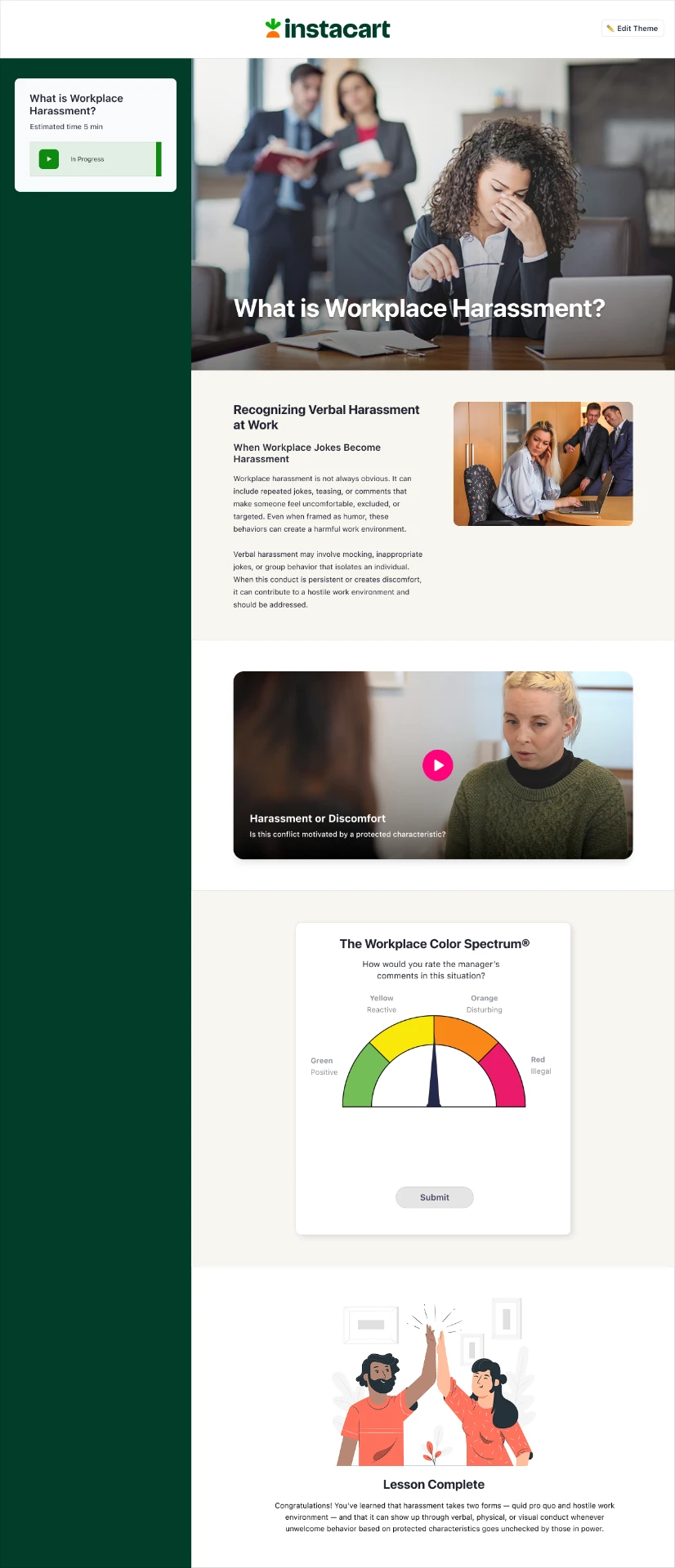
That can include company-specific language, policies and examples; relevant workplace situations; customized imagery; videos; interactive questions; policy acknowledgements; decision points; and different learning formats.
Instead of training feeling like something purchased from an outside vendor, it can increasingly reflect your workplace.
Make employees participants
The biggest shift, however, is from passive consumption to participation.
- Ask employees to evaluate a situation.
- Ask what they would do next.
- Ask how confident they feel handling it.
- Ask whether they’ve experienced something similar.
- Ask where a behavior falls on a spectrum from healthy to problematic.
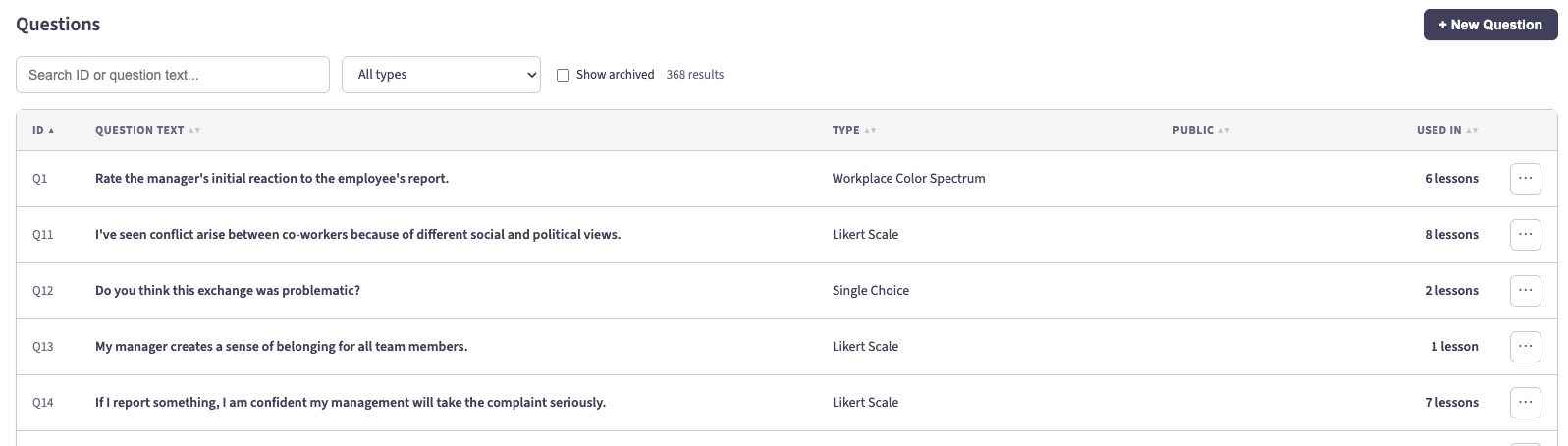
Suddenly, training isn’t simply talking at employees.
It’s creating a conversation with them.
2. Use Training to Understand Employee Engagement
Once employees participate, those interactions can tell you something.
This is where training can become more than a learning tool.
It can become a listening tool.
Emtrain embeds employee sentiment questions within culture and compliance training and uses responses to identify patterns in workplace perceptions. Its 2026 Workplace Culture research, for example, draws on employee responses collected through training interactions.
Consider a lesson about giving feedback.
Employees watch a realistic workplace situation and learn a skill for handling it.
But within that experience, you might also ask:
“I am hesitant to share my ideas or feedback with my team.”
Now the organization learns something too.
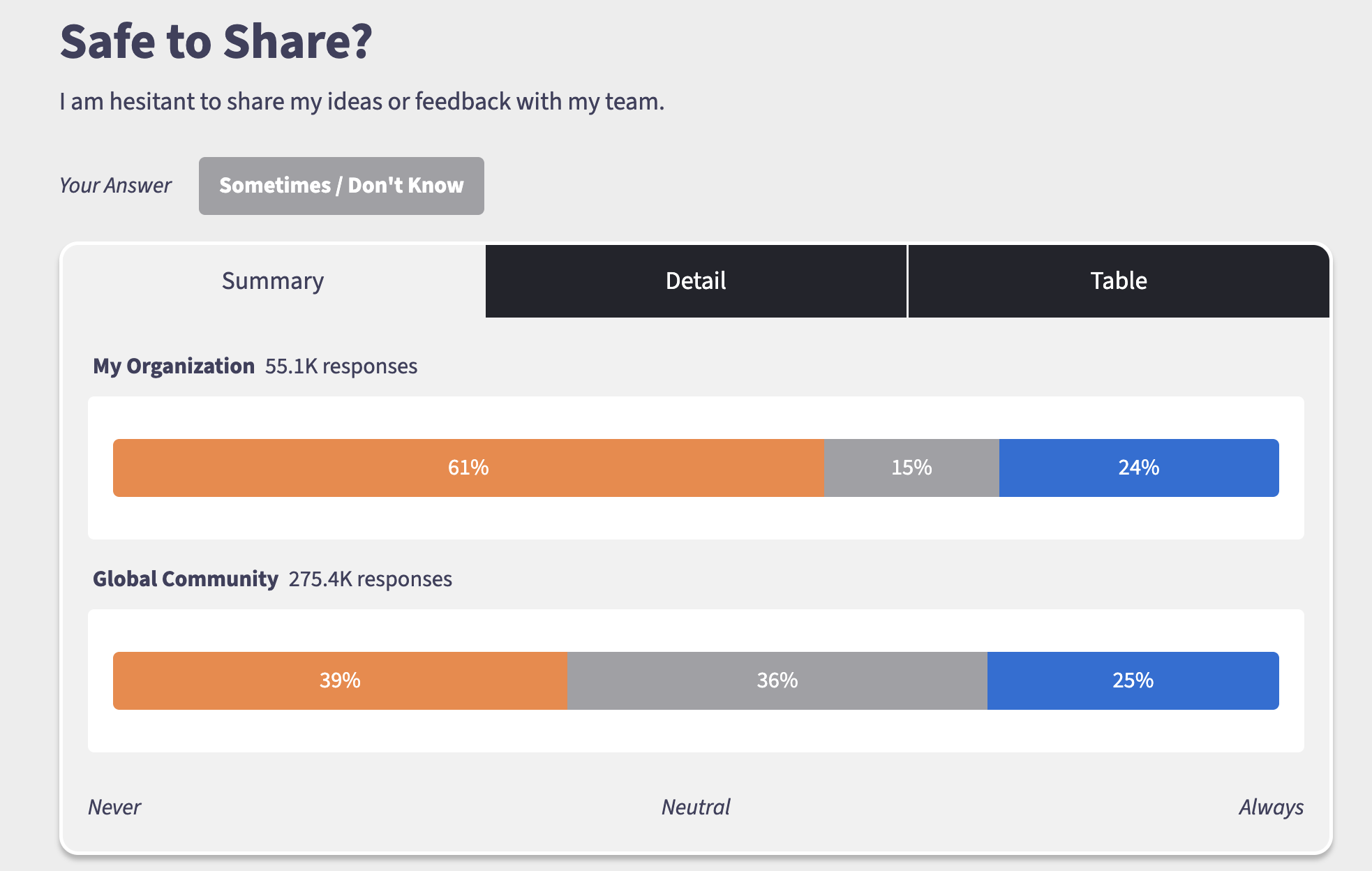
In Emtrain data previously analyzed for our feedback research, 25% of more than 275k responses indicated this happened often.
The course may be complete.
But that response tells HR there may still be work to do.
Look for patterns, not just individual answers
One response isn’t necessarily meaningful.
Thousands of responses can be.
Suppose sentiment around recognition falls sharply within Sales.
Or new managers are significantly more likely to report difficulty managing conflict.
Or employees in one business unit increasingly say they aren’t comfortable speaking up.
That’s where employee engagement data becomes more actionable.
Rather than simply asking:
What’s our engagement score?
HR can start asking:
- Where is engagement changing?
- Which employee groups are experiencing it?
- What workplace behaviors are associated with the change?
- Which skills might help?
That’s the transition from collecting employee data to developing workforce intelligence.
3. Turn Employee Engagement Insights Into Action
This is where many employee engagement strategies struggle.
They identify the problem but don’t close the loop.
Imagine employee sentiment falls 15 points within a Sales organization.
Workforce Intelligence identifies three related signals:
Workload and capacity
Recognition and reward
Manager effectiveness
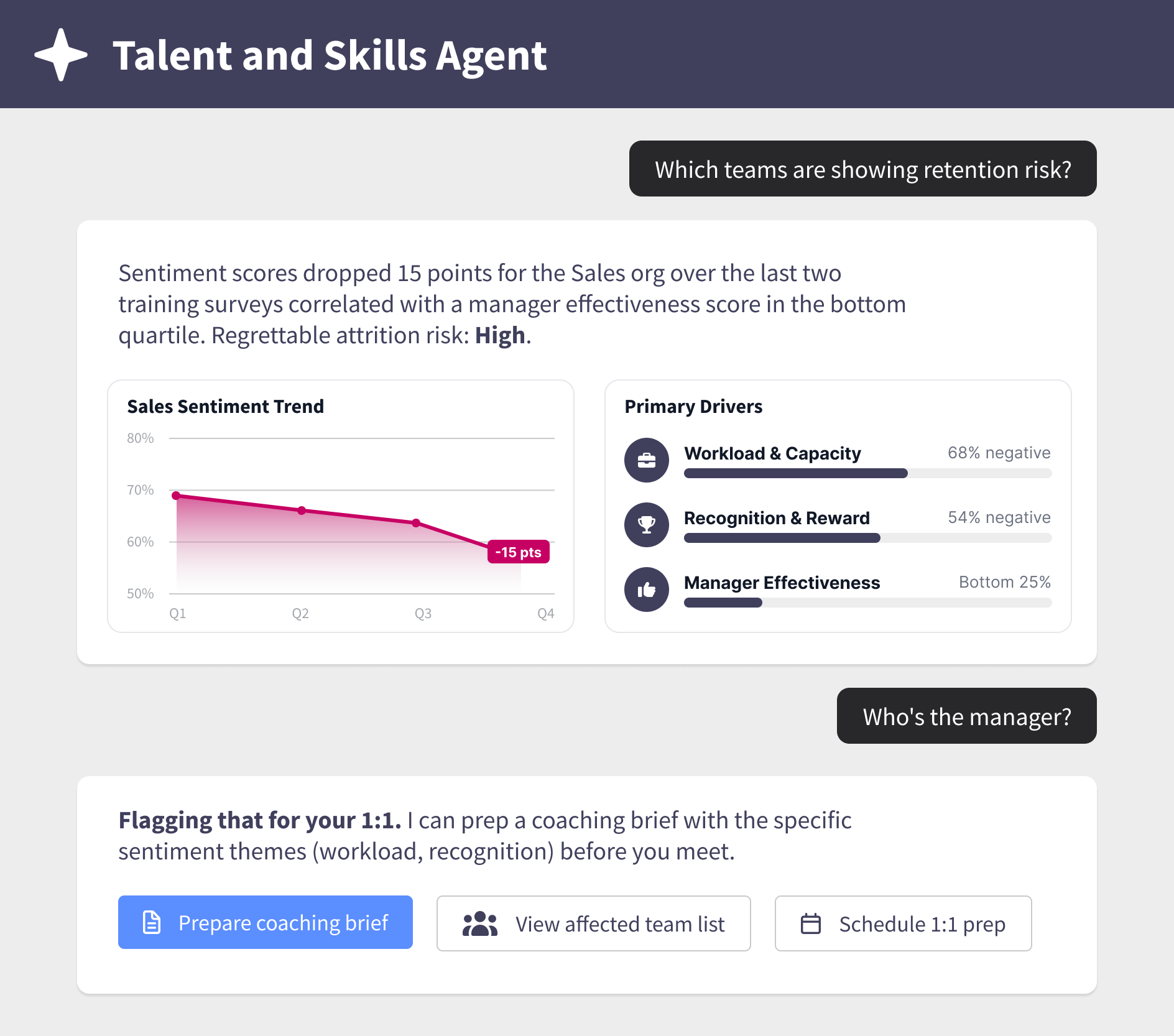
The data is useful.
But an HR leader still has to determine:
What should I do?
That’s the role AI agents can play.
An agent can help analyze patterns, identify the affected population, connect those patterns to relevant workplace skills, and help HR determine the next intervention.
For example, a Talent and Skills Agent might identify deteriorating manager-effectiveness signals as a major factor associated with a team’s declining sentiment.
Instead of ending with:
Manager effectiveness: ↓
the next question becomes:
Which managers need support, and what skills should we develop?
Perhaps they need help giving effective feedback.
Recognizing employees.
Managing workload.
Handling conflict.
Coaching employees.
Or creating psychological safety.
The organization can then deliver targeted learning and continue measuring what happens.
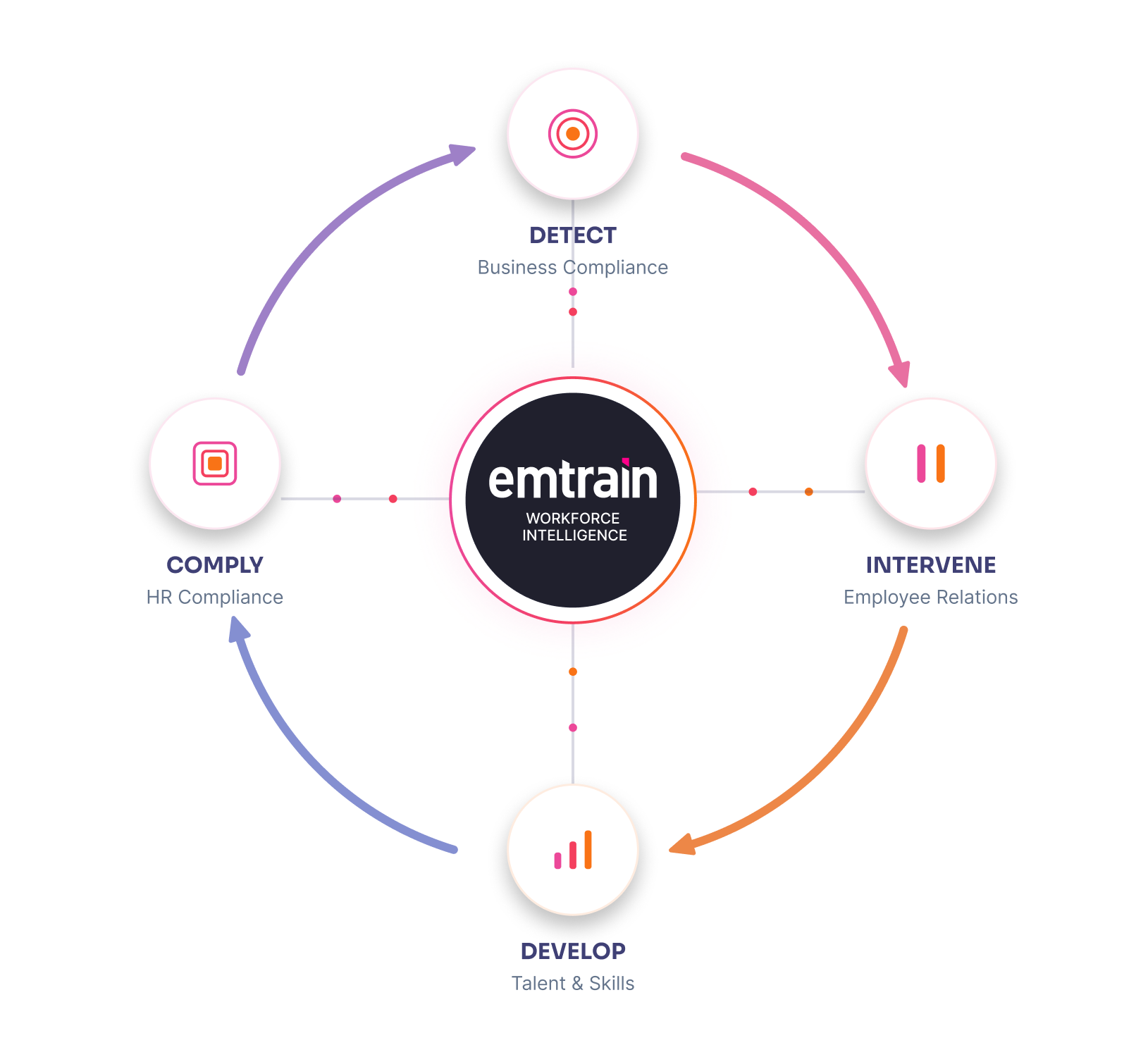
That’s how employee engagement becomes a cycle rather than a score.
Listen → Understand → Intervene → Learn → Measure again.
What Are the Drivers of Employee Engagement?
There isn’t one universal lever that creates engagement.
Research frequently points to factors such as meaningful work, development, supportive management, ongoing conversations, recognition, opportunities to contribute and the ability to use one’s strengths.
For HR leaders, it can be useful to translate those broad drivers into workplace behaviors.
|
Engagement driver |
What it can look like at work |
| Manager effectiveness | Managers coach, communicate expectations and respond constructively |
| Recognition | Employees feel their contributions are noticed |
| Employee voice | People feel comfortable sharing ideas and concerns |
| Development | Employees have opportunities to learn and build skills |
| Belonging | Employees feel respected, included and able to contribute |
| Psychological safety | Employees can question ideas and admit mistakes |
| Trust | Leaders follow through and employees believe speaking up matters |
| Team relationships | Employees can navigate feedback, disagreement and conflict productively |
These are precisely the kinds of behaviors organizations can reinforce through learning.
How Do You Measure Employee Engagement?
Employee engagement surveys remain one important tool.
But organizations can combine multiple sources of information to develop a richer understanding of what’s happening.
That might include:
- Engagement surveys for periodic measurement and benchmarking.
- Pulse surveys for more frequent snapshots.
- Employee sentiment questions embedded into workplace learning.
- Training responses that show how employees interpret realistic situations.
- Skills assessments that reveal confidence or knowledge gaps.
- Behavioral and HR indicators such as retention, absenteeism or internal mobility.
- Workforce intelligence that identifies patterns across teams, roles, tenure, locations and other organizational dimensions.
The goal isn’t to collect as much employee data as possible.
It’s to collect information that helps answer:
What is happening, why might it be happening, and what can we do about it?
How to Improve Employee Engagement
Organizations looking for ways to improve employee engagement often begin with initiatives.
- Recognition programs.
- Employee events.
- New benefits.
- Engagement committees.
Those approaches can have a place.
But sustainable employee engagement also requires addressing the everyday interactions that shape how people experience work.
- That means helping managers give better feedback.
- Teaching teams to navigate disagreement.
- Giving employees skills for speaking up.
- Helping people recognize exclusion.
- Teaching managers how to coach.
- Making expectations clear.
- Showing employees how to intervene when something isn’t right.
- And then listening to employees to determine whether those behaviors are actually changing.
This is why learning and employee engagement shouldn’t operate as separate HR programs.
Learning can be one of the mechanisms organizations use to improve engagement.
From Employee Engagement Surveys to Employee Engagement Conversations
The goal isn’t to replace employee engagement surveys. It’s to stop asking surveys to do everything. Surveys can tell you a great deal about your workforce. Training creates another opportunity.
Every realistic workplace scenario can start a conversation.
Every question can reveal a perception.
Every response can contribute a signal.
Every pattern can uncover a potential issue.
And every identified issue creates an opportunity to build a skill.
That’s a very different way to think about workplace training.
Instead of:
Assign → Complete → Record
think:
Create → Engage → Listen → Understand → Act → Improve
Employee engagement isn’t simply a number HR measures once or twice a year.
It’s something organizations create through thousands of workplace interactions.
The opportunity is to start learning from them.
Turn Training Into an Employee Engagement and Listening Tool
Create relevant learning experiences with AuthorAI, uncover workforce signals with Emtrain Intelligence, and turn insights into action with AI agents.