

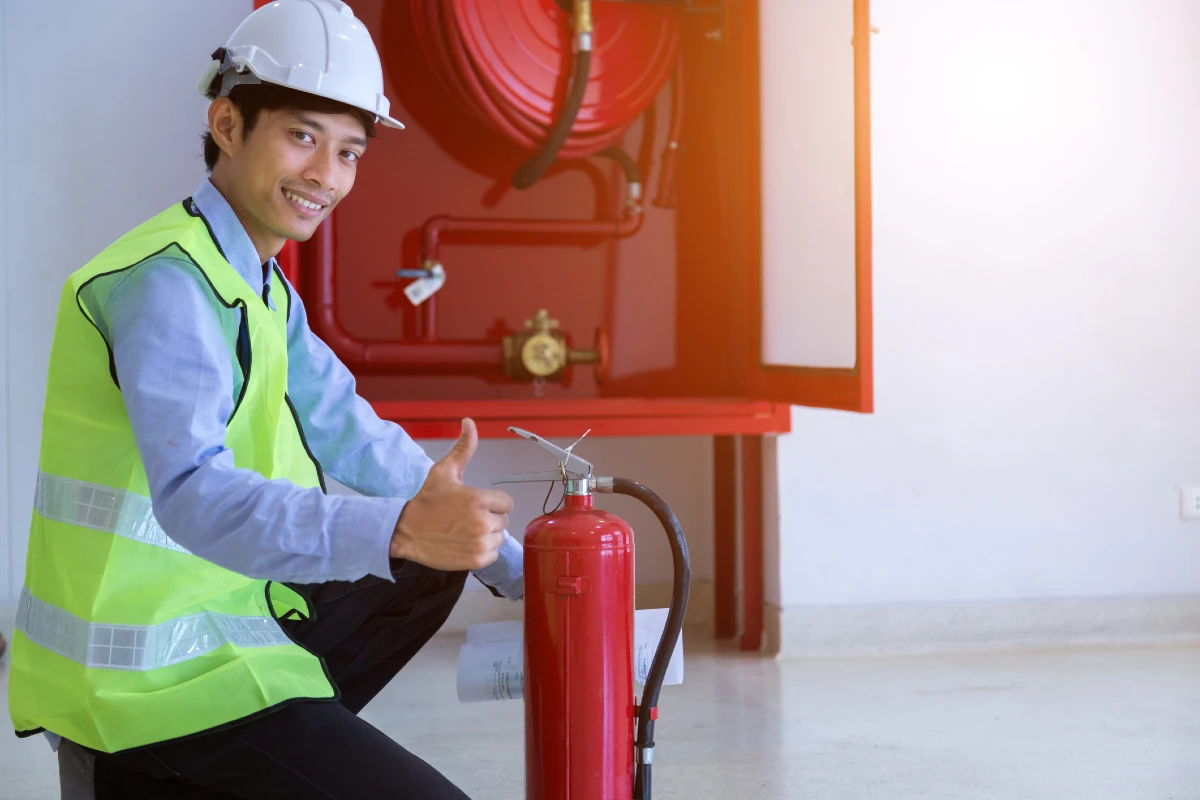


Preventing Fires and Responding Safely at Work
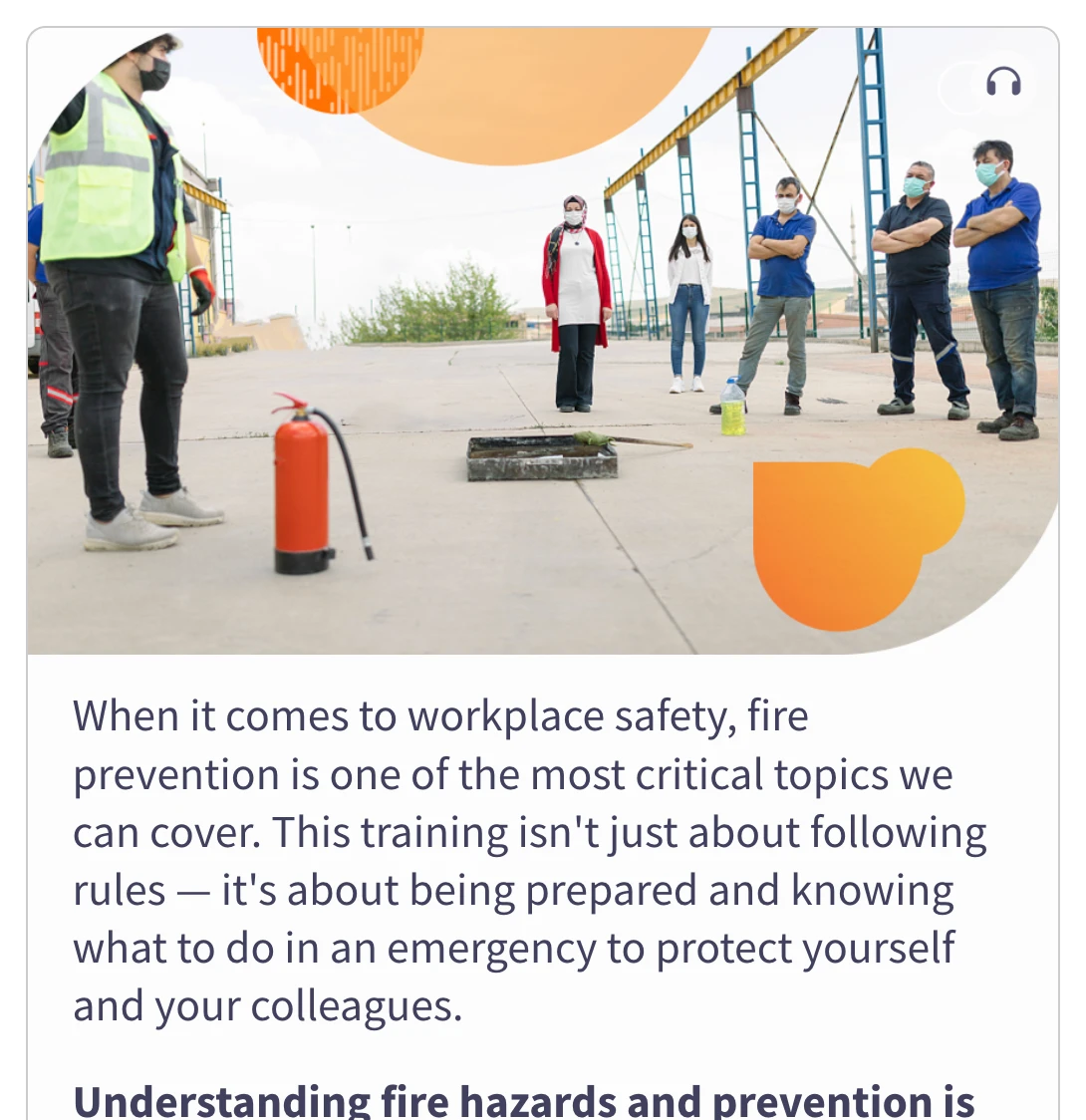
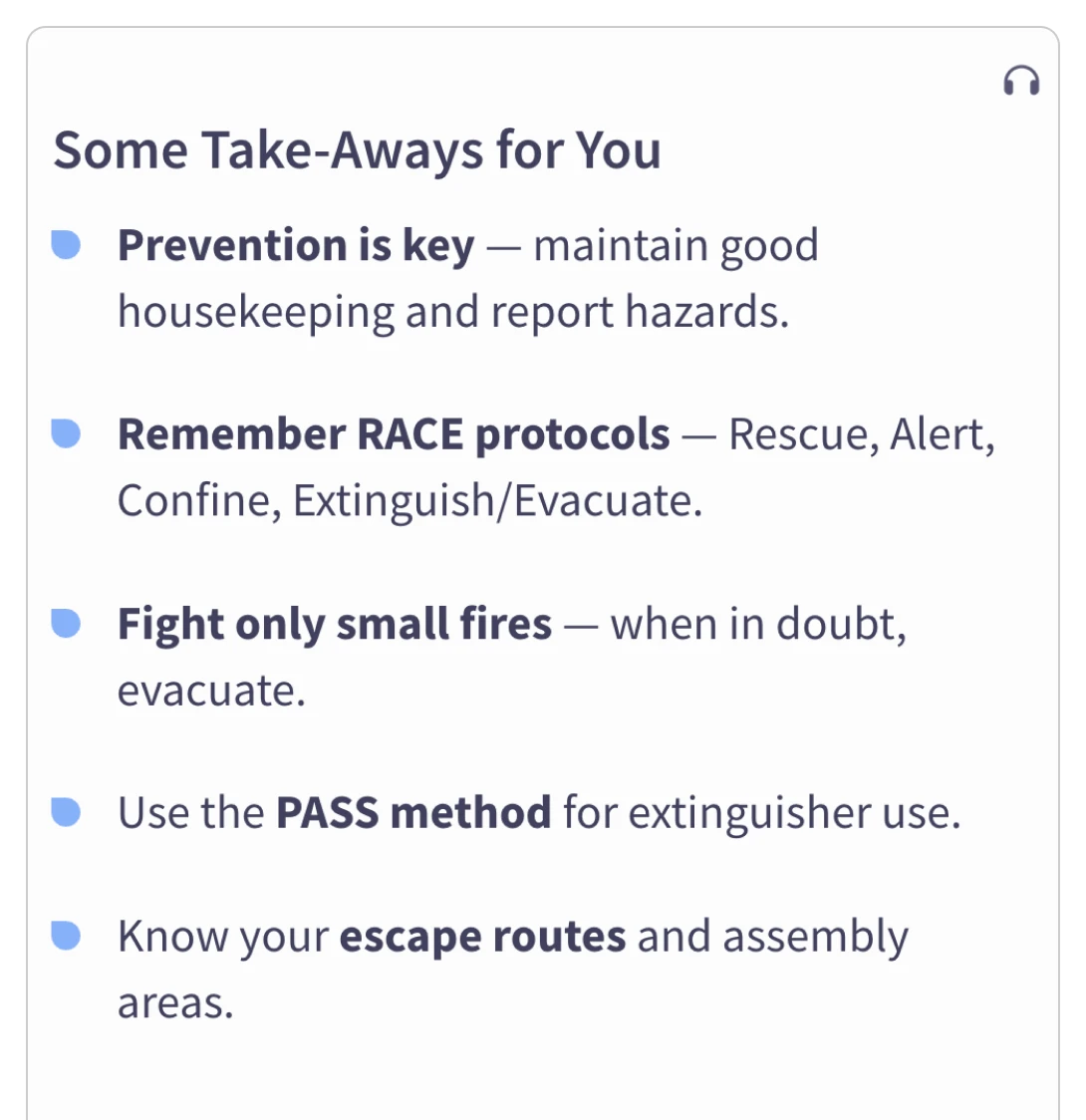
Fire safety is everyone’s responsibility, yet few employees think about it until an emergency occurs. A small mistake or overlooked hazard can quickly escalate, putting people and property at risk. This microlesson helps employees identify fire hazards, use extinguishers properly, and practice essential safety skills to respond calmly and effectively during a workplace fire.
Microlesson Description
This lesson provides essential knowledge on how to prevent fires and respond effectively in case of an emergency. Participants will learn about common fire hazards, the proper use of fire extinguishers, and the importance of creating and practicing a home or workplace evacuation plan.
Key Concepts
- How to be prepared in an fire emergency
- How to recognized and prevent common fire hazards in the workplace
- Crucial information to help you stay safe during a fire
- How to use the proper fire extinguisher
- Creating and Evacuation Plan
Microlesson Features
- Employee sentiment pulsing questions that provide leaders with insights into their workforce's core cultural competencies
- Emtrain's Expert Answers tool, enabling employeees to submit anonymous questions about sensitive issues.
- Rich, contemporary video scences illustrating key concepts through realistic scenarios
- A data driven, skill-based approach to eLearning that establishes a shared language for employees.
Related Resources
Related Trainings
Frequently Asked Questions
Below are answers to common questions that employees and managers have about this topic. These FAQs provide a preview of what you’ll learn in this microlesson and why it matters.