




Ease the Transition Back to Work With Clear Communication, Realistic Timelines, and Supportive Expectations
Returning from leave can feel overwhelming as routines, workloads, and team dynamics may have shifted. This microlesson helps learners navigate the transition with confidence by understanding typical adjustment timelines, setting healthy boundaries, and using structured communication to ensure a smooth and supportive reintegration.
Microlesson Description
Coming back to work after parental leave, medical recovery, or extended personal time away is a major transition—one that requires clarity, patience, and intentional support from everyone involved. Returning to Work After Leave gives learners a practical roadmap for managing this period with professionalism and empathy. Employees discover what a normal reintegration timeline looks like, how to communicate openly about workload and boundaries, and how to rebuild confidence without rushing the process. Managers learn how to create structured return-to-work plans, schedule check-ins, set clear expectations, and actively manage workloads to avoid overwhelm. This microlesson supports both the returning employee and the team—reinforcing empathy, clarity, and shared responsibility to create a stable, respectful transition back into the workplace.Key Concepts
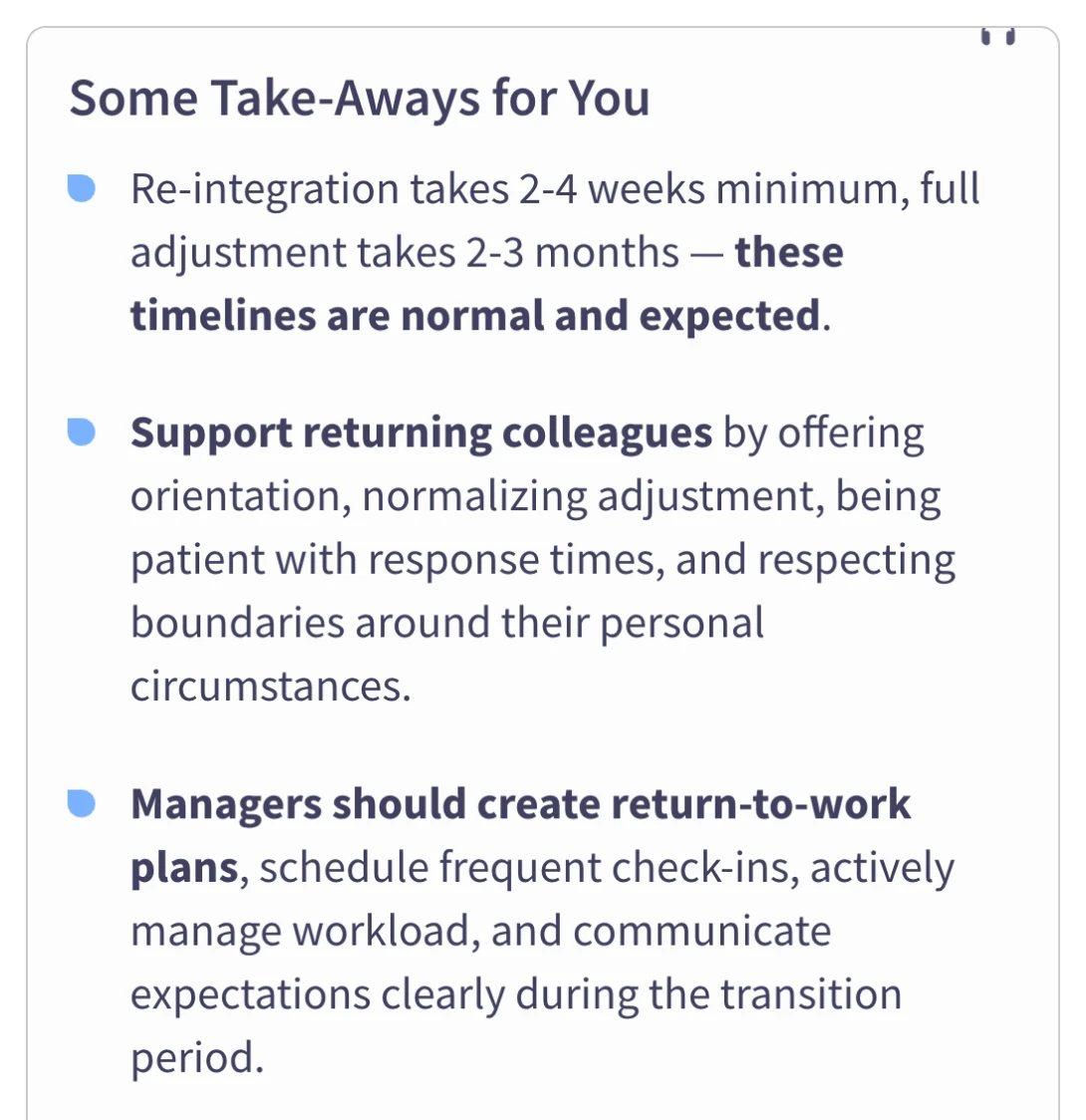
- Reintegration Takes Time: Most employees need 2–4 weeks to regain rhythm and 2–3 months for full capacity—these timelines are normal, not a performance issue.
- Support Returning Colleagues: Help by normalizing adjustment, being patient with response times, and respecting boundaries during reintegration.
- Managers Must Lead the Transition: Clear return-to-work plans, workload adjustments, and frequent check-ins ensure smoother reentry and reduce stress.
- Assume Good Intent: Returning employees are rebuilding capacity—flexibility and clarification questions reflect adjustment, not disengagement.
- Returners Should Pace Themselves: Asking questions, setting boundaries, and easing back into routines is healthy, practical self-management.
Microlesson Features
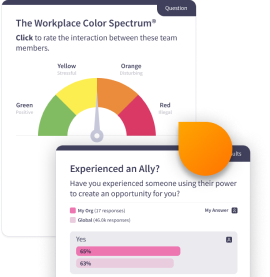
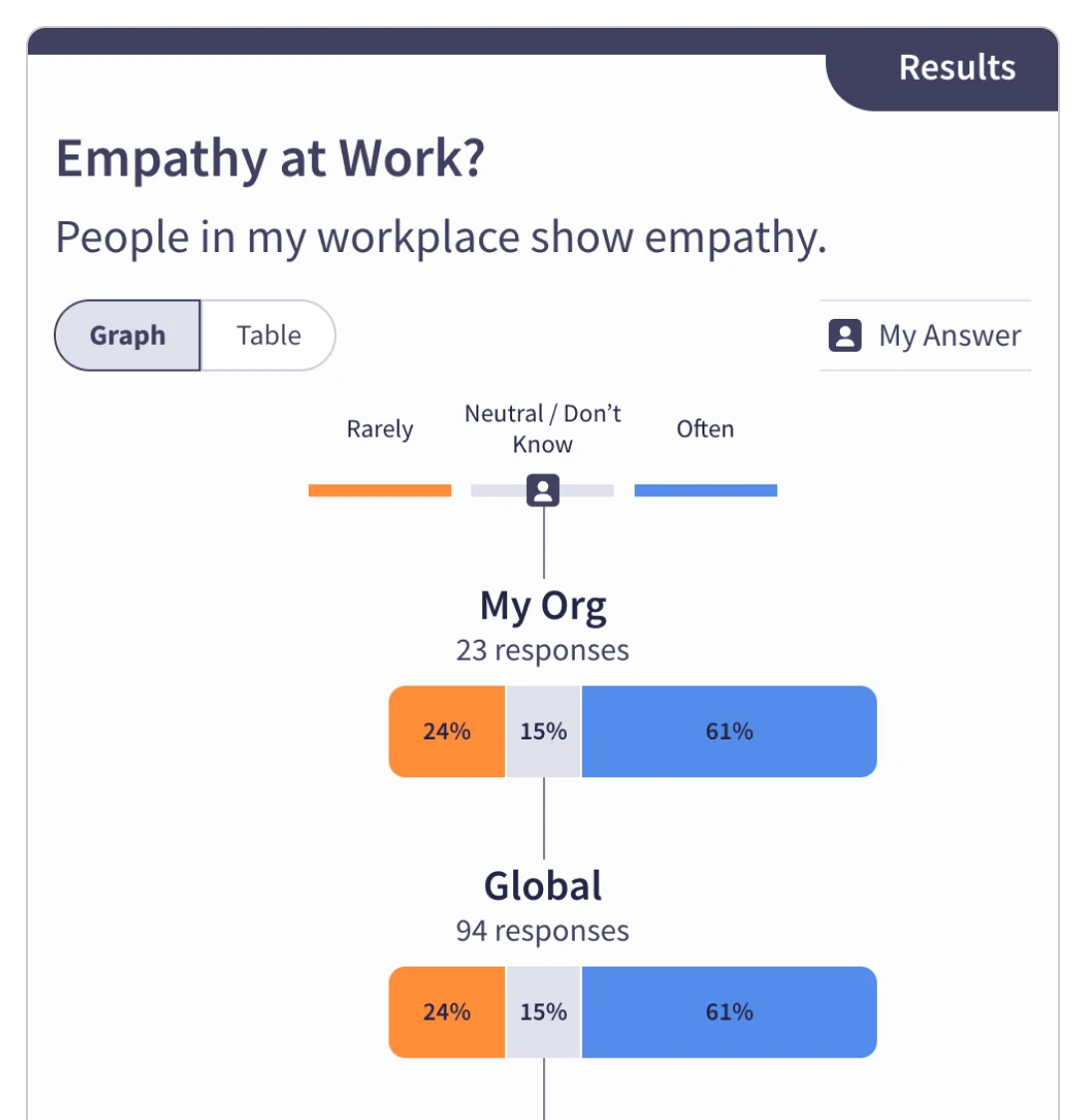
- Employee sentiment pulsing questions that provide leaders with insights into their workforce's core cultural competencies
- Emtrain's Expert Answers tool, enabling employeees to submit anonymous questions about sensitive issues.
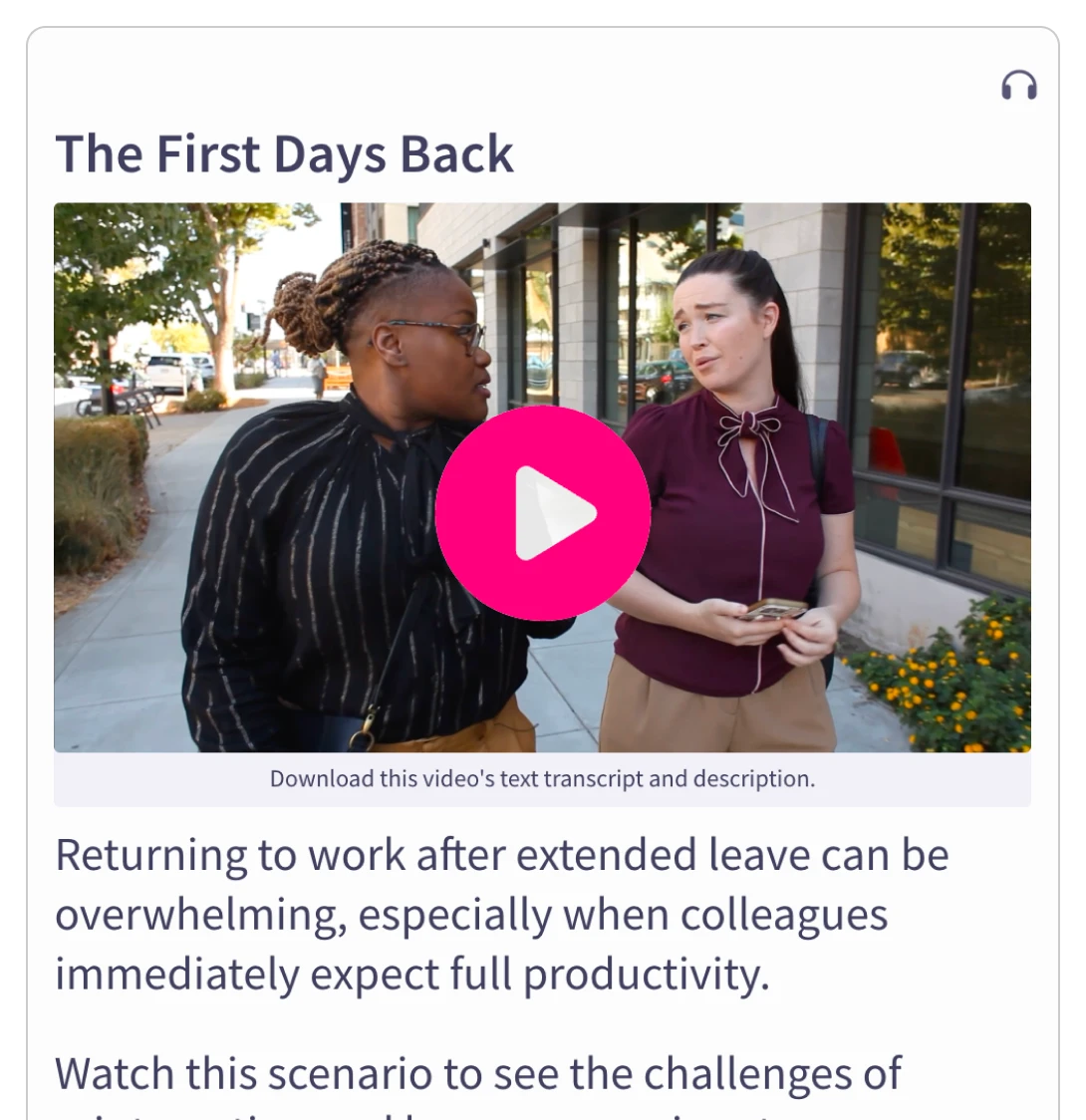
- Rich, contemporary video scences illustrating key concepts through realistic scenarios
- A data driven, skill-based approach to eLearning that establishes a shared language for employees.
Related Resources
Related Trainings
Frequently Asked Questions
Below are answers to common questions that employees and managers have about this topic. These FAQs provide a preview of what you’ll learn in this microlesson and why it matters.
Q
Why is returning to work after leave often challenging?
Routines, workloads, and team dynamics may have changed during your absence, and your capacity may not return immediately—making reintegration a period that requires patience and realistic expectations.
Q
How long does it typically take to readjust after returning from leave?
Most employees need 2–4 weeks to regain their rhythm and 2–3 months to fully rebuild capacity—this timeline is normal and not a sign of underperformance.
Q
What can coworkers do to support a returning colleague?
Peers can offer orientation, be patient with response times, normalize adjustment, and respect boundaries around personal circumstances and workload pacing.
Q
What should managers prioritize during an employee’s reintegration?
Managers should create structured return-to-work plans, schedule frequent check-ins, clearly communicate expectations, and actively manage workloads to prevent overwhelm.
Q
How should I communicate my needs when returning from leave?
Be honest about your capacity, ask clarifying questions, and set reasonable boundaries—these behaviors reflect healthy adjustment, not weakness.