Today’s workplace includes four generations working side by side—each bringing different communication styles, expectations, and perspectives.
While this diversity creates powerful opportunities for innovation and collaboration, it can also lead to misunderstandings around work-life balance, communication preferences, and career expectations.
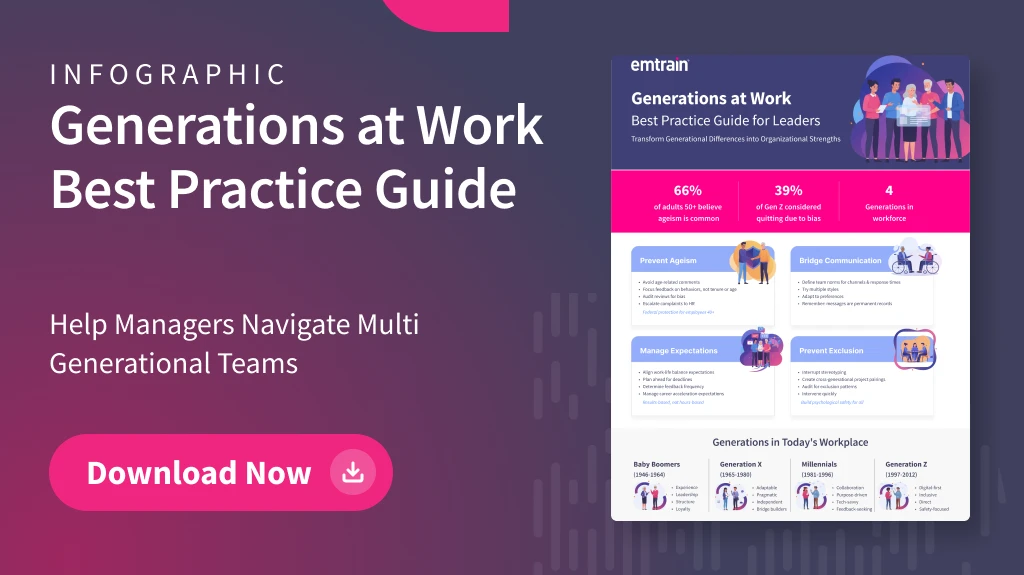
The Generations at Work infographic provides a quick visual guide to help managers understand generational dynamics and lead multi-generational teams more effectively.
What You’ll Learn in This Infographic
This visual guide highlights practical strategies leaders can use to strengthen collaboration across generations, including how to:
- Prevent age-related bias in everyday workplace interactions
- Bridge communication style differences across teams
- Align expectations around feedback, deadlines, and work-life balance
- Prevent generational stereotyping and workplace exclusion
It also outlines the strengths each generation brings to the workplace—from the experience and leadership of Baby Boomers to the digital-first perspectives of Generation Z.
Why Generational Leadership Matters
Generational differences often show up in subtle ways, such as:
- Communication preferences (chat vs. email vs. meetings)
- Expectations for feedback and manager interaction
- Work-life balance and flexibility
- Career progression timelines
Without clear leadership guidance, these differences can create tension or reinforce stereotypes.
Research highlighted in the infographic shows the scale of the issue:
- 66% of adults age 50+ believe ageism is common in the workplace
- 39% of Gen Z employees have considered quitting due to bias
Organizations that proactively address generational dynamics can reduce conflict and build stronger collaboration.
Key Leadership Practices Highlighted
The infographic outlines four key leadership priorities for managing multigenerational teams:
1. Prevent Ageism
Focus feedback on behaviors and outcomes rather than age or tenure, and address age-related comments or stereotypes early.
2. Bridge Communication Styles
Define team communication norms, adapt to different preferences, and ensure digital communication remains professional and clear.
3. Manage Expectations
Align expectations around deadlines, feedback frequency, and career progression to avoid generational misunderstandings.
4. Prevent Workplace Exclusion
Interrupt stereotyping and create cross-generational collaboration opportunities that strengthen team relationships.
When managers focus on these areas, generational diversity becomes a strength rather than a source of conflict.
Who Should Download This Resource
This infographic is designed for:
- People managers and supervisors
- HR leaders and HR business partners
- Organizational development teams
- Workplace culture and DEI leaders
- Organizations managing multigenerational teams
It serves as a quick reference guide for leaders who want to strengthen collaboration and prevent generational conflict.
Download the Generations at Work Infographic
Complete the form to access the Generations at Work Best Practice Infographic and equip your managers with practical strategies to lead across generations. Learn more about the full lesson on Generational Conflict in our course Preventing Workplace Harassment Training.