Emtrain measures workplace culture by embedding employee sentiment questions into scenario-based training. Emtrain Intelligence aggregates, scores, and benchmarks those responses to help leaders understand employee experiences, identify emerging risks, and take targeted action.
That makes Emtrain a culture risk analytics platform with training built in. Employees build skills while giving HR and Compliance leaders visibility into how people work together.
Because even with strong training completion rates, important questions remain: Do employees feel comfortable disagreeing with their managers? Are performance decisions fair? Does speaking up feel safe?
Those everyday experiences are where culture measurement begins.
What is the psychology behind Emtrain’s approach?
Workplace culture takes shape through repeated interactions: who gets heard, how managers handle mistakes, and what happens when someone challenges a decision.
Consider a manager who humiliates an employee while discussing a missed deadline. The interaction raises questions about power, trust, and the behavior a team accepts. An employee might recognize the situation long before they describe their workplace as having a culture problem.
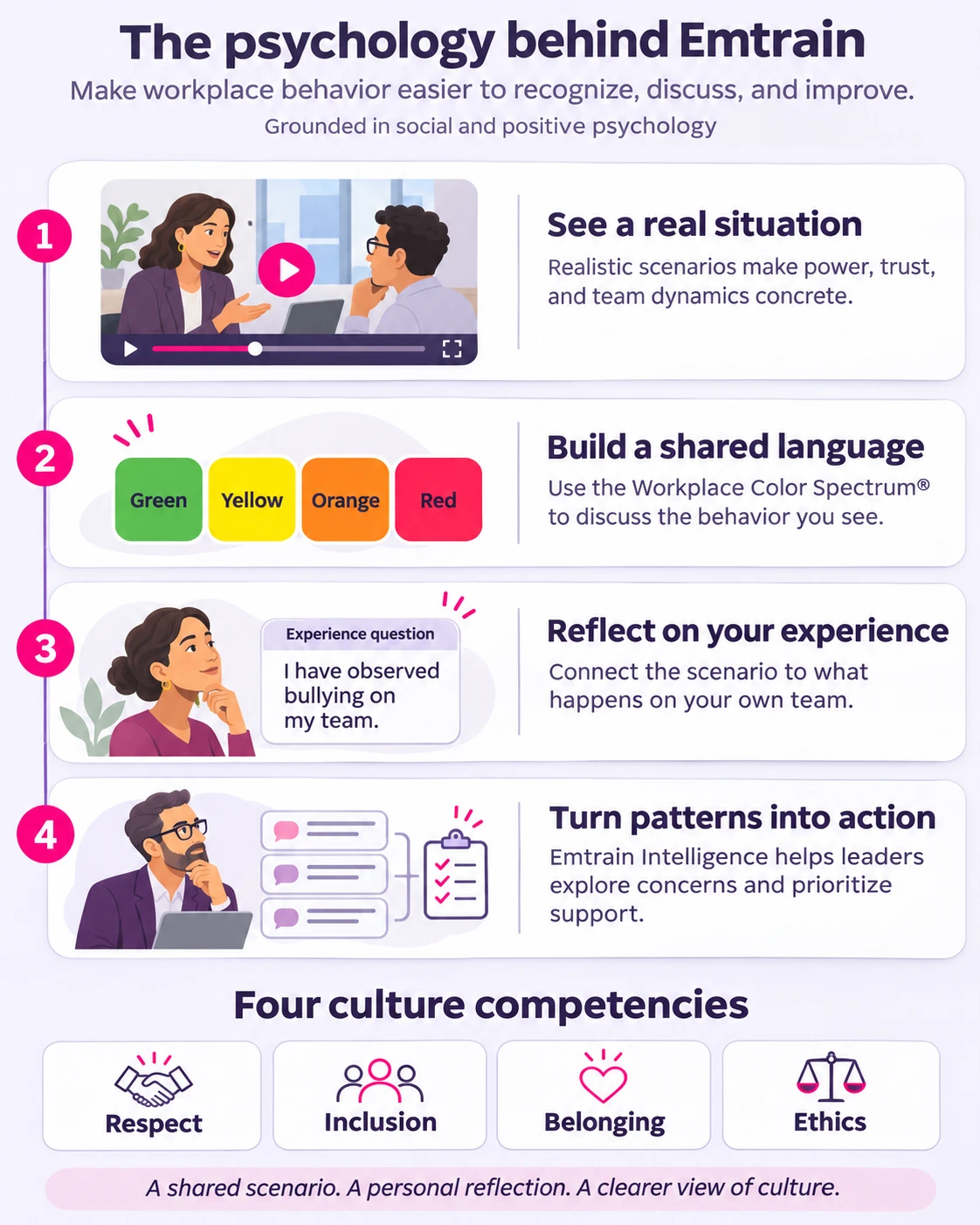
Emtrain’s learning architecture draws on social and positive psychology, including work led by organizational psychologist Dr. Leann Kang Pereira. Our Culture Skills Framework connects workplace dynamics to four competencies: respect, inclusion, belonging, and ethics.
Realistic scenarios give employees a concrete reference point for reflection. They can consider what happened, how people responded, and whether similar behavior occurs on their team. This connects learning to experiences that leaders can explore and address.
Emtrain’s Workplace Color Spectrum® gives employees a shared language for discussing behavior. It helps move the conversation from an abstract label like “culture” to a specific interaction people can recognize and discuss.
How can training become a workplace culture measurement tool?
Training creates an opportunity to listen during an activity already built into your employee learning program.
For example, our workplace bullying video scenario shows a manager responding to an employee with demeaning comments. Employees can evaluate the behavior and reflect on their own workplace.
Recognizing inappropriate behavior and reporting personal experience answer different questions. One helps employees practice identifying conduct; the other helps leaders understand whether employees encounter it.
As employees complete assigned courses and follow-up lessons, their responses create additional opportunities to assess culture. The frequency of those insights follows your training and listening schedule.
What topics does Emtrain measure for the employee experience?
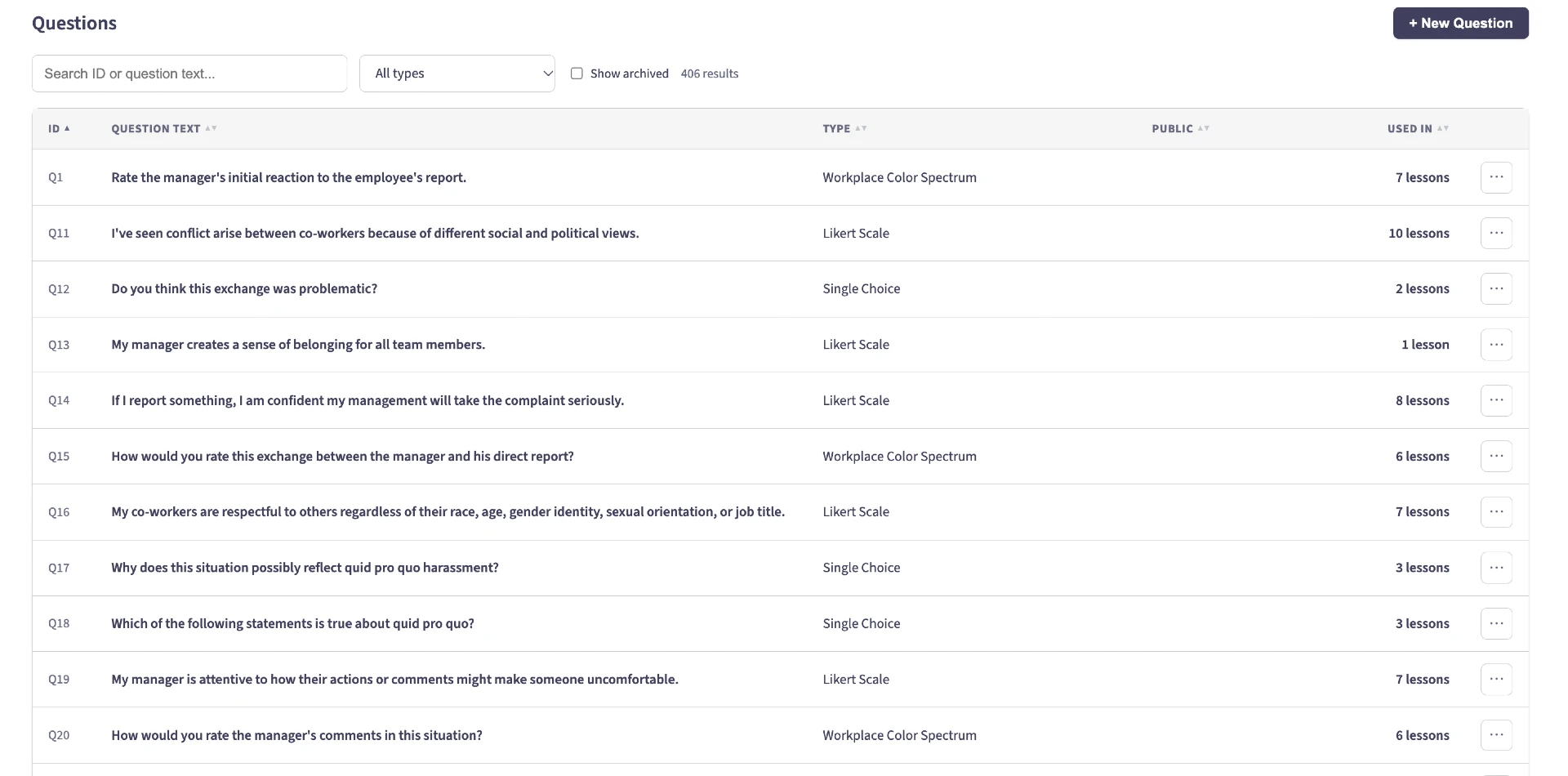
Our questions explore specific behaviors, expectations, and relationships. Examples include:
- “I have observed bullying on my team.”
- “It’s okay to tell my supervisor or manager that I disagree with them.”
- “People at my organization take the conflict of interest guidelines seriously.”
For a list of additional questions we score explore:
HR & People Risk covers harassment and discrimination; hiring, performance management, and terminations; wage and hour; workplace safety; and HR reporting and retaliation.
Business Compliance Risk covers code of conduct; data privacy and information security; bribery and corruption; reporting and whistleblowing; and antitrust and fair competition.
The questions available to your organization depend on your licensed training and analytics package. Together, they help connect employee experience with practical questions about leadership, team dynamics, and compliance.
How does Emtrain score workplace culture?
Emtrain Intelligence organizes employee responses into results leaders can explore, including healthy and unhealthy response patterns, priority issues, and groups showing signs of risk.
Culture risk scoring helps leaders decide where further investigation or support is needed.
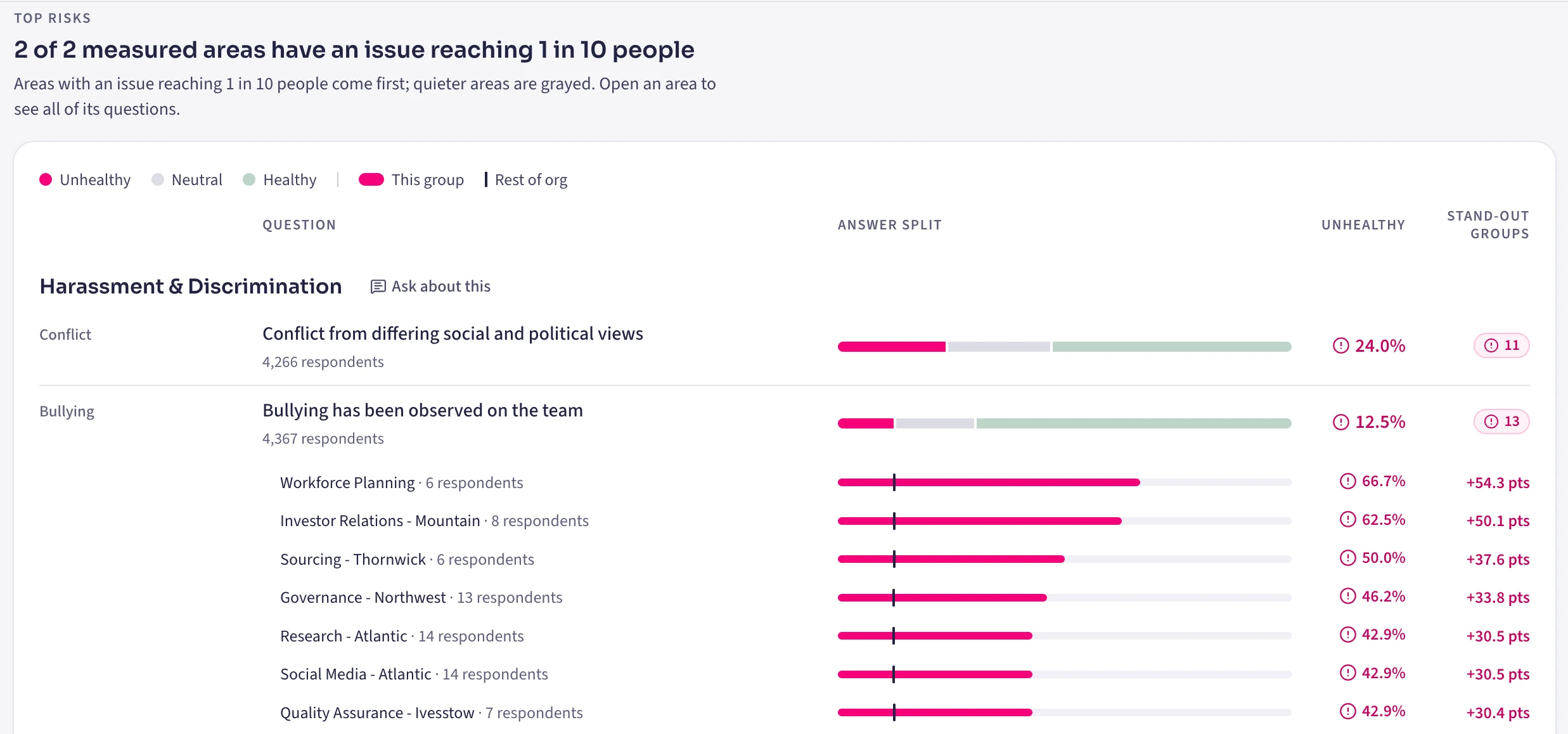
A healthy-response percentage reflects answers aligned with a positive workplace experience. The direction depends on the question: agreement with feeling safe speaking up is healthy; disagreement with observing bullying is healthy.
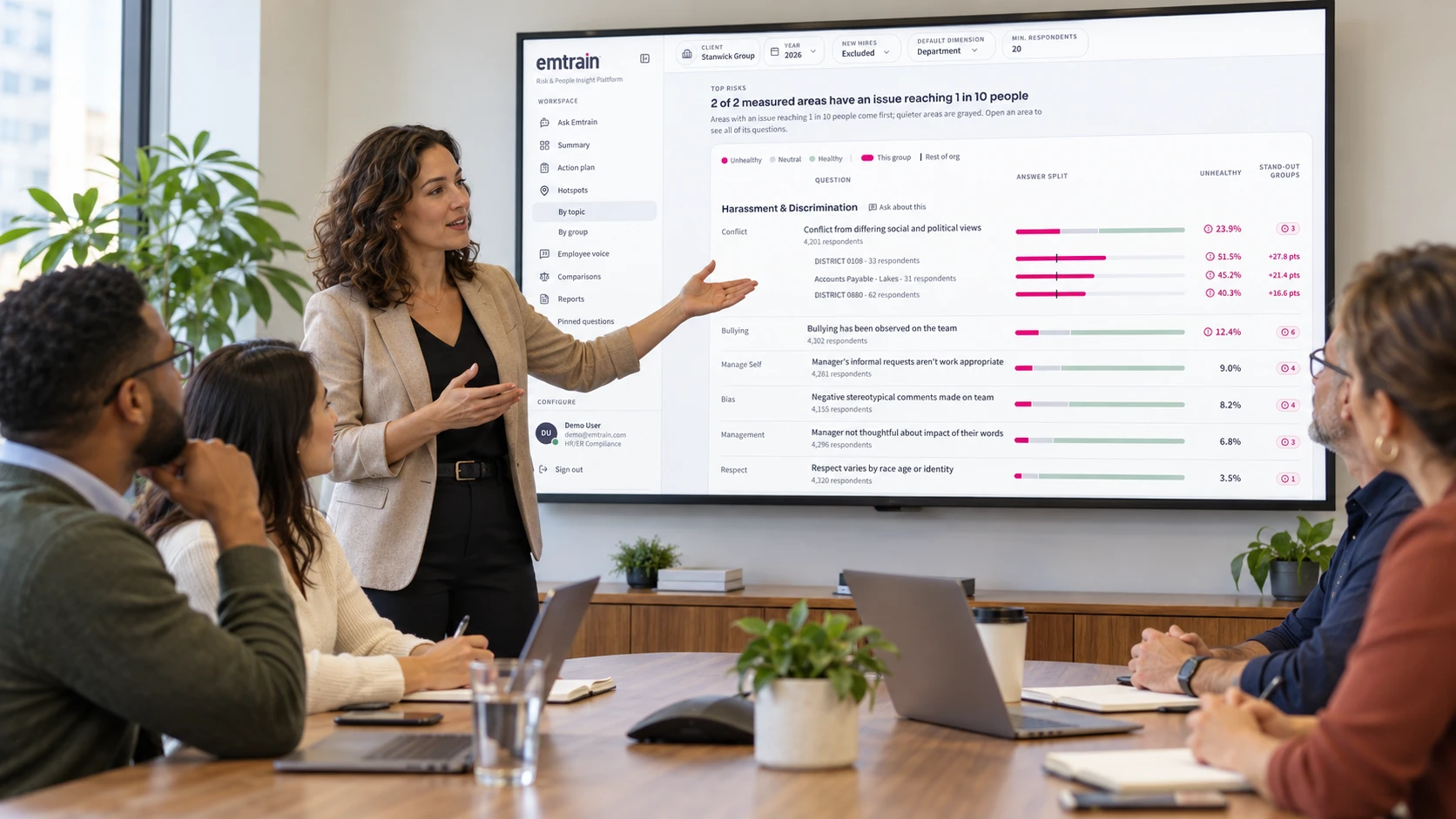
In the example below, 12.5% of respondents gave answers classified as unhealthy for the bullying question. Expanding that issue reveals groups with higher rates of unhealthy responses, helping HR and Compliance leaders identify where further investigation, coaching, or support may be needed.
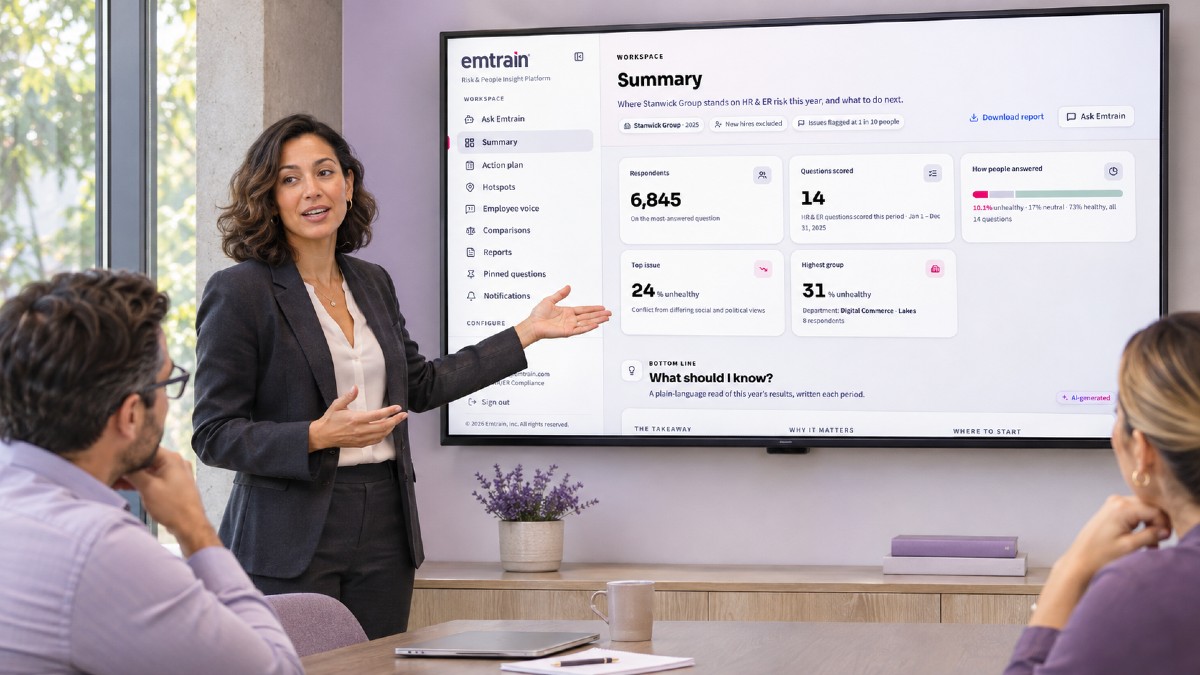
The Summary Dashboard brings key findings together. Employee Voice adds context through themes from written feedback and screened, unattributed examples, helping leaders understand the experiences behind the numbers.
How do you measure team culture and locate leadership concerns?
A company-wide average can conceal very different team experiences. Employees in one location may feel comfortable raising concerns while another group reports difficulty challenging decisions.
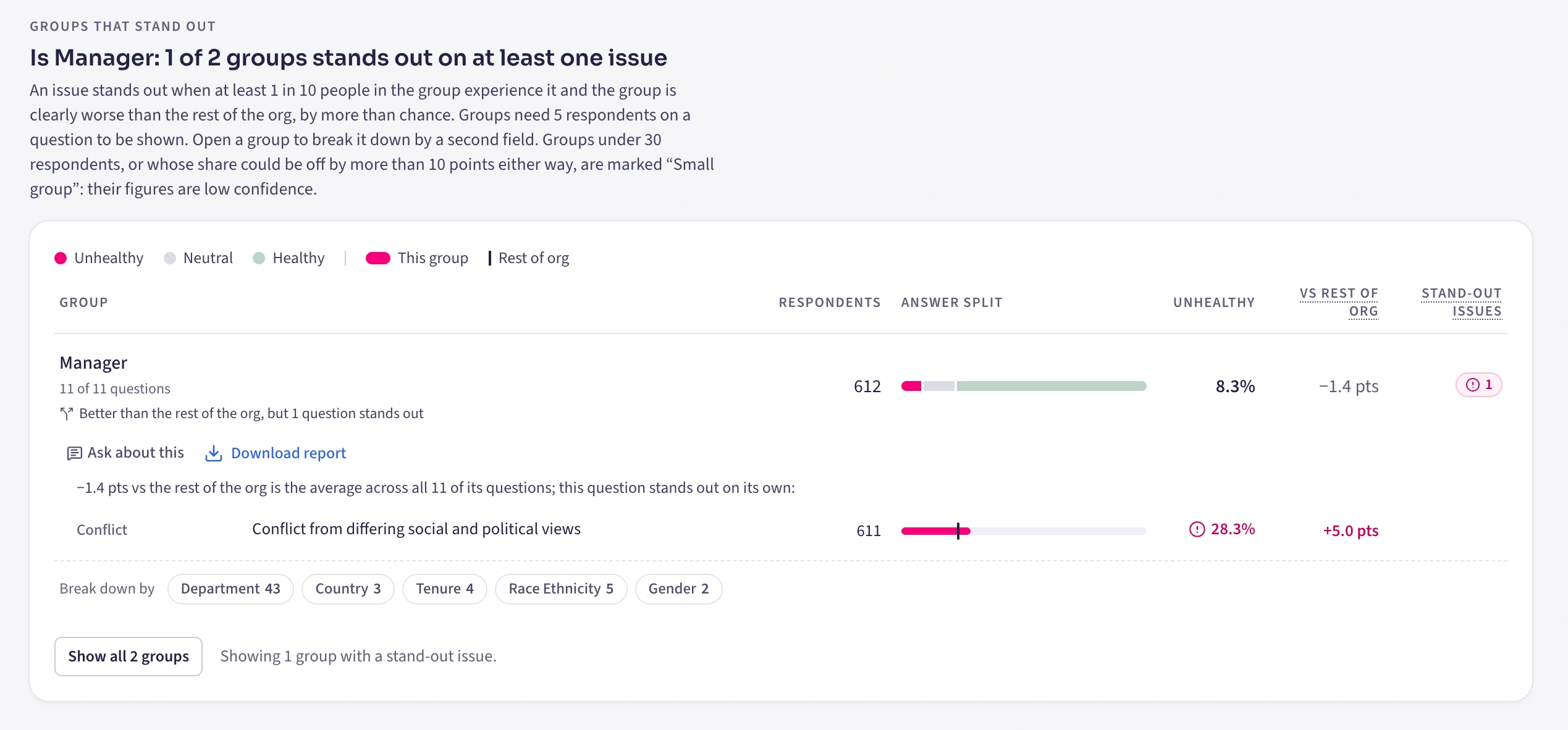
Hotspots help you explore where concerning patterns are concentrated. Depending on the employee data available, you can examine results by department, location, tenure, job group, and other dimensions.
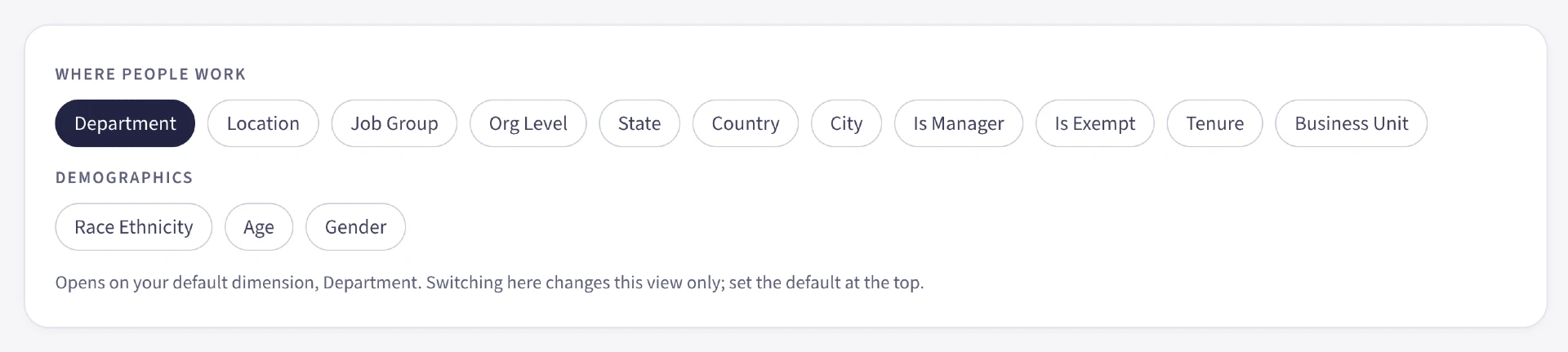
Consider the reporting period, respondent counts, and organizational context as you investigate. Group reporting uses minimum respondent requirements to help protect confidentiality.
These patterns give leaders a place to begin a conversation and determine what support a team needs.
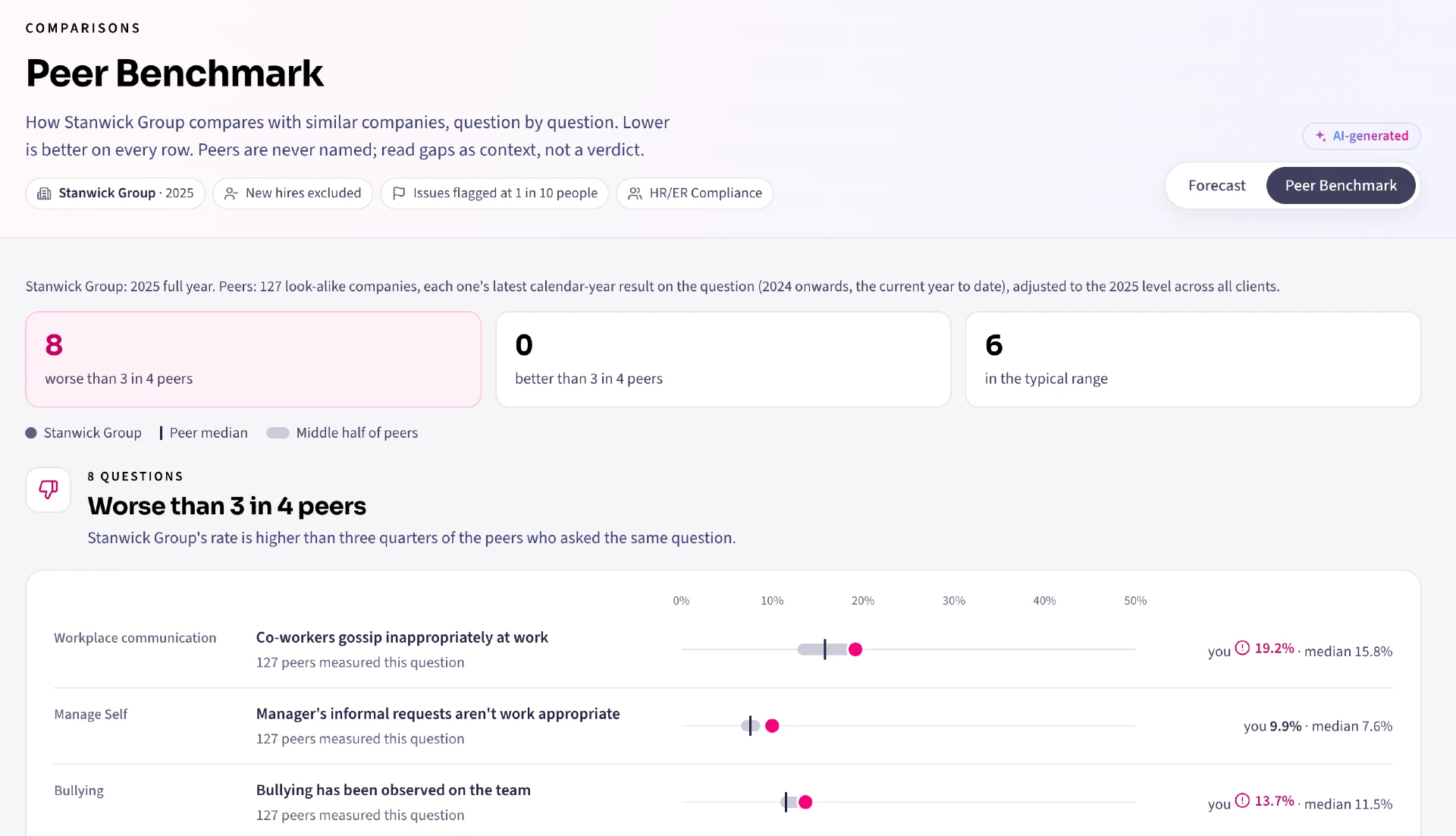
How does your workplace culture compare with peers?
A result becomes more useful when you can put it in context. Is a concern widespread across similar organizations, or does your workplace stand out?
Emtrain Intelligence provides anonymous peer comparisons for individual questions. Review the comparison group and timeframe alongside your own results.
A benchmark helps you prioritize investigation. Even an above-average result can leave room to improve employees’ experiences, particularly when a concern affects a specific group.
What happens after you identify a culture risk?
Imagine a department where employees report difficulty disagreeing with managers. That finding suggests a question to investigate: what happens when someone offers a different perspective?
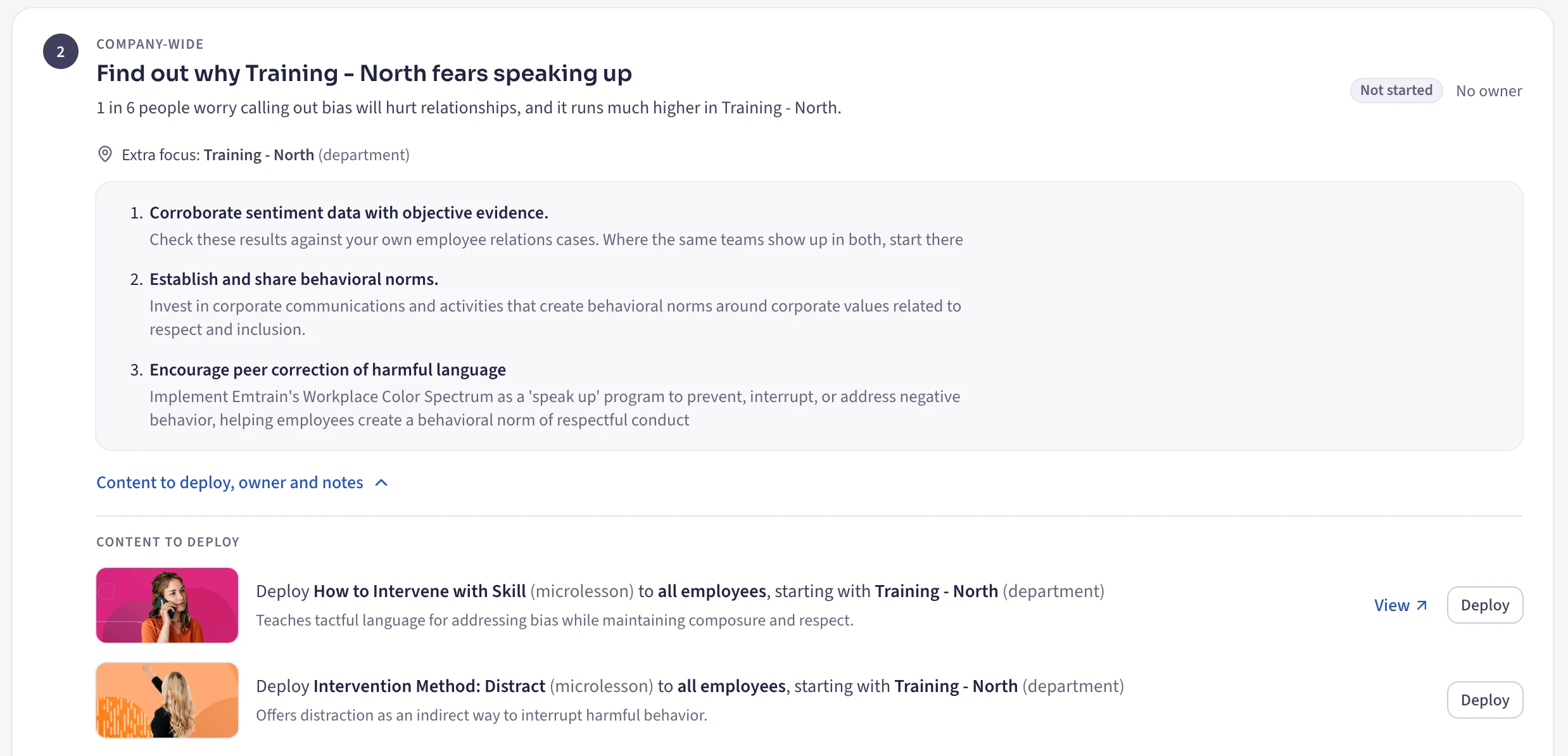
You might explore the results with Ask Emtrain AI, review employee feedback, and speak with leaders about how they invite input. Recommended actions can help translate findings into a plan, with owners, due dates, and progress tracking.
The response could include manager coaching, clearer expectations for team discussions, and a relevant microlesson. If your team needs custom reinforcement, you can send follow-up questions to AuthorAI to build a targeted lesson, then review and deploy it.
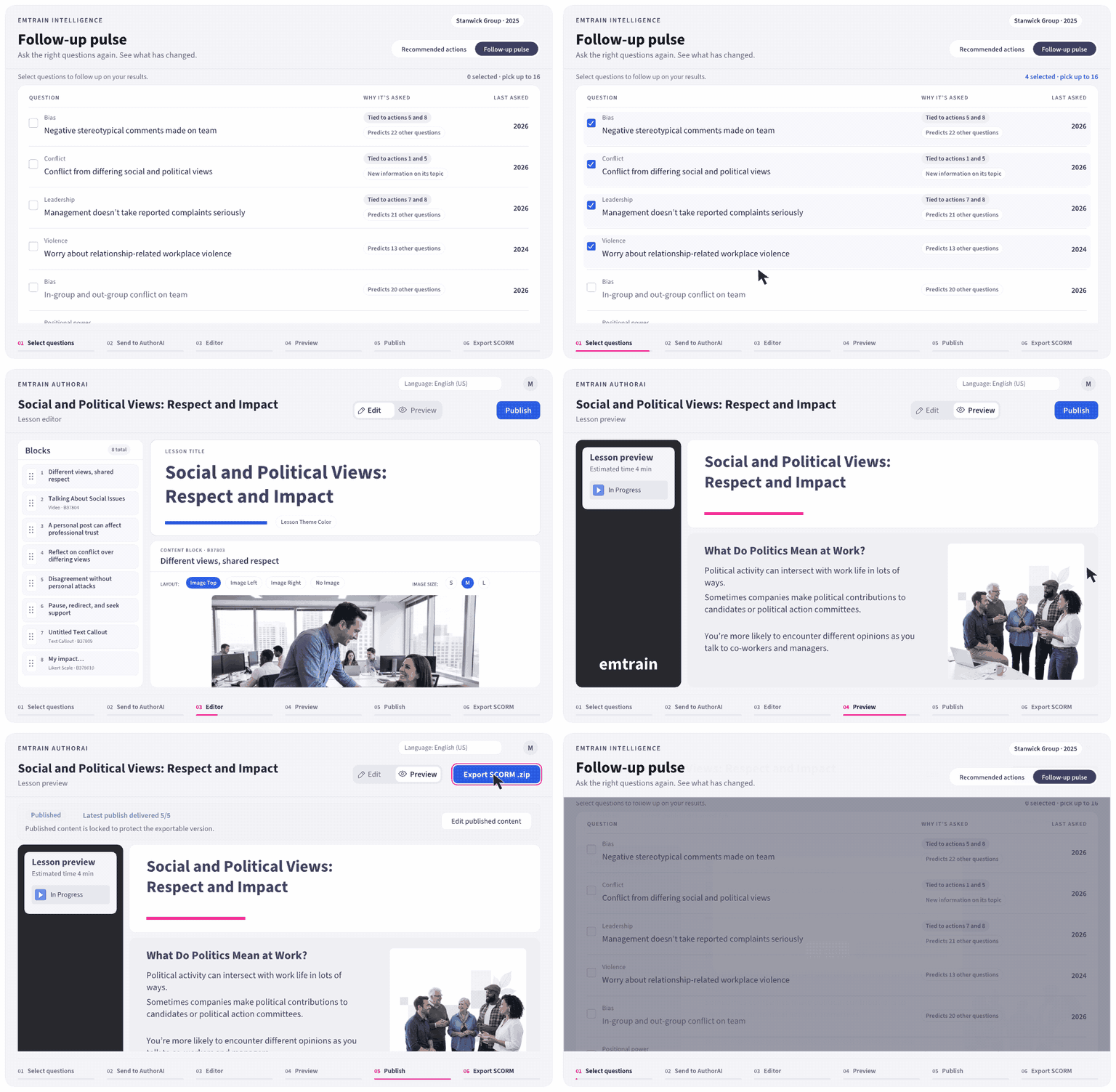
This connects measurement with a specific behavior to strengthen. A policy or process problem may also require changes beyond training.
How is this different from an engagement survey or LMS?
An LMS helps administer learning and track completion. Employee engagement surveys provide another valuable way to understand employee feedback.
Emtrain connects scenario-based learning, employee experience questions, culture risk analytics, and targeted interventions. You can explore the workplace conditions employees describe and connect those findings to skills and actions that address them.
It can complement your existing LMS, surveys, and broader employee listening program.
How does Emtrain compare with EasyLlama, Ethena, Traliant, NAVEX, and Culture Amp?
When comparing workplace culture measurement tools, look at the questions behind the dashboard. Training progress, employee sentiment, and reported incidents each provide a different view of your workplace.
Several providers collect feedback within training. Ethena offers sentiment pulse questions, Traliant compares responses before and after enabled courses but only offer 5 questions, and EasyLlama includes learner self-assessments and course survey slides. NAVEX provides broader compliance analytics, including training performance, incident trends, and whistleblowing benchmarks.
Culture Amp approaches measurement through employee surveys, engagement and factor scores, driver analysis, and external benchmarks. Its action plans help teams turn survey findings into improvements.
Emtrain brings culture measurement into the training employees already take, using realistic workplace scenarios and embedded experience questions to connect employee feedback with specific behaviors, potential compliance risks, and targeted skill development.
| Measurement dimension | Emtrain | EasyLlama | Ethena | Traliant | NAVEX | Culture Amp |
|---|---|---|---|---|---|---|
| Primary collection approach | Scenario-based employee sentiment questions | Knowledge checks | In-training pulse questions | Pre/post course questions | Training and compliance program data | Employee surveys |
| Scoring and analysis focus | Culture skills and healthy/unhealthy responses | Training engagement and self-assessments | Pulse responses and learning measures | Changes in pre/post responses | Training and incident metrics | Engagement and factor scores |
| External benchmark focus | Employee experience questions | Unconfirmed | Unconfirmed | Unconfirmed | Whistleblowing and incidents | Employee survey questions |
| Forward-looking insights | Unhealthy-response forecasts | Unconfirmed | Unconfirmed | Unconfirmed | Broader risk trends | Turnover risk predictions (early access) |
Culture Amp’s question-level benchmarks and turnover-risk predictions address different measurement questions. Turnover predictions estimate whether employees in a group may leave; Emtrain’s response forecasts estimate where specific workplace experience results may be heading.
Why Emtrain connects all four
Employee feedback becomes easier to act on when you can understand what it means, how it compares, and where results may be heading. Emtrain connects employee experience questions, culture and risk scoring, peer benchmarks, and forecasting to help HR and Compliance leaders turn what employees share into a focused plan.
Consider a training scenario where a manager dismisses an employee’s concern. Employees learn to recognize the behavior and reflect on whether they feel comfortable speaking up on their own team. Emtrain Intelligence organizes those responses into measurable patterns, shows where concerns are concentrated, and provides peer comparisons for context. Forecasting adds an outlook on whether results may improve, worsen, or hold steady.
Together, these insights help leaders prioritize where to investigate, provide coaching, or reinforce specific skills. Relevant microlessons and custom lessons created with AuthorAI help teams respond to the issues employees describe. Follow-up questions then help leaders assess whether employee experiences are changing.
Training creates an opportunity to listen, and what employees share helps shape the learning and leadership actions that follow.
Can culture analytics help reduce employee relations risk?
Culture analytics can surface concerns that deserve attention before they develop into larger problems. Repeated reports of bullying, unfair treatment, or reluctance to speak up give HR and Compliance leaders a reason to investigate.
The value comes from what happens next: understanding the situation, addressing harmful behavior, supporting employees, and following through. Employee sentiment and AI-generated insights inform that work; professional judgment remains essential.
How do you know workplace culture is improving?
Return to the issue you set out to address. After coaching or a targeted lesson, do employees report healthier interactions, better conflict resolution, or greater confidence speaking up?
Follow-up questions, pinned questions, and comparisons over time help you assess whether employee experiences are changing.
Forecasting helps you look ahead. Emtrain Intelligence estimates which results are likely to improve, worsen, or hold steady next period, with projected ranges showing uncertainty. Leaders can use that outlook to prioritize where to investigate, reinforce progress, or provide additional support.
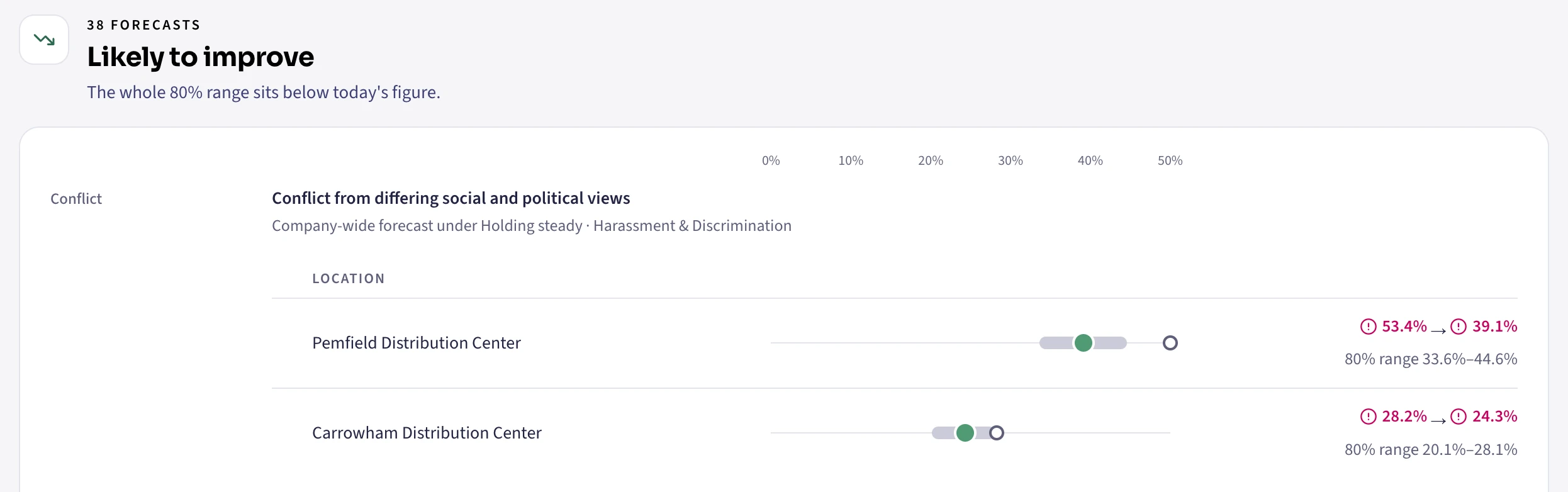
For example, if conflict around differing social and political views is forecast to remain elevated in a particular location, your team can explore the underlying concerns and plan a focused response.
As new employee responses come in, compare actual results with previous findings and forecasts. That helps you understand whether progress is occurring and where to adjust your approach.
Workplace culture measurement becomes useful when it creates an ongoing practice: listen, understand, act, and listen again.
Explore Emtrain Intelligence to see how training can help your team measure workplace culture and decide where to act next.