Your company has just reorganized. As the HR manager, you’re hearing two things. Some employees are unsure what they’re responsible for now. Others know what’s expected of them but hesitate to speak up when their manager assigns work they can’t take on. How do you decide what to ask and where to ask it?
If you need to understand how the reorganization is affecting employees across departments, start with an engagement survey. You can ask about role clarity, workload, and manager support in the same questionnaire. If you’re trying to understand how managers respond when employees push back, sentiment questions in a lesson about speaking up may be a better fit. You can ask employees how comfortable they feel disagreeing with their own manager and use the responses to guide follow-up coaching.
The choice starts with the decision you need to make. Are you trying to understand how a change is affecting employees across the organization, or explore a specific behavior you may need to address?
What are employee engagement surveys?
An employee engagement survey is a standalone questionnaire that gives leaders a snapshot of how people experience work. It typically includes questions about employees’ connection to their work and the conditions that shape it, such as workload, career growth, trust in leadership, and manager support. Leaders can use the results to see which themes are widespread and where different groups are having different experiences.
For example, after a reorganization, an engagement survey can help you understand whether employees know their new priorities, feel supported, and have a manageable workload. A shorter pulse survey can focus on one of those issues once employees have had time to adjust. You can choose when to ask and which groups to reach.
What are employee sentiment insights?
Employee sentiment insights are patterns in what employees say about their workplace experiences. Those insights can come from surveys or other listening channels. In Emtrain, they come from questions employees answer as part of their learning. A question might ask whether their manager considers their feedback or whether they feel comfortable disagreeing with a supervisor.
A knowledge check tells you whether employees understand what to do. A sentiment question tells you what they say they experience. Someone can know how a manager should respond to a concern and still feel uneasy raising one. Looking at those responses across groups helps HR and compliance teams see where a behavior may warrant a closer look.
What do survey and training sentiment questions look like side by side?
The table pairs illustrative engagement survey items with actual questions from Emtrain’s question bank.
| What you want to understand | Illustrative engagement survey item | Actual Emtrain sentiment item |
|---|---|---|
| Comfort speaking up | “I feel comfortable raising concerns at work.” | “It’s okay to tell my manager or supervisor that I disagree with them.” |
| How managers receive feedback | “I feel heard at work.” | “My manager really hears and considers my feedback and ideas.” |
| How managers handle difficult conversations | “I have confidence in my manager’s leadership.” | “My manager has the skills to handle uncomfortable situations at work.” |
A broad item like “I feel heard at work” can flag a concern. Asking whether a manager considers feedback brings the focus to a specific relationship. Either item can go in a standalone survey. What changes is what employees have in mind when they answer. After watching a manager respond to feedback in a training video, employees have a shared example to draw on as they reflect on how their own manager responds.
What does video add if you can ask the same question in a survey?
Ask employees whether they feel comfortable disagreeing with their manager. One person might think about suggesting a different meeting time. Another might picture challenging a decision that affects who gets ahead. A video gives both employees the same interaction to consider before they think about their own experience.
In this Emtrain scenario below, Danielle tells her manager, Tim, that she’s found pay disparities and suggests a compensation audit. She also points out that employees who play basketball or grab drinks with leaders get access that others miss. Watch how Tim responds. He focuses on what the audit would cost and treats the second concern as criticism of workplace friendships. He says he’ll speak with the executive team. Watch Retaliation: When Employee Concerns Put Their Job at Risk.
Then comes the follow-up email. Tim thanks Danielle for speaking up and tells her leadership is passing on the audit. He ends by suggesting she might want to make a change if the situation doesn’t support her career goals. After watching the meeting, you can see why Danielle reads that line as a threat. The scene shows how a manager’s tone, what they choose to address, and what they say afterward can shape whether someone feels safe raising another concern.
Pairing video with a sentiment question is at the heart of Emtrain’s training experience. The lesson can ask employees to reflect on what Tim could have said or done differently, then bring the conversation back to their own workplace.
“It’s okay to tell my manager or supervisor that I disagree with them.”
A standalone survey can ask the same question. The pairing gives employees a chance to see a conversation unfold, consider what a better response would look like, and think about how their own manager responds when someone pushes back. When employees across a group report that they hesitate to disagree, HR has a reason to look more closely at how concerns are handled.
Do employee surveys assign risk the same way Emtrain does?
Some survey tools can flag low scores, highlight turnover concerns, break down results by group, and support action planning. Whether survey responses feed a specific risk framework depends on how the program is designed. See how Culture Amp supports survey action plans.
Emtrain connects training responses to defined HR and business compliance risk areas. For example, HR Reporting & Retaliation includes whether employees feel safe speaking up, whether they believe management will take a complaint seriously, and whether they feel comfortable disagreeing with a manager. Together, those indicators help leaders ask a more useful question than “Is engagement low?” They can ask, “Where might employees be holding back concerns, and what makes it harder to speak up?” Explore Emtrain’s HR Reporting & Retaliation risk indicators.
Behavior questions matter because broad sentiment can miss the conditions that allow a risk to grow. Employees can be engaged in their work and still hesitate to challenge a manager. A low score on comfort disagreeing could reflect team dynamics, a manager’s communication style, or fear of consequences. If employees also express low confidence that management will take complaints seriously, HR has more reason to look into how concerns are received and handled. These patterns help prioritize follow-up. Establishing what happened in an individual case requires a separate review.
How do group filters help you decide where to act?
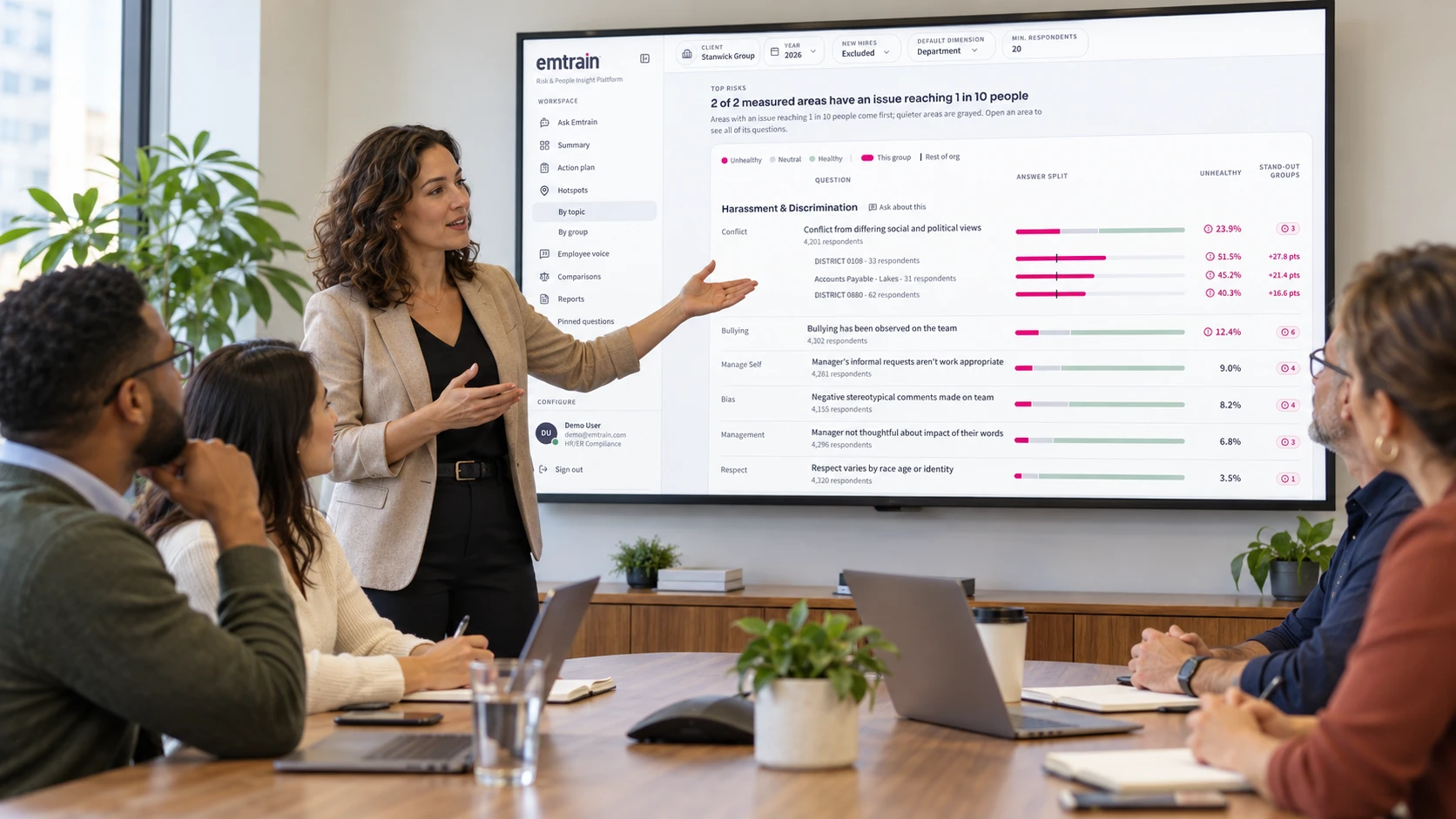
A company-wide score can hide differences in what employees experience. Say employees generally feel comfortable disagreeing with their managers, but the pattern looks different when you view results by location. Looking at the same indicator by tenure might reveal that newer employees report less comfort than longer-tenured employees. Those views suggest different places to investigate, such as local manager practices or how teams invite input from new hires.
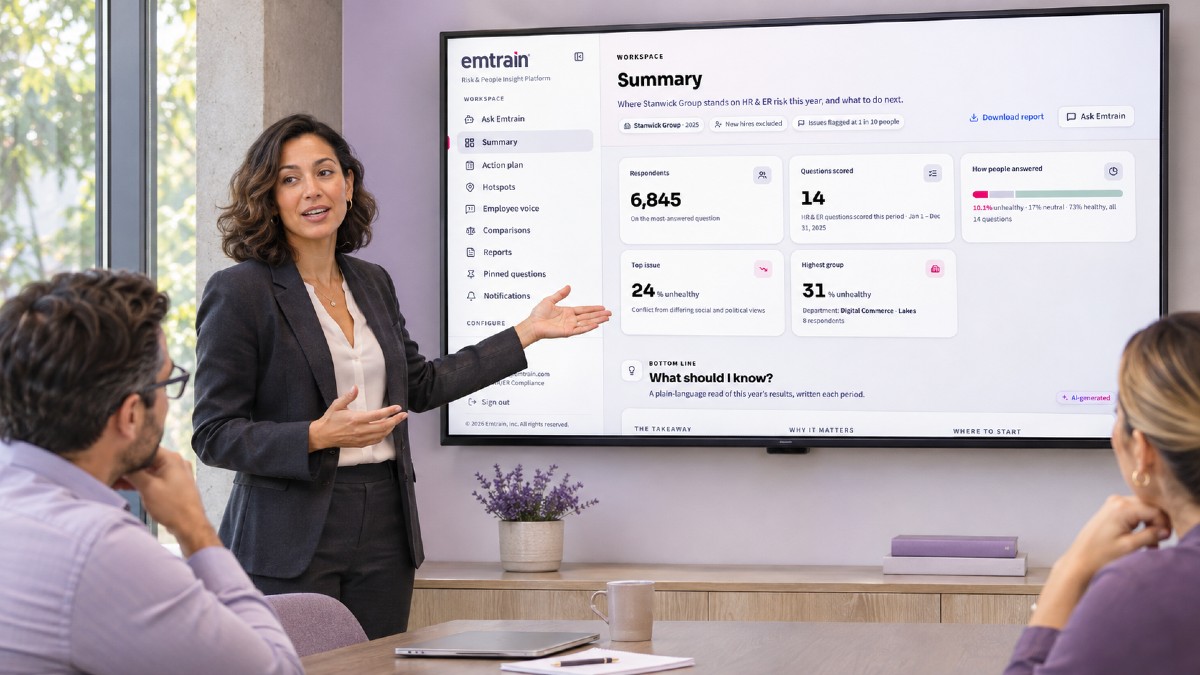
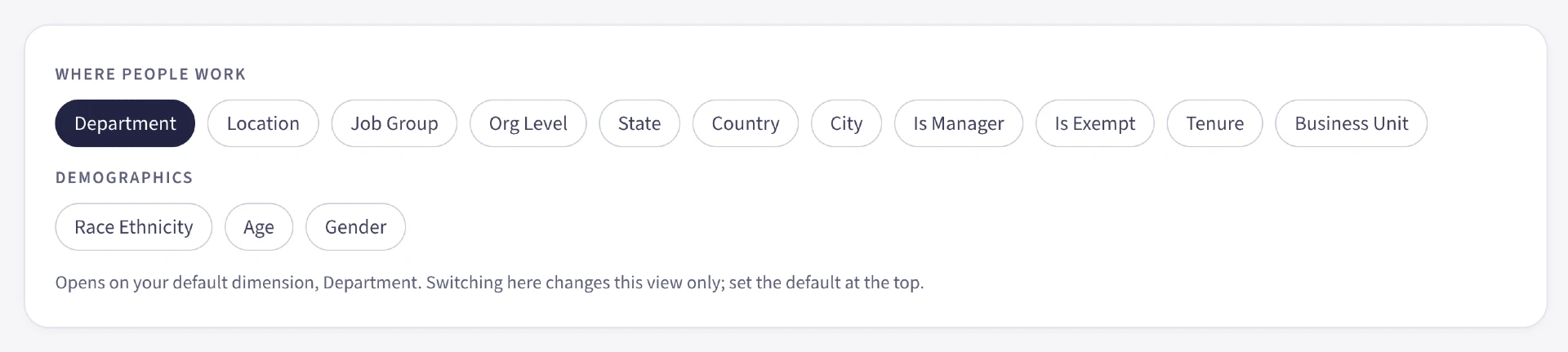
Emtrain Intelligence lets leaders view responses by department, location, job group, organizational level, business unit, tenure, manager status, and other available dimensions, including demographic groups. Which views you can use depends on the data available and the number of responses. Compare groups where you have enough responses to protect confidentiality and interpret the pattern. Filters help narrow where to look and which questions to ask next. A difference between groups can have several causes. See how Emtrain measures workplace culture.
Can a follow-up survey tell you whether a manager’s behavior changed?
A targeted pulse survey can tell you whether employees report a different experience after an intervention. It can help you check whether people feel more comfortable challenging a decision or bringing forward a concern. To establish whether a specific manager is still engaging in concerning behavior, HR needs to follow up through the appropriate channels and review what employees describe.
Training gives you a way to act on the feedback and check progress. Say responses suggest that employees in a particular group hesitate to disagree with managers. HR can explore what happens when someone pushes back. If the issue is a habit of dismissing concerns, managers can practice acknowledging the concern, asking a follow-up question, and explaining what happens next. If employees say concerns disappear after they report them, improving how managers follow through may matter as much as coaching the initial conversation.
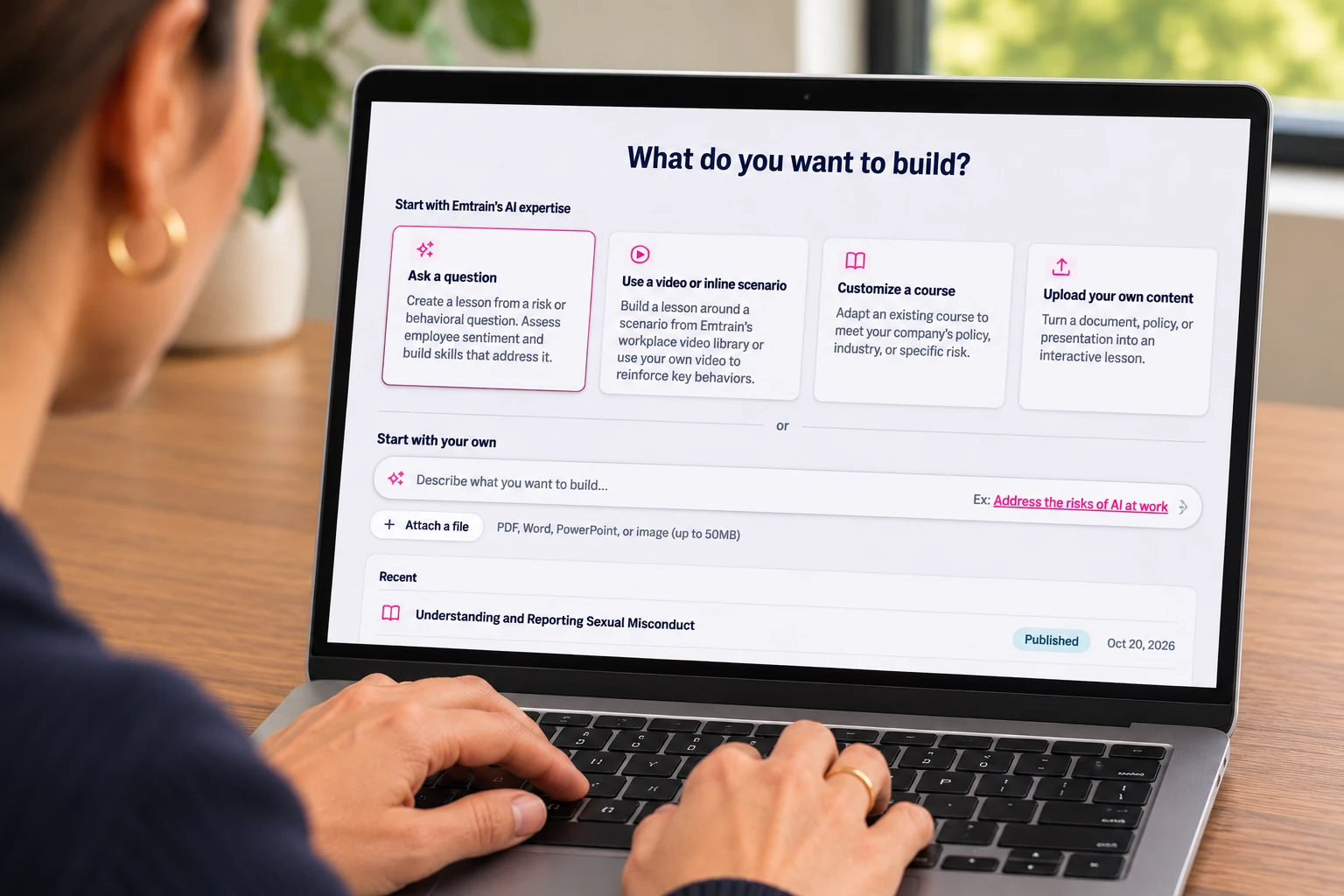
You can deploy a follow-up microlesson on demand throughout the year, when the issue is relevant to the group. In Emtrain Intelligence, teams can deploy a recommended lesson or send follow-up questions to AuthorAI to build a custom lesson. Give employees time to experience any changes, then ask again using consistent wording and a comparable group where possible. If the pattern persists, use that feedback to guide the next conversation and decide what else needs to change. See how Emtrain Intelligence turns follow-up questions into targeted training.
Why measuring workplace culture takes both approaches
An engagement survey helps you see the big picture. After a reorganization, it might show that one department feels less supported. Training sentiment can help you explore a specific experience within that department. Are people comfortable disagreeing with their managers? Do they trust that a concern will be taken seriously? Taken together, the answers help you decide whether to look at a broad organizational issue or a behavior that calls for a more focused response.
Emtrain connects the steps from listening during training to acting on what employees share. Employees see a behavior play out and reflect on their own experience. HR and compliance teams can use Emtrain Intelligence to review responses against defined risk indicators and see where concerns are concentrated. When a skill needs reinforcement, they can deploy a recommended lesson or use AuthorAI to build one around follow-up questions, then listen again after employees have had time to experience the change. Explore Emtrain Intelligence.
Frequently asked questions
Is a survey question the same as a sentiment question asked during employee training?
The wording can be identical. What changes is the context in which employees answer. In a standalone survey, employees draw on whatever experiences come to mind. In Emtrain training, they first watch a realistic workplace scenario. After seeing how Tim responds when Danielle raises a concern, employees can reflect on what happens when they disagree with their own manager. The video gives everyone a shared example before they answer about their own experience
Why ask an employee sentiment question during training instead of in a survey?
An Emtrain lesson teaches employees how to recognize a workplace behavior, understand its impact, and respond constructively. It also gives HR a chance to ask whether employees have seen similar behavior on their own teams. After watching Tim get defensive when Danielle raises a concern, employees can learn what a better response looks like, then reflect on how their own manager handles pushback.
In a standalone survey, employees may picture very different situations. They may also interpret the same behavior differently. One person might see Tim’s response as dismissive, while another might see it as an ordinary disagreement about cost. The lesson gives employees a shared example and helps them understand why the behavior matters before they answer about their own experience.
What’s the difference between an employee survey question and a training sentiment insight?
An employee survey question is a prompt in a standalone questionnaire. A training sentiment insight is what you learn from employees’ responses to a question embedded in a lesson, often after they’ve watched a realistic workplace scenario.
For example, both can ask whether employees feel comfortable disagreeing with their manager. In a survey, employees answer based on the experiences that come to mind. In an Emtrain lesson, they first watch how a manager responds when an employee raises a concern. That gives them a shared example to reflect on before answering about their own workplace. If responses show that employees in one group are especially hesitant to speak up, HR can use that insight to decide where to follow up and what to reinforce through coaching.
Can training sentiment questions replace employee engagement surveys?
Engagement surveys are better suited to broad topics like workload, career growth, and organizational change. Training sentiment questions are useful when you want to assess a specific behavior risk and connect the results to coaching or learning.
Do training sentiment responses prove that misconduct occurred?
Sentiment responses describe employees’ reported experiences and perceptions. Use patterns to prioritize follow-up and review individual concerns through your reporting and investigation processes.