For years, organizations evaluated compliance training vendors using a simple checklist.
Do they have harassment training?
Do they offer code of conduct courses?
Can they track completions?
Will they integrate with our LMS?
Can they help us meet legal requirements?
Those questions still matter. Compliance training remains an important part of managing workplace risk and meeting regulatory obligations.
But today’s workplace challenges have exposed a much larger problem.
Completing training does not necessarily mean employees understand expectations. It doesn’t mean managers are leading effectively. It doesn’t mean workplace culture is improving. And it certainly doesn’t mean organizational risk is decreasing.
As workplaces become more complex, organizations need compliance training vendors that do more than deliver courses.
They need partners that help them understand workplace behavior, identify emerging risks, strengthen culture, and drive meaningful change.
The Traditional Compliance Training Model
Historically, compliance training was designed to accomplish one primary goal:
Reduce legal liability.
Organizations assigned annual courses on harassment prevention, ethics, workplace safety, cybersecurity, or code of conduct topics. Employees completed training, passed a quiz, and the organization maintained records in case they were ever needed.
Success was measured through:
- Completion rates
- Assessment scores
- Training records
- Audit readiness
While these metrics remain important, they provide very little insight into what is actually happening inside an organization.
A completion report can tell you whether employees finished a course.
It cannot tell you:
- Whether employees trust leadership
- Whether managers are creating healthy team environments
- Whether employees feel comfortable reporting concerns
- Whether workplace conflict is increasing
- Whether harassment risks are emerging
- Whether employees understand how to apply policies in real situations
In other words, traditional compliance training tells you what employees completed.
It rarely tells you what employees believe, experience, or do.
Why Modern Organizations Need More
Today’s compliance challenges look very different than they did even five years ago.
Organizations are navigating:
- Increasing workplace polarization
- Hybrid and remote workforces
- Rapid AI adoption
- Growing employee expectations
- Heightened regulatory scrutiny
- Manager skill gaps
- Rising employee relations complexity
These issues cannot be solved through annual training assignments alone.
Organizations need visibility into workforce behaviors, perceptions, and risk indicators long before issues become complaints, investigations, or lawsuits.
This is where compliance training begins to evolve from a legal requirement into a strategic business tool.
The 7 Capabilities Every Modern Compliance Training Vendor Should Deliver
1. Skills-Based Learning, Not Just Policy Awareness
Many compliance programs focus on teaching rules.
The most effective programs teach employees how to navigate real workplace situations.
Employees need practical skills such as:
- Giving feedback
- Managing conflict
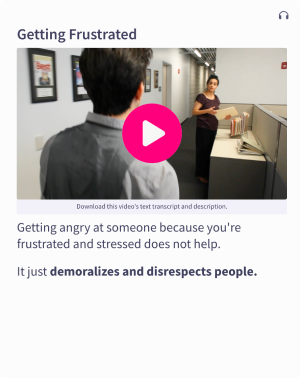
- Stress Awareness
- Speaking up
- Handling difficult conversations
- Addressing bias
- Making ethical decisions
Organizations reduce risk when employees know how to respond—not simply when they know what the policy says.
2. Training That Measures Employee Sentiment
Most compliance vendors can tell you:
- Who completed training
- Who passed an assessment
Very few can help you understand how employees actually feel about workplace behaviors and culture.
Organizations should be asking:
- Do employees trust managers?
- Do they feel comfortable speaking up?
- Do they believe policies are applied consistently?
- Do they feel respected and included?
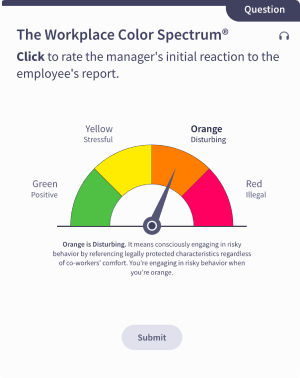
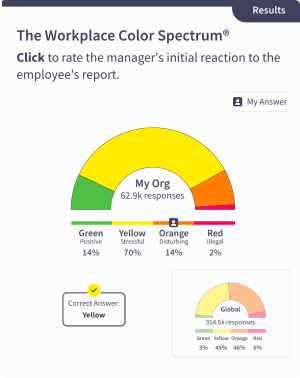
Training can become a powerful listening mechanism when employee feedback is captured at the moment workplace behaviors are being discussed.
3. Workplace Culture Intelligence
Training generates data.
The question is whether organizations are using that data effectively.
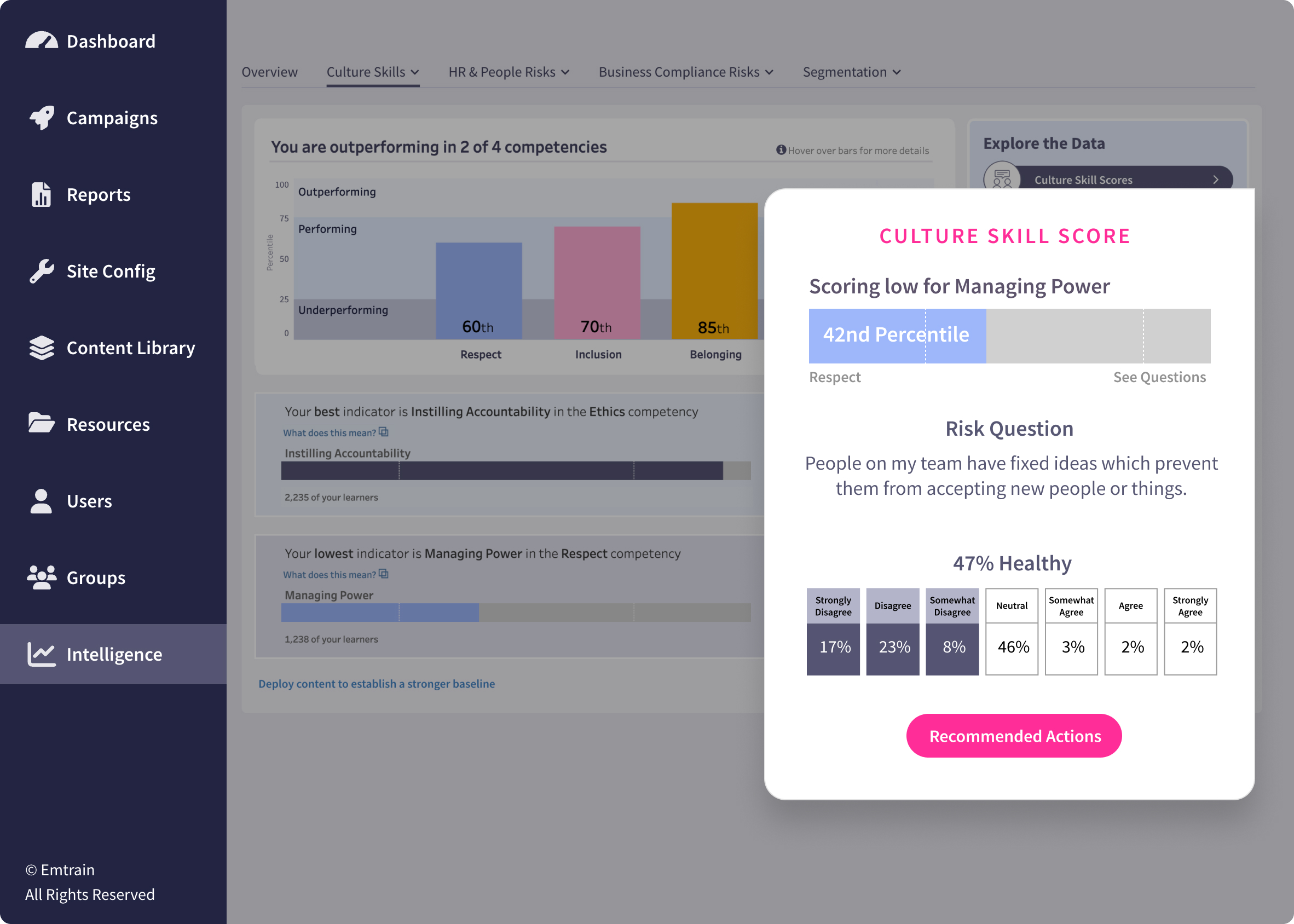
Modern compliance programs should provide visibility into:
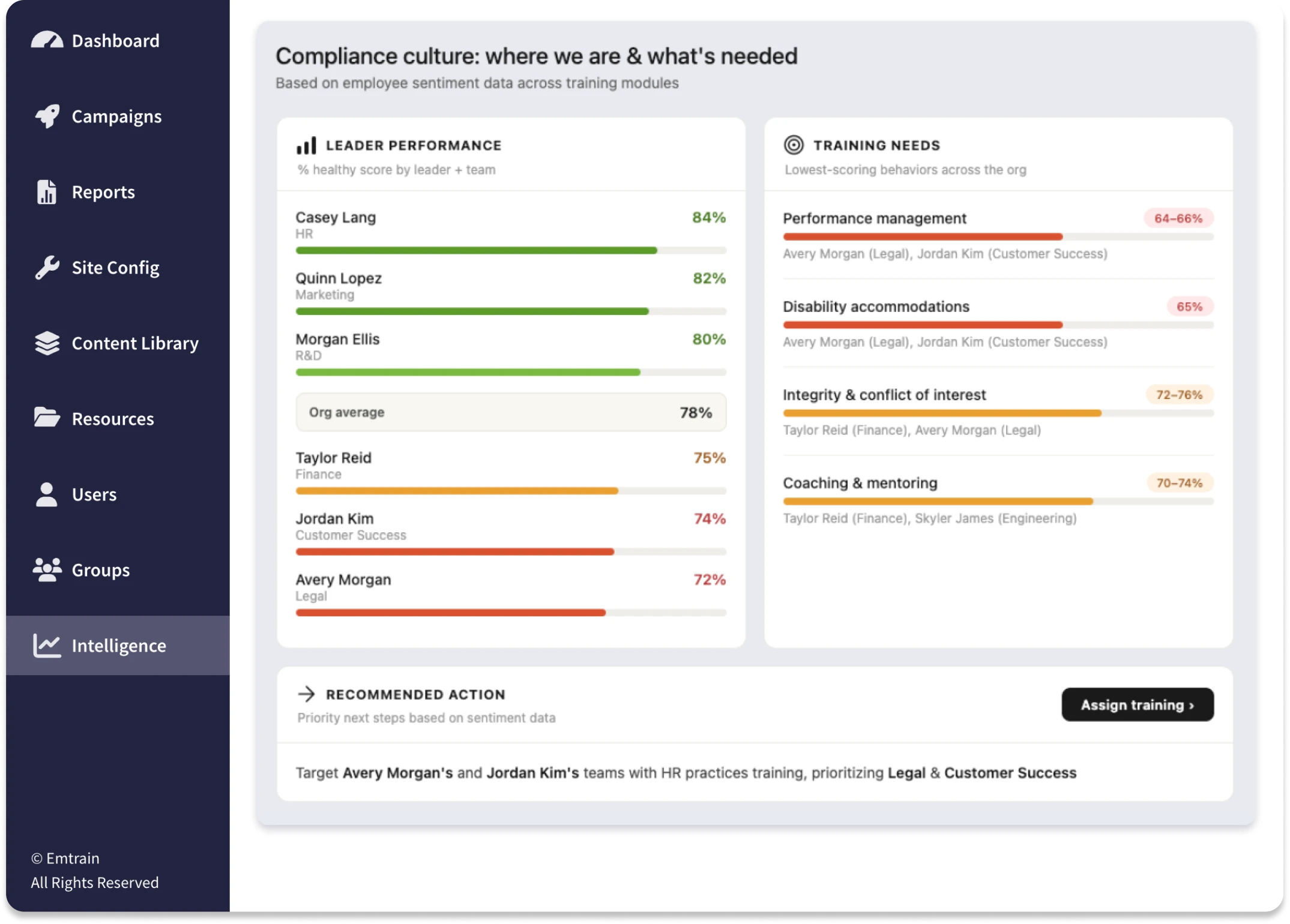
- Workplace culture trends
- Employee sentiment
- Team-level risks
- Inclusion indicators
- Leadership effectiveness
Organizations cannot improve what they cannot measure.
4. Leadership Reporting
Many workplace issues originate with managers rather than employees.
Yet most compliance programs provide little visibility into leadership effectiveness.
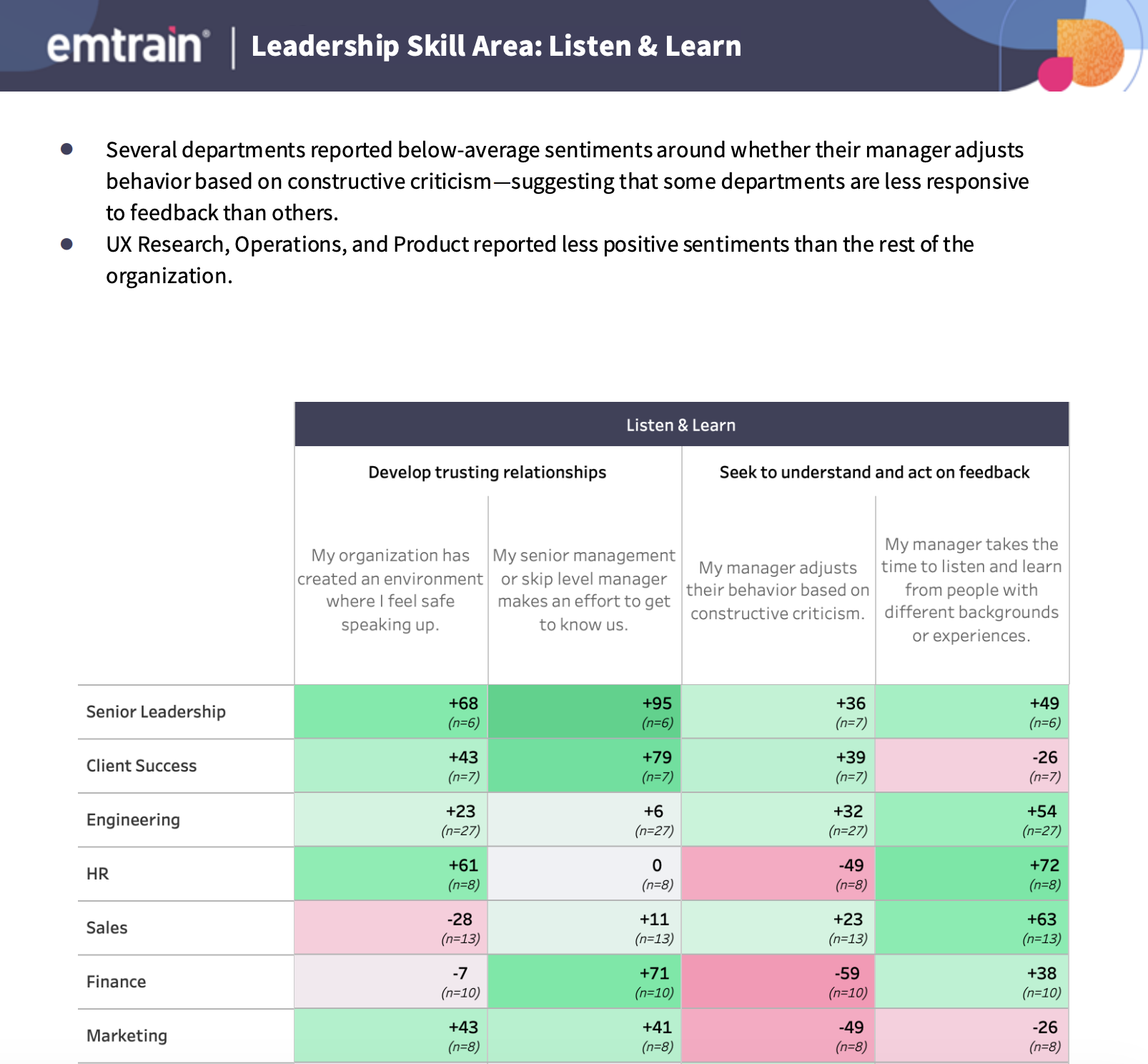
Modern compliance vendors should help organizations understand:
- Manager strengths
- Coaching opportunities
- Team dynamics
- Emerging employee relations concerns
The goal is not simply compliance.
The goal is stronger leadership.
5. AI-Powered Customization
Generic compliance training often feels disconnected from organizational culture.
Employees engage more effectively when training reflects:
- Company branding
- Internal policies
- Workplace expectations
- Industry-specific scenarios
- Organizational values
AI now makes it possible to personalize training at scale without sacrificing legal accuracy.
6. Flexible Deployment
Organizations should not have to replace their learning ecosystem to improve compliance training.
The best vendors support:
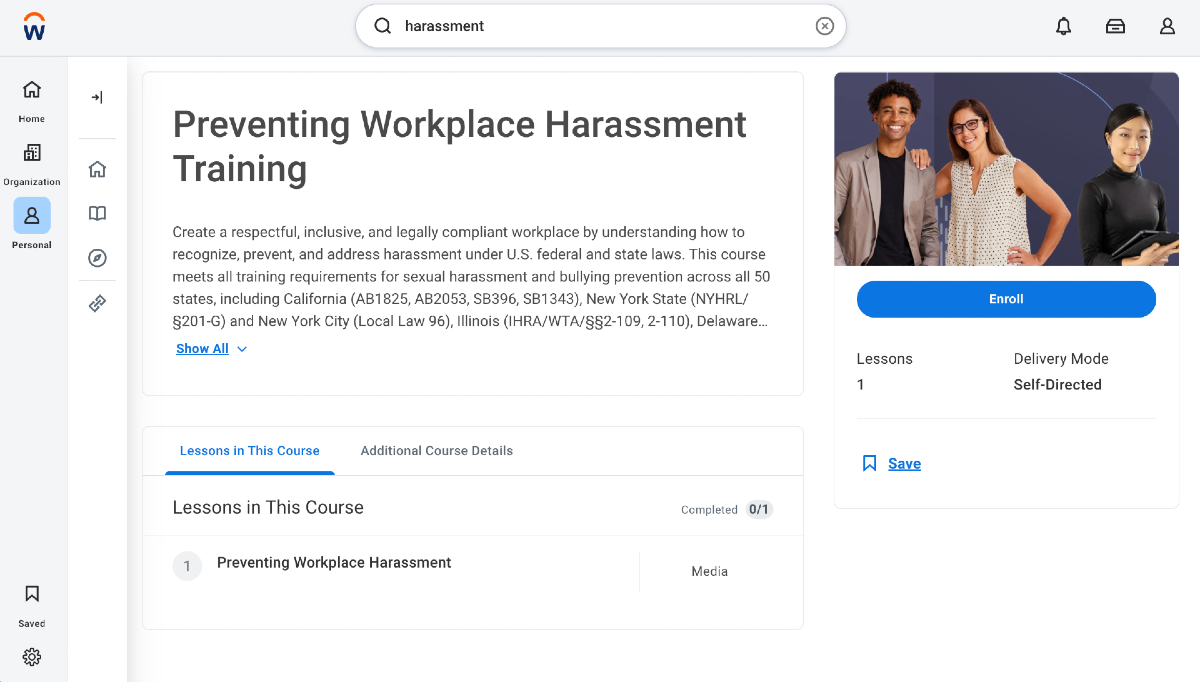
- Workday Learning
- SCORM
- Cornerstone
- SAP SuccessFactors
- Oracle Learning
- Docebo
- Existing LMS environments
Compliance training should fit into existing workflows—not create new administrative burdens.
7. Predictive Risk Intelligence
Perhaps the biggest opportunity for modern compliance training is helping organizations identify risk before incidents occur.
Traditionally, organizations discovered problems after:
- Complaints were filed
- Employees resigned
- Investigations began
- Litigation occurred
Modern workplace intelligence can help organizations identify patterns much earlier.
The future of compliance training is not simply documenting what happened.
It’s helping organizations understand what may happen next.
Why This Matters to HR, Legal, and Compliance Leaders
Compliance training budgets are increasing.
At the same time, executive leaders are asking harder questions.
They want to know:
- Is training reducing risk?
- Is workplace culture improving?
- Are managers becoming more effective?
- Are employees more likely to speak up?
- Are compliance programs driving measurable outcomes?
Traditional compliance metrics cannot answer these questions.
Completion rates and assessment scores only tell part of the story.
Organizations increasingly need training programs that provide business intelligence alongside compliance education.
How Emtrain Approaches Compliance Differently
Emtrain was built around a different question.
Instead of asking:
“Did employees complete training?”
Emtrain asks:
“Is workplace behavior improving?”
This philosophy influences every aspect of the platform.
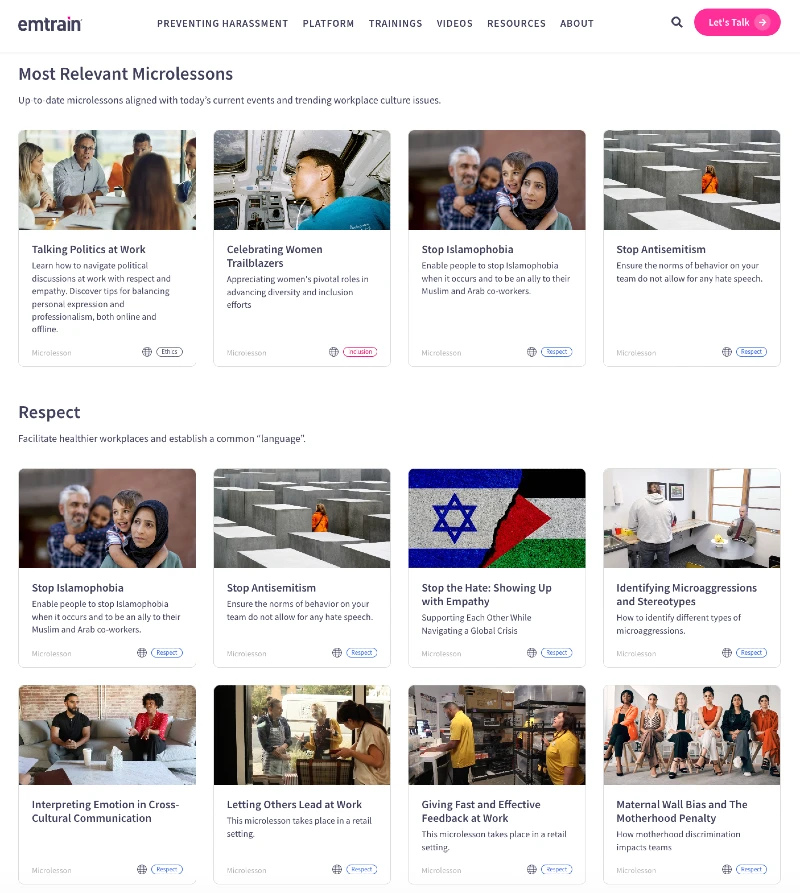
Organizations can deliver compliance training across harassment prevention, anti-discrimination, ethics, cybersecurity, workplace safety, manager development, and dozens of additional topics through Workday, SCORM, or their existing LMS.
At the same time, embedded employee sentiment questions help organizations understand how employees perceive workplace behaviors, leadership effectiveness, inclusion, accountability, and organizational culture.
Combined with workplace analytics, leadership reporting, AI-powered customization, and predictive risk insights, compliance training becomes more than a legal requirement.
It becomes a strategic source of workplace intelligence.
The Future of Compliance Training
The compliance training market is changing.
Organizations no longer need vendors that simply deliver courses and track completions.
They need partners that help them reduce risk, strengthen culture, develop leaders, and gain visibility into the workplace behaviors that influence business outcomes.
Because the future of compliance training isn’t measured by how many courses employees completed.
It’s measured by whether workplace behavior actually changed.
And whether organizations have the data to prove it.