




Help Employees Understand Mexico Harassment Laws and Build a Respectful Workplace
Course Video Preview
Work Health Balance - SpanishWorkplace harassment prevention in Mexico requires more than a policy—it requires employees to understand how harassment, discrimination, workplace violence, and psychosocial risks impact the workplace. As legal requirements continue to evolve, organizations must equip employees with the skills to recognize inappropriate behavior, speak up when concerns arise, and contribute to a culture of respect and accountability.
Emtrain's Preventing Workplace Harassment course combines legal awareness with practical workplace skills. Through realistic scenarios and guided learning, employees learn how to identify harassment, respond appropriately to workplace concerns, support coworkers, and navigate reporting processes while helping organizations support compliance with Mexico's workplace harassment and violence prevention requirements.
Course Description
Equip employees with the legal knowledge, practical skills, and shared language to prevent harassment, discrimination, workplace violence, and psychosocial harm—and to act confidently when they witness or experience it.
Grounded in Mexico's Federal Labor Law, NOM-035, and recent workplace reforms, this training helps learners recognize inappropriate behavior, understand reporting responsibilities, intervene appropriately, and contribute to a safer, more respectful workplace.
Legal Requirements
Emtrain helps organizations meet their legal obligations under Mexico's Federal Labor Law and 2026 reforms, including mandatory safety standards like NOM-035 and the prevention of workplace violence and gender-based violence.Languages
- Videos feature Spanish-speaking characters with English subtitles
- Key concepts and learning points are reinforced in Spanish
Key Concepts
- Workplace Harassment, Violence & Bullying – Recognize and respond to harassment, workplace violence, and acoso laboral.
- Discrimination & Respect at Work – Understand protected characteristics, bias, and inclusive workplace behaviors.
- Psychosocial Risk & Employee Wellbeing – Identify behaviors and conditions that contribute to psychosocial harm under NOM-035.
- Bystander Intervention & Reporting – Learn how to speak up, support others, and use reporting channels effectively.
- Investigations, Retaliation & Accountability – Understand employee responsibilities, investigation processes, and anti-retaliation protections.
Course Features
- Access to our Anonymous Ask the Expert tool
- Rich video scenarios based on real-world events
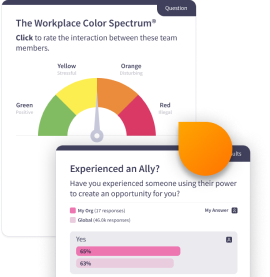
- Built-in employee sentiment surveys
- 50+ Machine Translation Options
- Optional program timer
- Policy acknowledgement tool
- Extensive customization options
Lessons
Protecting People and Workplaces
Preventing Discrimination
Defining Sexual Harassment
Workplace Violence and Bullying (Acoso Laboral)
Psychosocial Risk and Your Well-Being
Bystander Intervention
Retaliation
Reporting, Investigations, and Our Policies
Relevant Courses

Complementary Microlessons
Recommended Resources
From ‘Ask the Expert’
Emtrain’s Ask the Expert feature enables users to ask questions about compliance, bias, harassment, and diversity & inclusion as they come up. It’s all confidential, and answers are sent straight to their inbox. View some of the example questions below and see the Experts answers.