
Home » Concepts » Health & Safety » NOM-035
NOM-035-STPS-2018 is a mandatory Mexican workplace standard designed to identify, analyze, and prevent psychosocial risk factors in the workplace while promoting a favorable organizational environment. Established by Mexico’s Ministry of Labor and Social Welfare (STPS), the standard requires employers to evaluate workplace conditions that may negatively affect employee wellbeing and take steps to address those risks.
Unlike traditional workplace safety regulations that focus on physical hazards, NOM-035 recognizes that workplace culture, leadership behaviors, harassment, workplace violence, excessive workloads, and chronic stress can significantly impact employee health and organizational performance.
The goal is not simply to prevent harm—it is to help organizations create workplaces where employees feel respected, supported, and psychologically safe.
Emtrain’s harassment training course is engaging, interactive, and designed to spot and reduce EEO risk.
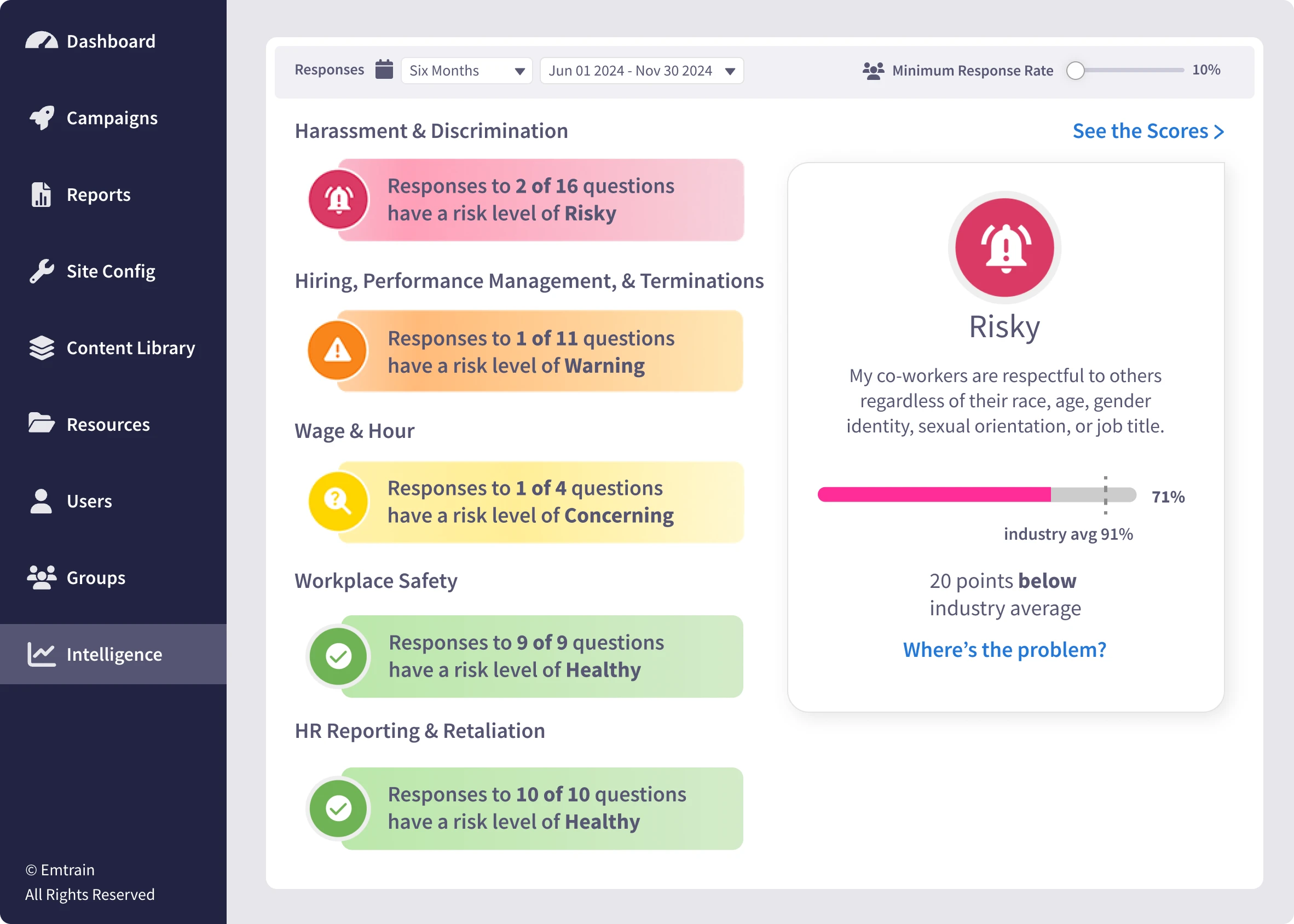
Historically, workplace safety programs focused on preventing physical injuries, accidents, and occupational illnesses. Over time, researchers, regulators, and employers began recognizing that workplace stress, bullying, harassment, toxic leadership, and workplace violence could create equally significant harm to employees and organizations.
Mexico introduced NOM-035 as part of a broader shift toward recognizing psychological safety as a critical component of workplace health. The regulation reflects growing international attention to workplace wellbeing and aligns with efforts by organizations such as the International Labour Organization (ILO) to address violence, harassment, and psychosocial risks at work.
External Resources:
One of the most important aspects of NOM-035 is that it goes beyond compliance. The standard recognizes that poor workplace culture can become a business risk. When employees experience harassment, bullying, excessive pressure, poor leadership, or workplace violence, organizations often see increased turnover, absenteeism, burnout, employee relations complaints, and reduced productivity.
Rather than waiting for these issues to become legal or operational problems, NOM-035 encourages organizations to proactively identify risks and build healthier workplace environments.
One of the most overlooked aspects of NOM-035 is its emphasis on creating a favorable organizational environment.
A favorable organizational environment is one where employees can perform their work in a setting characterized by respect, trust, clear communication, and supportive leadership. It focuses on creating conditions that help employees succeed rather than merely reacting to workplace problems after they occur.
Organizations that foster favorable work environments often:
This focus aligns closely with modern workplace culture initiatives and reinforces the idea that reducing risk starts with improving employee experiences.
NOM-035 identifies several workplace conditions that can negatively affect employee wellbeing and organizational health.
Examples include:
These risks often appear gradually and may not be immediately obvious. For example, an employee experiencing persistent criticism from a supervisor may become disengaged long before a formal complaint is filed. Similarly, excessive workloads may create stress and burnout that affect performance, morale, and retention.
By identifying these risks early, organizations can implement corrective measures before problems become widespread.
At Emtrain, we believe NOM-035 is more than a compliance requirement—it’s an opportunity to strengthen workplace culture and reduce organizational risk.
Many of the psychosocial risks identified under NOM-035 stem from everyday workplace behaviors. Harassment, bullying, exclusion, retaliation, workplace conflict, and poor communication can all contribute to unhealthy workplace environments.
Our Preventing Workplace Harassment Training — Mexico helps employees recognize these behaviors and develop the skills needed to create safer, more respectful workplaces. Through realistic workplace scenarios and practical guidance, learners build confidence in identifying concerns, responding appropriately, and supporting coworkers.
Additional resources that support NOM-035 initiatives include:
Together, these learning experiences help organizations move beyond measuring risk and begin actively reducing it.
NOM-035 represents a significant evolution in workplace health and safety. By recognizing psychosocial risks as legitimate workplace hazards, the standard encourages organizations to think more broadly about employee wellbeing and organizational culture.
The most successful organizations do not view NOM-035 as a compliance exercise. Instead, they use it as a framework for building trust, strengthening leadership, improving communication, and fostering respectful workplace behaviors.
Ultimately, organizations that proactively address psychosocial risks are often better positioned to reduce employee relations issues, improve engagement, and create workplaces where employees can perform at their best.