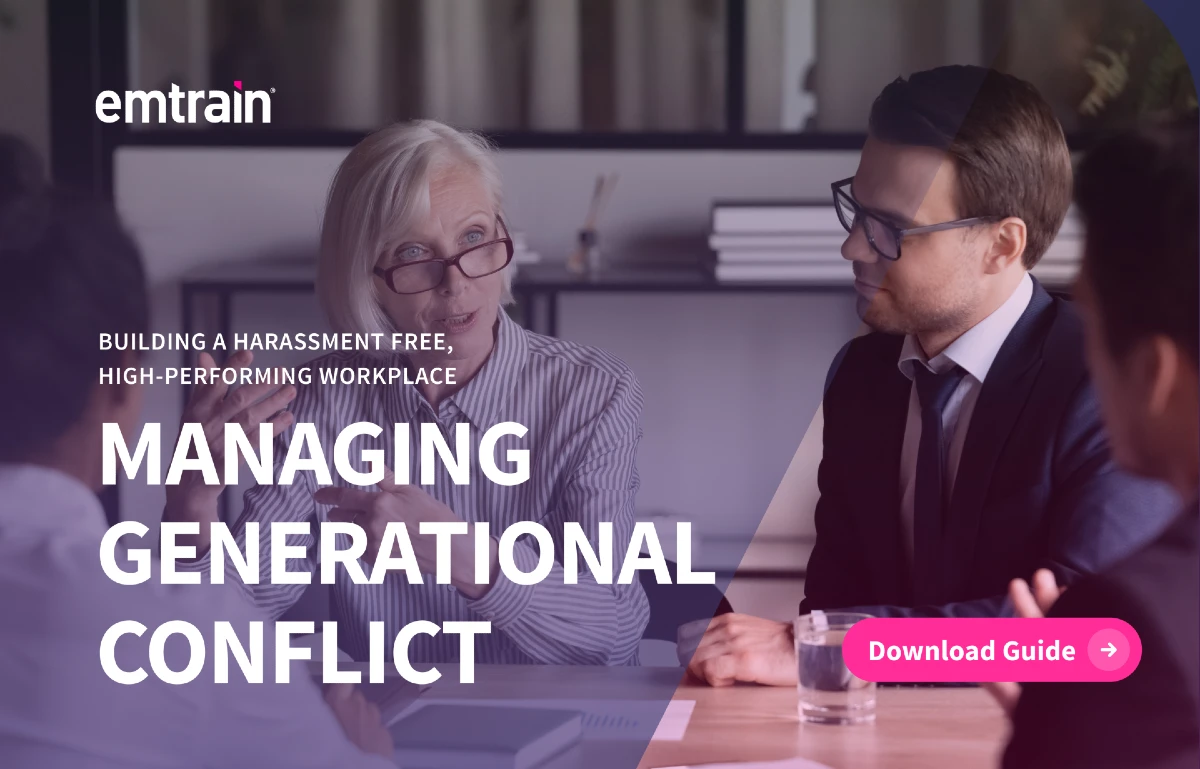
A Strategic Guide for HR Leaders & Managers
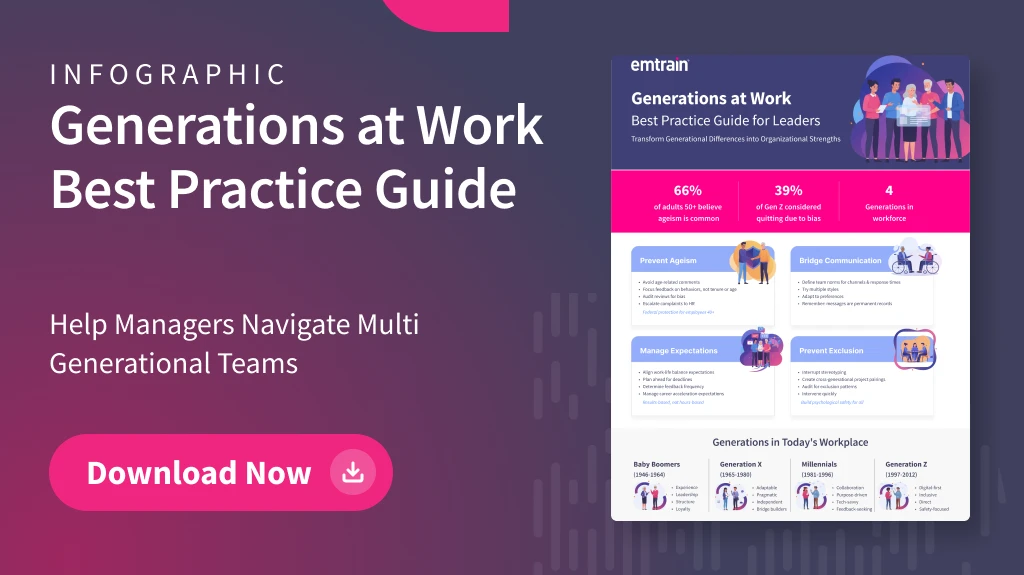
Today’s workforce spans multiple generations, from experienced Baby Boomers to digital-first Gen Z employees. This diversity brings powerful advantages: different perspectives, deeper institutional knowledge, and innovative ideas.
But it also creates friction.
Different communication styles, expectations about work-life balance, technology habits, and career paths can easily lead to misunderstandings between coworkers.
Left unmanaged, these tensions can damage collaboration, reduce engagement, and increase legal risk, especially when generational comments or stereotypes cross into age-related bias.
This practical guide helps HR leaders and managers understand how generational differences show up at work and how to turn them into strengths instead of conflict.
What You’ll Learn in This Generational Conflict Guide
Inside this resource, you’ll discover:
- How generational stereotypes can create age-related bias and legal exposure
- Why communication style differences often lead to workplace misunderstandings
- How work expectations around flexibility, commitment, and hierarchy vary by generation
- Real workplace scenarios showing how generational conflict escalates
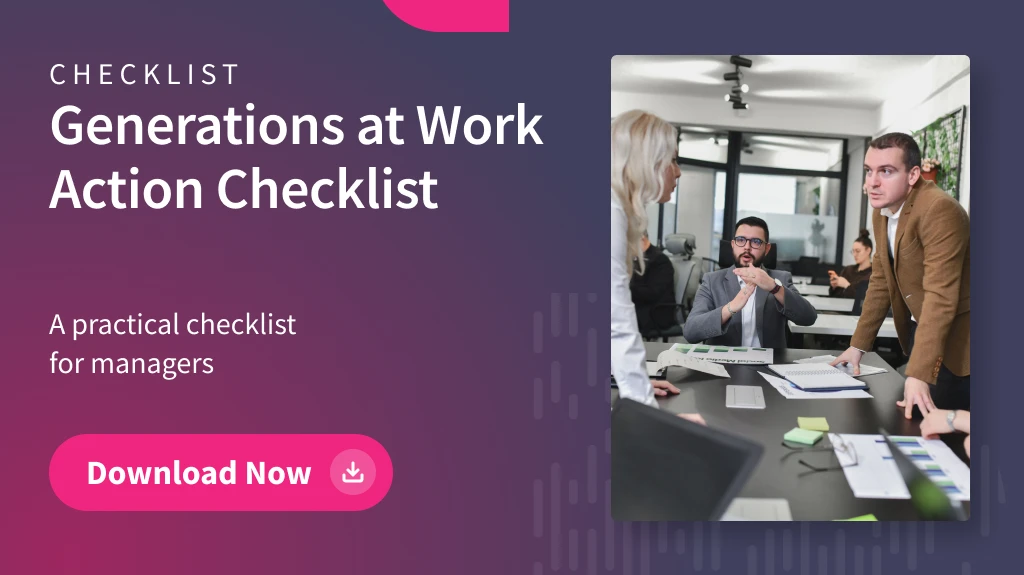
- Practical strategies to improve collaboration across age groups
The guide includes realistic workplace video examples that demonstrate how common interactions such as feedback conversations, digital communication habits, and team expectations can unintentionally create conflict between coworkers of different generations.
Why This Guide Matters for HR and Managers
Generational tension is not just a cultural challenge. It is a leadership challenge.
When generational differences are ignored, teams can fall into “us vs. them” dynamics that damage trust and collaboration.
Employees may feel dismissed, stereotyped, or excluded because of their age, communication style, or expectations about work.
Over time, these patterns can lead to:
- Age discrimination complaints
- Reduced collaboration and knowledge sharing
- Lower engagement and retention
- Workplace culture breakdowns
Organizations that actively manage generational dynamics, however, gain a competitive advantage. Diverse teams combine experience, institutional knowledge, curiosity, and digital fluency to solve problems faster and innovate more effectively.
Who Should Download This Resource?
This guide is ideal for:
- HR leaders and HR business partners
- Learning and development professionals
- Compliance and legal teams
- Managers and supervisors
- Executive leaders building multigenerational teams
If your organization wants to improve collaboration, reduce age-related bias, and strengthen workplace culture across generations, this guide provides practical steps to get started.
Turn Generational Differences Into Team Strengths
Age diversity is one of the greatest untapped strengths in modern organizations.
Younger employees bring fresh perspectives, digital fluency, and new ways of thinking. Experienced employees bring judgment, institutional knowledge, and long-term perspective.
When leaders create shared norms and mutual respect, those differences become powerful assets instead of sources of conflict.
Equip your managers with the tools they need to navigate generational differences and build stronger, more collaborative teams.
Download the Guide
Managing Generational Conflict: Building a Harassment-Free, High-Performing Workplace
Learn how to prevent age-related bias, improve communication across generations, and create a culture where employees of every age can thrive.