Home » Video Library » Off-Duty Conduct: When Client Behavior Creates Harassment Risk
Harassment doesn’t only happen inside the office—and it doesn’t only come from managers or co-workers. One of the most common misconceptions about workplace harassment is that it requires a traditional employment relationship or must occur during work hours. In reality, harassment law focuses on power, access, and impact, not job titles or time clocks.
This video scenario explores how off-duty interactions with clients can still create harassment risk, particularly when there is a power imbalance between a client and a younger or less experienced professional. It reinforces a key lesson taught in Emtrain’s Preventing Workplace Harassment course: employers have a duty to protect workers from harassment—even when the harasser is a client, vendor, or third party.
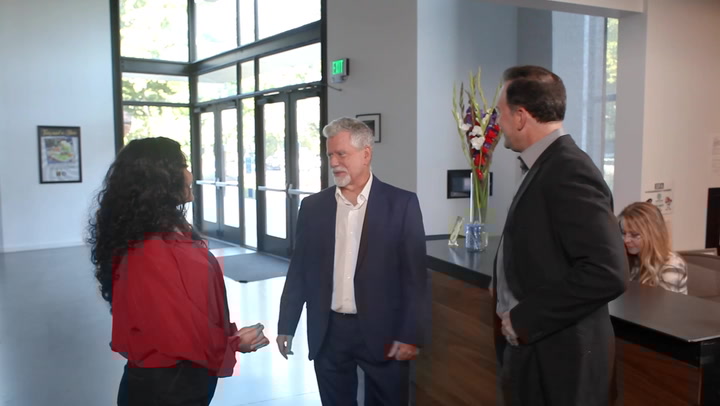
In this scenario, a young professional is invited to dinner by a client. On the surface, nothing overtly inappropriate occurs. The client doesn’t make explicit sexual comments or threats. However, as the evening progresses, his behavior becomes increasingly flirtatious and pressuring.
He encourages drinking, pushes for a more personal tone, and creates an environment that feels less like a business meeting and more like a date. The woman appears uncomfortable, but the power dynamic makes it difficult for her to push back. The client holds influence, and the interaction feels tied to professional expectations.
This scenario is best described as orange conduct—not because a single explicit comment was made, but because context, pressure, and power matter.
Harassment is not defined solely by words. It is defined by unwelcome conduct that makes someone uncomfortable, unsafe, or pressured, especially when the behavior is tied to power.
In this case:
Most people would view this conduct as inappropriate—not because of what was said explicitly, but because of how the situation felt and the limited ability of the employee to freely disengage.
This is exactly why harassment law looks at impact over intent.
Another major misconception addressed in this lesson is the belief that harassment laws only apply between employees. In reality, protections extend much further.
People protected by harassment laws can include:
Similarly, potential harassers are not limited to managers or co-workers. They can include:
Harassment law is designed to protect people, not employment classifications.
At its core, harassment is about power. Power can come from position, authority, influence, or control over opportunities. In client relationships, power often flows toward the client—especially when the employee is early in their career or dependent on maintaining the relationship.
This imbalance can make it difficult for someone to say no, set boundaries, or exit a situation without fear of professional consequences. Even subtle pressure can feel coercive when power is uneven.
That’s why behavior that might seem “mild” in another context becomes risky here.
A common question is whether an employer is responsible for behavior that happens outside the office or after hours. The answer depends on two key questions taught in the PWH course:
If the answer to both questions is yes, harassment protections apply.
When off-duty conduct affects an employee’s sense of safety, ability to work, or professional standing, the employer has a responsibility to take the concern seriously and act appropriately.
Ignoring client behavior is not a safe strategy—and it can expose the organization to legal and ethical risk.
This scenario is rated orange because the conduct involves:
It may not yet meet the threshold of unlawful harassment—but it is exactly the kind of situation that can escalate if left unaddressed.
Orange is the point where early intervention matters most.
One of the core lessons taught in Emtrain’s Preventing Workplace Harassment course is that harassment risk doesn’t stop at the office door—and it doesn’t depend on job titles. By learning to recognize how power, context, and off-duty conduct intersect, employees and managers can identify risk earlier and respond more effectively.
The course equips organizations to:
Creating a respectful workplace means protecting people wherever work happens—and ensuring that professionalism doesn’t end when the meeting moves off-site.