




Practical Strategies to Build Confidence and Reduce New Technology Anxiety
Adopting new technology can feel overwhelming, especially when expectations rise faster than your comfort level. This microlesson gives learners the tools to understand why tech-related anxiety happens and how to shift their mindset from self-doubt to steady progress. By learning to reframe negative self-talk, focus on small wins, and ask for support effectively, learners gain the confidence they need to master new tools without sacrificing performance or mental wellbeing.
Microlesson Description
Today’s workplace evolves rapidly, and employees often feel pressure to keep up with unfamiliar tools, platforms, and processes. This microlesson demystifies the psychology behind technology-related anxiety and shows learners how to navigate change with confidence. Through real-world scenarios, science-backed insights, and practical skill-building strategies, learners discover how to interrupt avoidance cycles, challenge imposter syndrome, and reframe the discomfort of learning as evidence of growth. By the end of the lesson, learners will understand how to take small, meaningful steps toward mastering new tools, communicate their learning needs, and sustain their performance—even during times of rapid organizational or technological change.Key Concepts
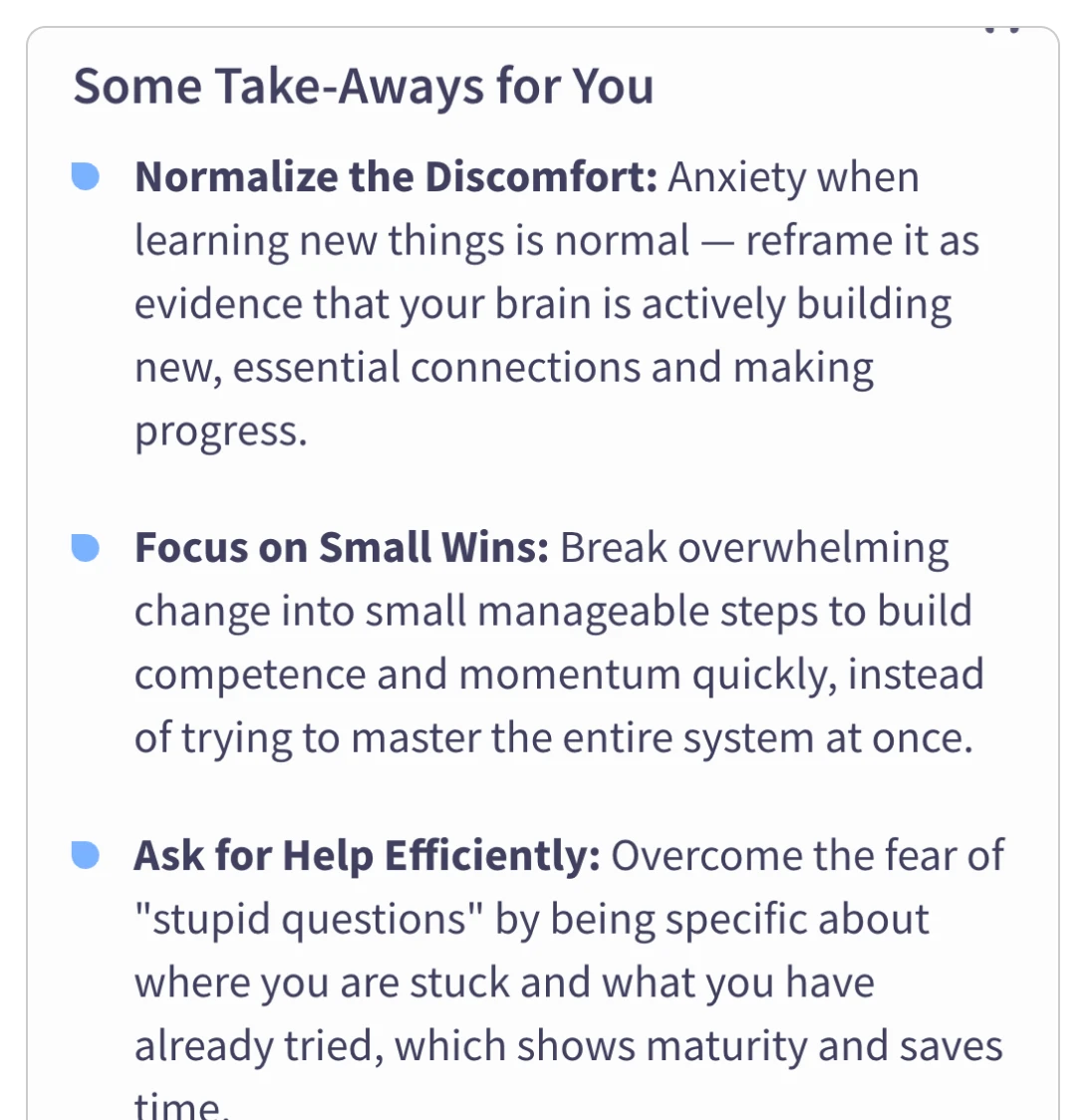
- Why Change Triggers Anxiety: Discover the science behind tech-related stress so you can face new tools with clarity and confidence.
- Reframing Negative Self-Talk: Learn simple mindset shifts that turn fear and doubt into momentum and professional growth.
- Small Wins Build Momentum: See how breaking technology into small, achievable steps helps you build competence quickly.
- Ask for Support Effectively: Master the skill of requesting targeted help so you can learn faster and stay productive.
Microlesson Features
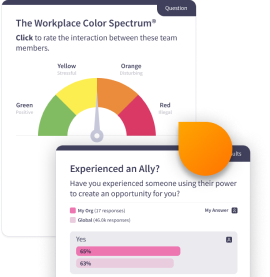
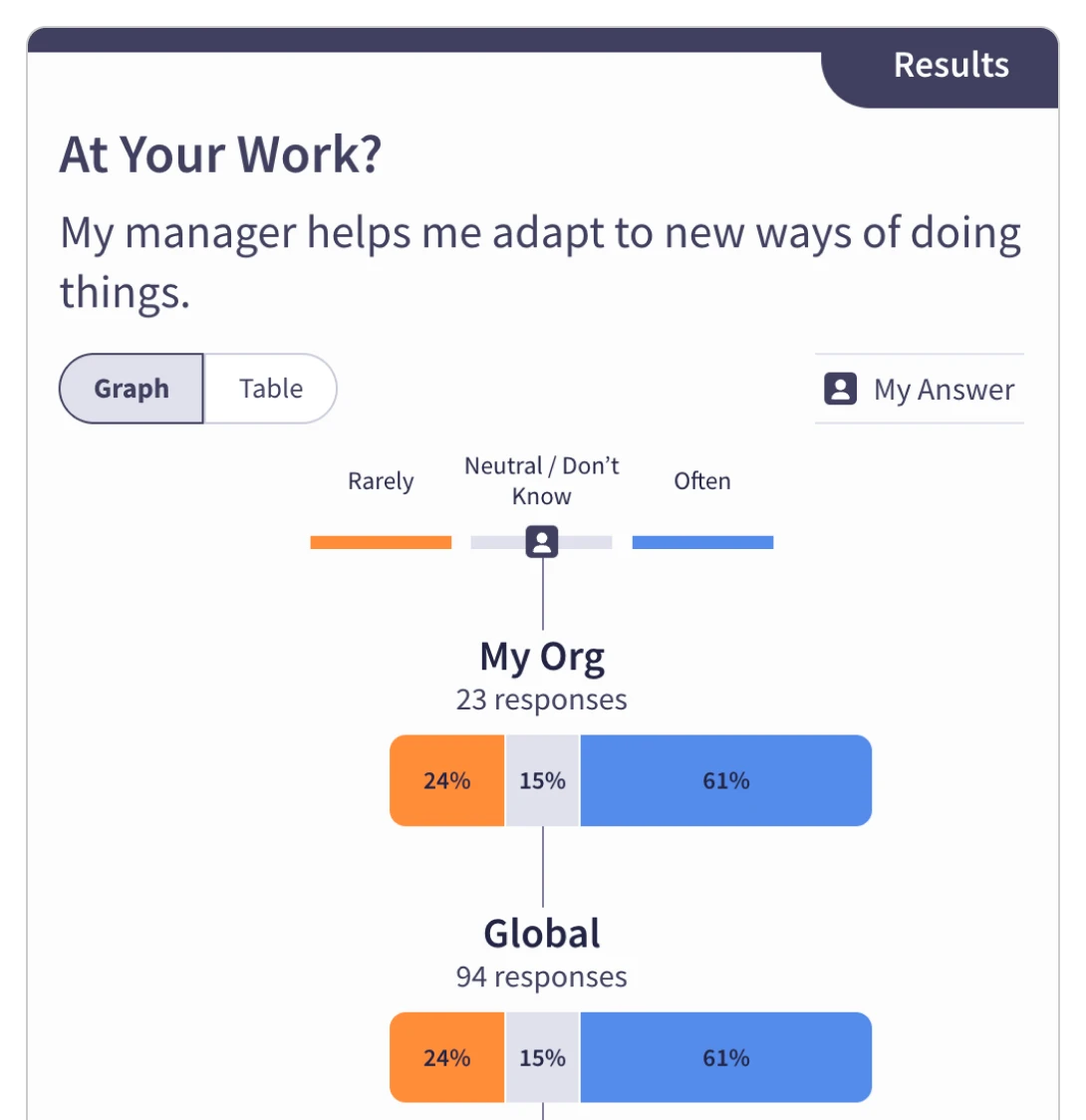
- Employee sentiment pulsing questions that provide leaders with insights into their workforce's core cultural competencies
- Emtrain's Expert Answers tool, enabling employeees to submit anonymous questions about sensitive issues.
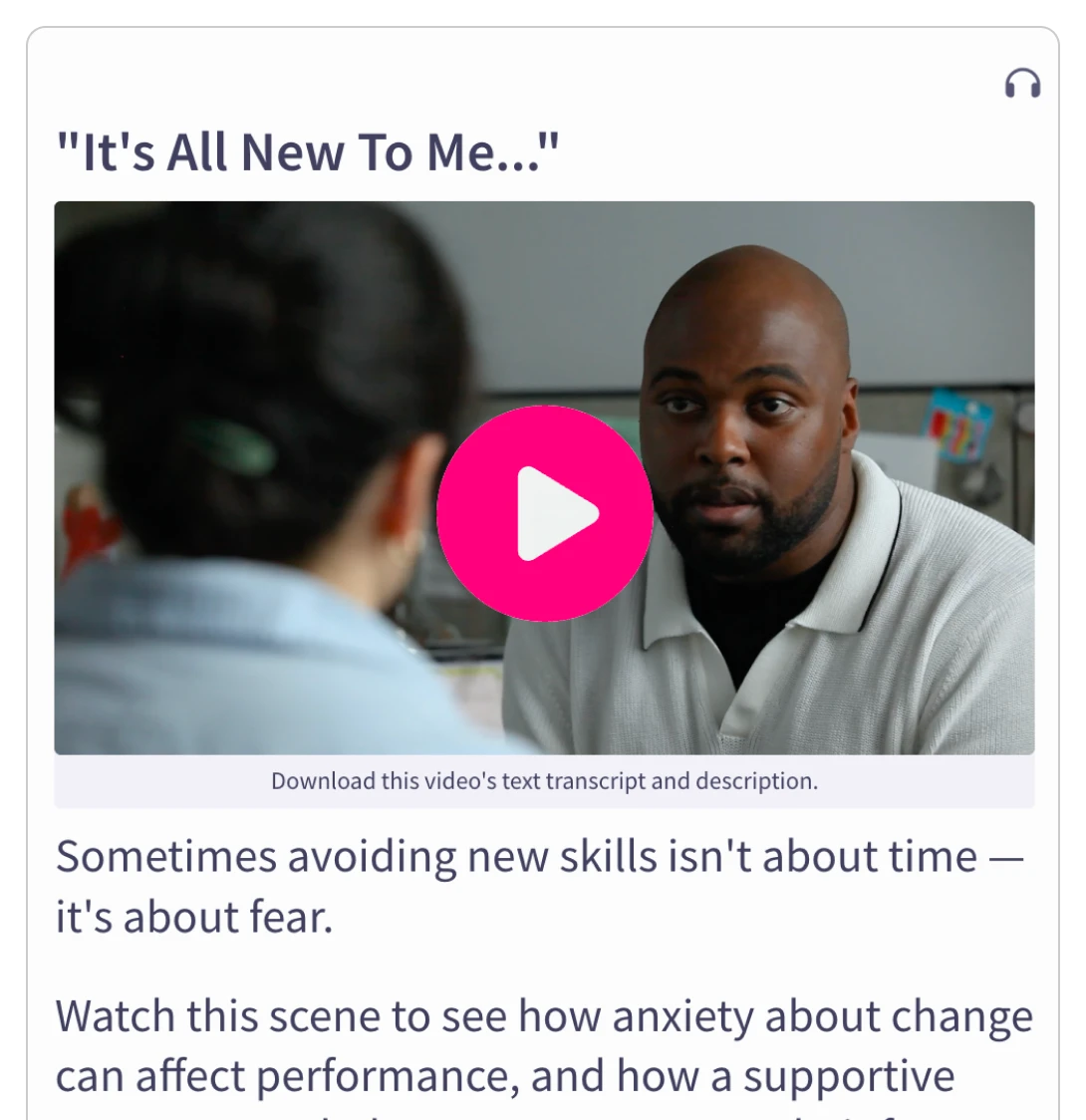
- Rich, contemporary video scences illustrating key concepts through realistic scenarios
- A data driven, skill-based approach to eLearning that establishes a shared language for employees.
Related Resources
Related Trainings
Frequently Asked Questions
Below are answers to common questions that employees and managers have about this topic. These FAQs provide a preview of what you’ll learn in this microlesson and why it matters.
Q
Why do new tools and technologies create anxiety for some employees?
New technology disrupts familiar routines, and the brain interprets unfamiliar tasks as a temporary loss of competence—making the learning curve feel more intimidating than it actually is.
Q
How can understanding the psychology behind change help reduce tech anxiety?
When learners understand that discomfort during change is a biological response—not a personal flaw—they feel more confident approaching new tools with patience and self-compassion.
Q
What mindset shift helps people overcome fear of not being as fast as their coworkers?
Reframing comparisons into growth-focused language—like 'I haven’t learned this yet'—reduces self-doubt and encourages steady, sustainable progress.
Q
Why are small wins so effective when learning new technology?
Completing a manageable task builds quick momentum, helping learners feel capable while reducing overwhelm associated with mastering complex systems.
Q
What should employees do when they feel stuck or unsure where to begin?
Ask for help early and share what you’ve already tried—this makes it easier for colleagues or IT support to provide clear, efficient guidance.