When an employee raises a concern about harassment, discrimination, or workplace misconduct, the way a manager responds matters.
Even well-intentioned decisions can create serious legal risk if they negatively impact the employee who spoke up.
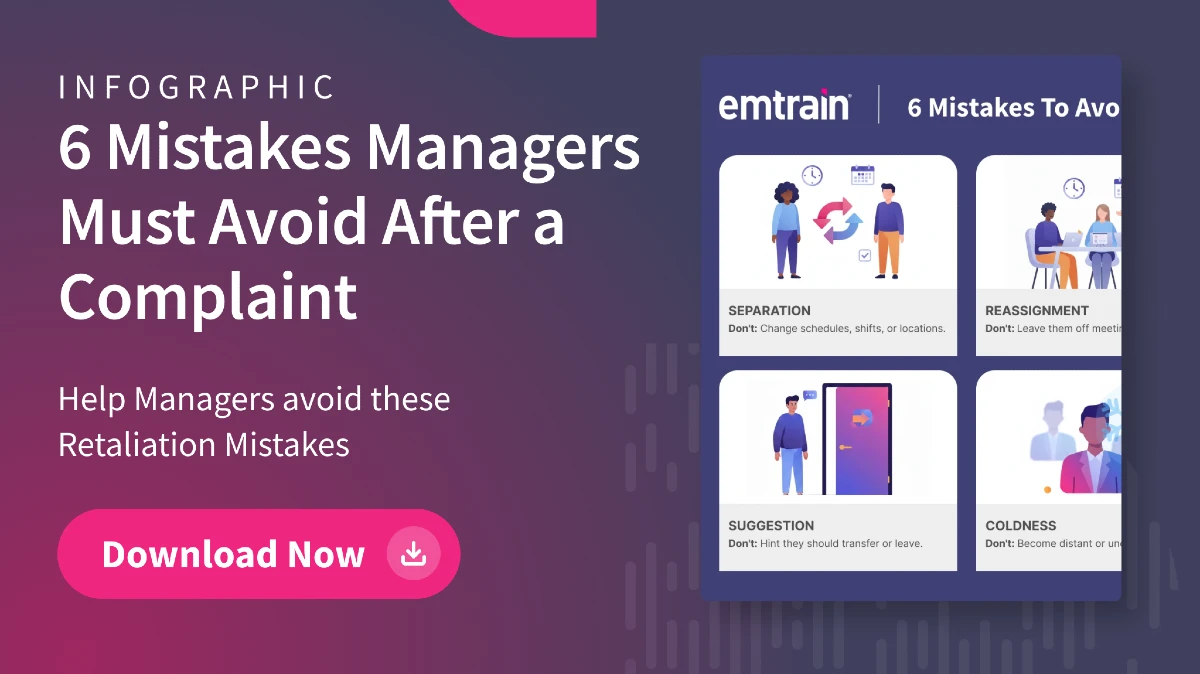
The 6 Mistakes to Avoid After a Complaint infographic helps managers quickly recognize actions that may appear retaliatory—even when the intent was simply to solve a problem or reduce conflict.
This visual checklist highlights common mistakes managers make after complaints and provides guidance to help leaders respond more thoughtfully.
What This Retaliation Infographic Shows
This quick-reference resource outlines six common retaliation risks managers should avoid after an employee complaint, including:
✔ Separating employees by changing schedules or locations
✔ Removing employees from projects or meetings
✔ Suddenly increasing scrutiny or micromanaging performance
✔ Suggesting an employee transfer or leave their role
✔ Becoming distant or reducing communication
✔ Allowing coworkers to exclude the employee from team activities
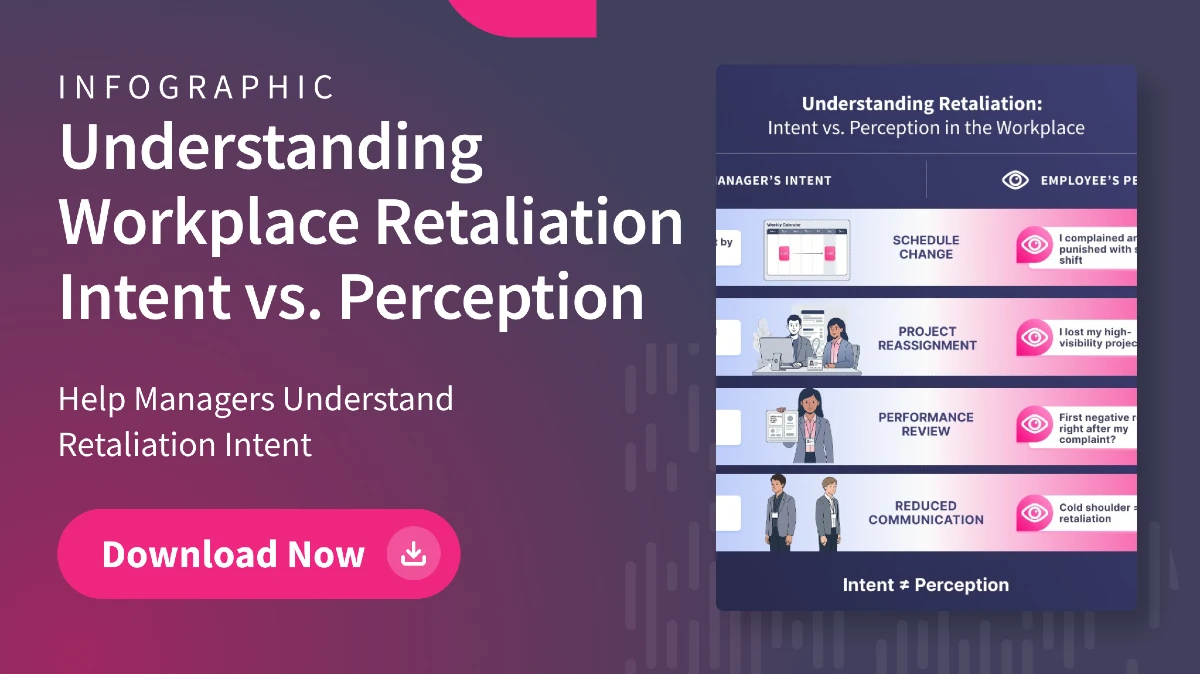
Each example shows how actions meant to “manage the situation” can easily be interpreted as retaliation.
Why These Mistakes Matter for Retaliation Intent
Retaliation is consistently the most common complaint filed with the EEOC.
Many retaliation claims arise not from intentional punishment, but from reactive management decisions made after a complaint.
For example, managers may:
- Separate employees to avoid conflict
- Remove someone from a project to “protect them”
- Begin documenting performance issues more closely
- Reduce communication to avoid uncomfortable conversations
While these actions may feel practical in the moment, they can create the appearance that the employee is being penalized for speaking up.
Understanding these risks helps managers pause, consult HR, and make better decisions.
Who Should Use This Resource
This infographic is designed for:
- People managers and supervisors
- HR leaders and HR business partners
- Compliance and legal teams
- Organizations strengthening harassment prevention training
- Companies working to build stronger speak-up cultures
It works well as a leadership training reinforcement tool, helping managers quickly recognize retaliation risks in everyday workplace situations.
Help Managers Respond to Complaints the Right Way
Employees must feel safe raising concerns without fear of negative consequences.
When managers understand how their actions may be perceived after a complaint, organizations reduce retaliation risk and strengthen workplace trust.
The 6 Mistakes to Avoid After a Complaint infographic provides a simple visual guide leaders can use to respond more carefully and protect both employees and the organization.
Download the Retaliation Prevention Infographic
Complete the form above to access the 6 Mistakes Managers Must Avoid After a Complaint infographic and help your leaders recognize retaliation risks before they happen.