
Emtrain logo

Concept

HIPAA (Health Insurance Portability & Accountability Act) Definition

The Health Insurance Portability and Accountability Act (HIPAA) is a federal law enacted in 1996 to establish national standards for protecting individuals’ medical records and protected health information (PHI). It governs how healthcare providers, insurers, and any organization handling PHI create, store, access, and share that information. HIPAA ensures the confidentiality, integrity, and availability of health data while maintaining necessary healthcare operations.

Emtrain is the only compliance training provider that guaranteed to reduce ER claims

Emtrain’s harassment training course is engaging, interactive, and designed to spot and reduce EEO risk.
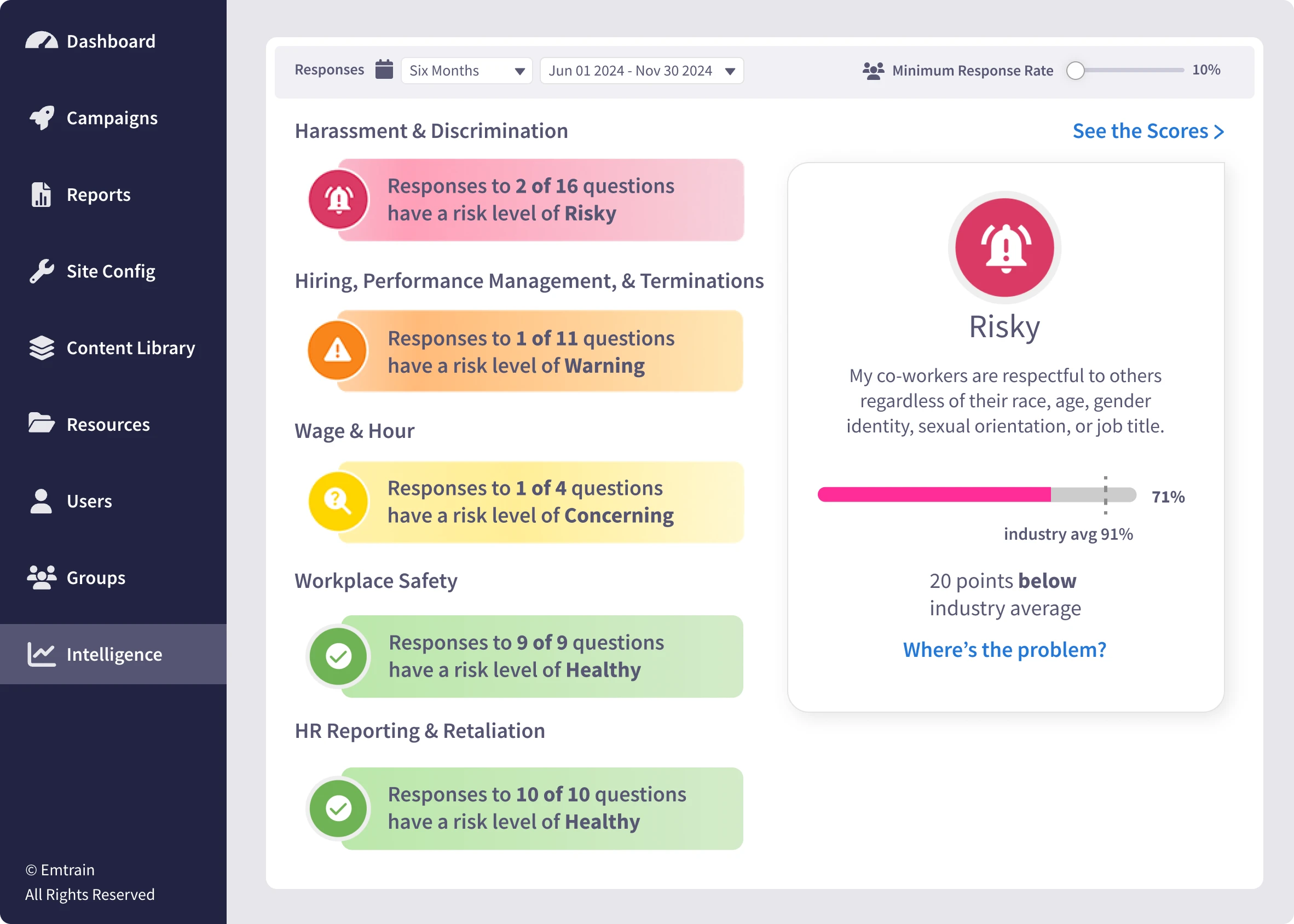
HR & People Risk Areas Dashboard

Courses and Mircolessons that cover HIPAA (Health Insurance Portability & Accountability Act)

Microlesson-Health-Information-Privacy-Rights

Sharing Health Information at Work

Learn the rules on sharing health information to employer.
Microlesson
all
Ethics
Course-HIPAA-Training-Course

HIPAA Training

Protect your organization and your clientele's PHI.
Course
all
Ethics

Additional Information on HIPAA (Health Insurance Portability & Accountability Act)

Historical Context: Why HIPAA Matters

Before HIPAA, there were no consistent national privacy standards for healthcare information. With the shift toward electronic health records in the late 1990s, HIPAA became essential to secure digital health data and prevent unauthorized disclosures. The Privacy Rule (2003) and Security Rule (2005) introduced obligations for covered entities and business associates to safeguard patient data. Today, HIPAA violations can lead to fines up to $1.5 million per year per violation type, according to the U.S. Department of Health and Human Services (HHS). More importantly, breaches erode trust between organizations and the people they serve

Examples of Common HIPAA Violations

Understanding the most common HIPAA violations helps organizations recognize how everyday mistakes and oversights can create significant compliance risks. Many of these issues stem from human error rather than intentional misconduct. By being aware of these examples, HR Managers, People Leaders, and Compliance Officers can take proactive steps to reduce exposure and protect sensitive information.

  • Unsecured Handling of Health Information: One of the most frequent HIPAA violations occurs when employees mishandle PHI. This includes leaving health documents on desks, sharing medical information through unsecured email, or storing files in unprotected cloud folders. Even a simple oversight—such as sending health details to the wrong recipient—can lead to a reportable breach. HIPAA Training helps employees understand secure methods for handling sensitive data. 
  • Unauthorized Access or Disclosure: Team members may access patient or employee health data without a legitimate business reason or share it with unauthorized individuals. This often happens when employees are curious, careless, or unaware of access protocols. Regular audits and training are essential to prevent improper access. 
  • Improper Disposal of PHI: Throwing away printed health records or deleting digital files without proper security measures can expose PHI. Organizations should implement strict data disposal policies, including shredding physical records and using secure digital deletion tools. 
  • Remote Work and Technology Risks: Remote and hybrid work environments introduce new challenges. Employees using public Wi-Fi, failing to lock screens, or discussing PHI during virtual meetings can unintentionally expose private information. Global Data Privacy Training teaches employees how to maintain confidentiality in flexible work environments. 
  • Vendor and Third-Party Mismanagement: When vendors handle PHI without a valid Business Associate Agreement (BAA) in place, organizations become vulnerable to compliance penalties. Compliance Officers should ensure that all third parties meet HIPAA standards and that contracts clearly outline data protection responsibilities. 
  • Cultural and Communication Missteps: Sometimes violations arise from casual or thoughtless communication. Discussing health details in hallways, using unsecured messaging apps, or sharing screenshots of sensitive data are all risky behaviors. Cyber Security Training and conduct programs can help cultivate better awareness and responsibility. 

By identifying these common violations early and addressing them through policy, training, and consistent reinforcement, organizations can reduce risk while strengthening trust. Proactive awareness ensures that protecting PHI becomes an integral part of daily operations rather than an afterthought.

How to Stay HIPAA Compliant at Work

  • Train your team regularly. Emtrain’s HIPAA Training is designed for employees handling PHI to ensure understanding of the Privacy and Security Rules.
  • Align with global data privacy standards. Global Data Privacy Training teaches teams how to interpret and implement multi-jurisdictional privacy standards.
  • Review and update your Code of Conduct. Ethical handling of sensitive data starts with company culture.
  • Monitor compliance continuously. Conduct internal audits and require annual re-certification of employees with PHI access.
  • Report issues early. Emtrain’s resource on Common HIPAA Violations details the most frequent pitfalls and how to prevent them.

Ensuring compliance is not just about meeting regulatory expectations—it’s about creating systems that make privacy protection second nature. Start by setting clear expectations, incorporating compliance into onboarding, and establishing open communication channels for reporting concerns. Employees should feel empowered to speak up when they notice a risk. Routine training sessions, scenario-based exercises, and leadership reinforcement go a long way in maintaining awareness.

Best Practices for Protecting Health Information

  1. Encrypt all PHI and ePHI in transit and at rest.
  2. Use strong authentication and limit access based on roles.
  3. Maintain secure data disposal policies for physical and digital records.
  4. Provide annual HIPAA and privacy training refreshers.
  5. Regularly assess third-party vendor compliance.
  6. Establish incident response and breach notification procedures.

Beyond technical safeguards, emphasize human behavior as a central part of your security culture. Encourage mindfulness about how PHI is handled in daily workflows—whether that’s in conversations, shared drives, or remote work environments. Promote a culture where security isn’t seen as restrictive but as a shared commitment to integrity and professionalism.

When employees understand why security measures exist, they are more likely to follow them consistently. Reinforce compliance through leadership modeling and reward systems that recognize diligence in protecting sensitive data. HIPAA success lies in proactive education, accountability, and an organization-wide sense of responsibility.

External references:

Recommended Reading from Emtrain

These resources provide timely, practical advice for HR and compliance leaders responsible for protecting sensitive information.

Final Thoughts

HIPAA compliance is not just a legal requirement—it’s a trust commitment. For HR Managers, it means ensuring employee health data confidentiality. For Compliance Officers, it’s about risk management and policy enforcement. For People Leaders, it’s building a culture where data protection is a shared value.

Emtrain’s HIPAA Training and Global Data Privacy Training provide scalable, interactive education that transforms compliance into a culture of care.

Video Preview: Common HIPAA Violations and Common-Sense Precautions

You might be surprised to learn that many HIPAA violations are not caused by hacking, system security breaches, or sophisticated technology failures. In reality, the most common issues stem from human error and poor judgment—such as discussing patient information in public spaces, leaving PHI unsecured, or sending emails to the wrong recipient.

This short video explains the most frequent HIPAA violations and demonstrates how to prevent them with everyday best practices. Learn the common-sense precautions that every HR Manager, People Leader, and Compliance Officer should know to safeguard your organization and its people.

Frequently Asked Questions

All individually identifiable health information in any form (e.g., paper, electronic).
Healthcare providers, health plans, and any business associates handling health information.
Violations can result in significant fines and penalties, depending on the severity.
HIPAA protects patient health information, including medical records, diagnoses, treatments, and any identifiable information related to a person’s health care.

Culture Forward Companies That Choose Emtrain

Okay, you got this far.
Let’s get compliant.

Search all Emtrain Resources

Search Emtrain’s course and microlesson selections, blog, resources, video libraries, and more.