
Home » Concepts » Health & Safety » Mental health
Mental health in the workplace refers to an employee’s psychological, emotional, and social well-being as it relates to their ability to function, engage, and perform at work. It influences how individuals handle stress, interact with colleagues, make decisions, and respond to challenges. Workplace mental health is not just the absence of mental illness—it includes a sense of psychological safety, belonging, and the ability to manage pressures in a healthy and sustainable way.
A mentally healthy workplace supports employees in navigating stress, encourages open communication, and actively reduces stigma around seeking help. It recognizes that mental well-being is directly tied to performance, engagement, and overall organizational resilience.
Emtrain’s harassment training course is engaging, interactive, and designed to spot and reduce EEO risk.
Mental health has not always been a visible or prioritized topic in workplace culture. Historically, workplace safety focused almost exclusively on physical risks—machinery, hazards, and compliance with occupational safety standards. Psychological well-being was often dismissed as a personal issue rather than an organizational responsibility.
Over time, research and public awareness have reshaped this perspective. Institutions like the Centers for Disease Control and Prevention (CDC) and the National Institute of Mental Health (NIMH) have highlighted the growing impact of mental health on workforce productivity, absenteeism, and long-term health outcomes. According to the CDC, mental health conditions such as stress, anxiety, and depression significantly contribute to lost productivity and increased healthcare costs.
Similarly, the NIMH emphasizes that mental health is essential to overall health and directly affects how individuals think, feel, and act in daily life.
In today’s workplace, mental health is no longer optional—it is foundational. The rise of remote work, economic uncertainty, and evolving workplace expectations has made stress more complex and more visible. Organizations that fail to address mental health risks face increased turnover, disengagement, and even legal exposure tied to harassment, discrimination, and unsafe work environments.
Emtrain’s research and resources, such as The Rise of Mental Health Leave and Empathy and Mental Health, reinforce a key insight: employees are not separating their mental well-being from their work experience. Culture and mental health are now deeply interconnected.
Mental health challenges in the workplace often show up in subtle but impactful ways.
Consider an employee who has been consistently high-performing but suddenly becomes withdrawn, misses deadlines, and avoids team interactions. Without awareness, a manager might interpret this as disengagement or lack of accountability. In reality, the employee may be experiencing burnout or anxiety, and the lack of support could worsen their condition.
In another scenario, a team environment lacks psychological safety. Employees hesitate to speak up in meetings, fearing judgment or negative consequences. Over time, this creates stress, silences innovation, and reinforces in-group/out-group dynamics—ultimately impacting both culture and performance.
A more visible example involves workplace stress accumulation. An employee juggling tight deadlines, unclear expectations, and limited support may begin to experience physical symptoms such as fatigue or headaches. Without intervention, this can escalate into more serious mental health concerns or lead to extended leave.
These scenarios highlight an important truth: mental health is not always visible, but its impact is always felt.
Organizations that effectively support mental health take a proactive, culture-driven approach rather than a reactive one.
First, leadership plays a critical role. Managers must be trained to recognize early signs of stress and respond with empathy rather than judgment. Validation, as explored in Emtrain’s Why Validation Is a Critical Leadership Skill, helps employees feel seen and supported, which reduces risk and builds trust.
Second, organizations should normalize conversations around mental health. When employees feel safe discussing challenges, they are more likely to seek support early—before issues escalate into burnout or conflict.
Third, clear policies and resources are essential. This includes access to mental health benefits, flexible work arrangements when possible, and clear pathways for reporting concerns related to workplace stress, harassment, or unsafe conditions.
Finally, organizations should invest in continuous learning. Training programs that address stress awareness, psychological safety, and inclusive communication equip employees with the skills to support both themselves and others.
Emtrain approaches mental health as both a cultural priority and a measurable risk factor.
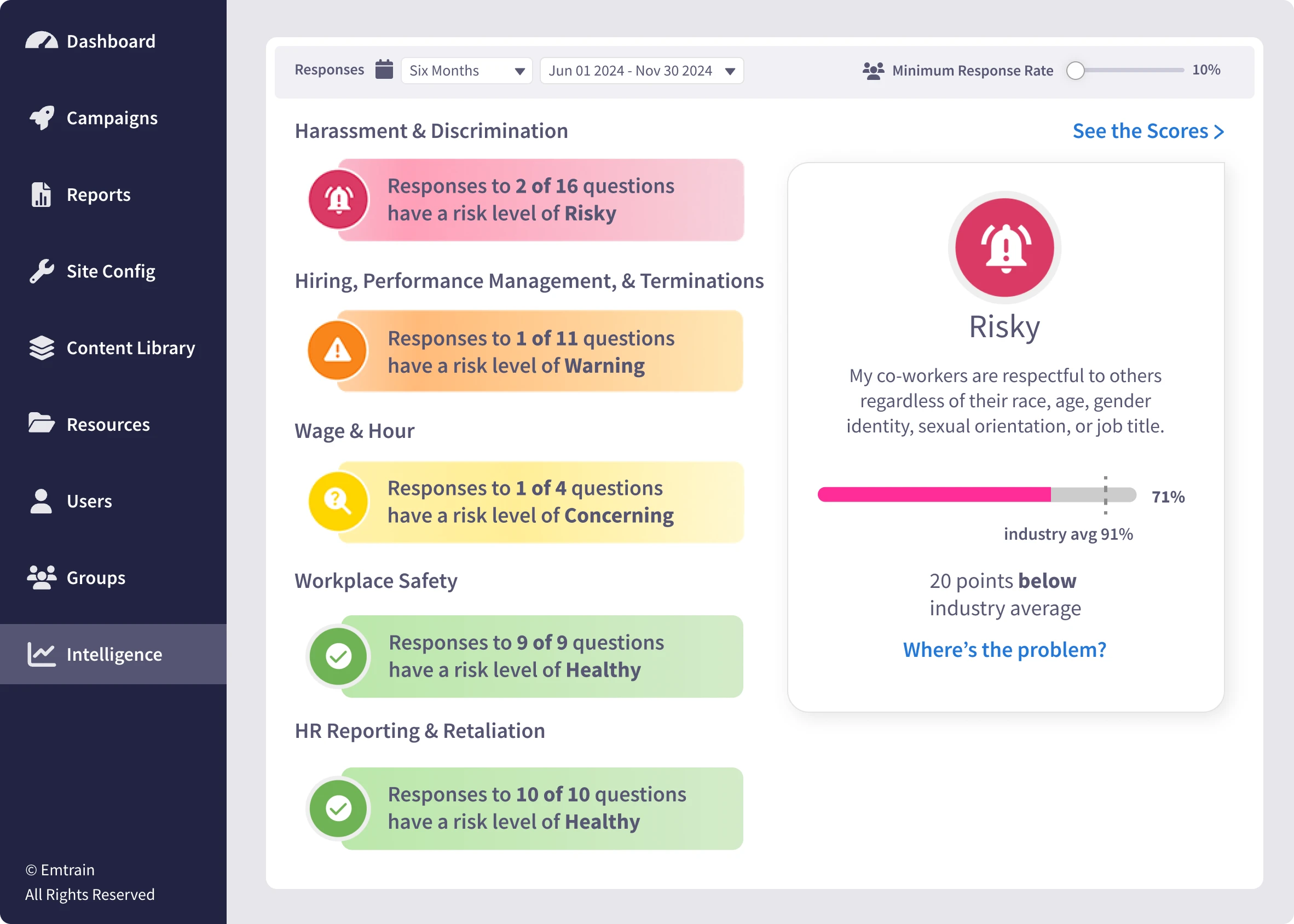
Through Emtrain Intelligence, organizations can monitor employee sentiment and identify patterns related to stress, inclusion, and psychological safety. This data-driven approach allows leaders to proactively address risk areas before they escalate into larger issues such as harassment claims or disengagement.
Training programs like the Preventing Workplace Harassment Course reinforce the connection between respectful behavior and mental well-being. A workplace free from harassment is not only compliant—it is essential for maintaining psychological safety.
Emtrain’s microlessons, including Stress Awareness and Psychological Safety and Recognizing Personal Stress and Seeking Support, provide practical, skill-based learning that employees can apply immediately. These short, focused lessons help individuals recognize stress signals, communicate effectively, and seek support when needed.
Additionally, Emtrain’s content emphasizes empathy, validation, and real-world scenarios—ensuring that mental health is not treated as an abstract concept but as a daily workplace experience that can be improved through behavior change.
Mental health is no longer a secondary consideration in the workplace—it is a core driver of culture, performance, and risk management. Organizations that invest in mental well-being create environments where employees feel safe, supported, and empowered to do their best work.
By integrating mental health into training, leadership development, and risk monitoring, companies can move beyond compliance and toward a more resilient and inclusive workplace. The goal is not just to reduce negative outcomes, but to build a culture where employees can thrive.
A manager confronts an employee who missed a client call, only to learn the employee is struggling without necessary medication and facing serious mental health challenges. Rather than responding with empathy, the manager focuses on performance issues, leaving the employee feeling like a burden to the team. The situation escalates when the employee requests a mental health leave of absence, highlighting how a lack of understanding and supportive communication can increase risk, damage trust, and negatively impact both the individual and the organization.