




See Individuals Clearly and Create a Workplace Where Everyone Thrives
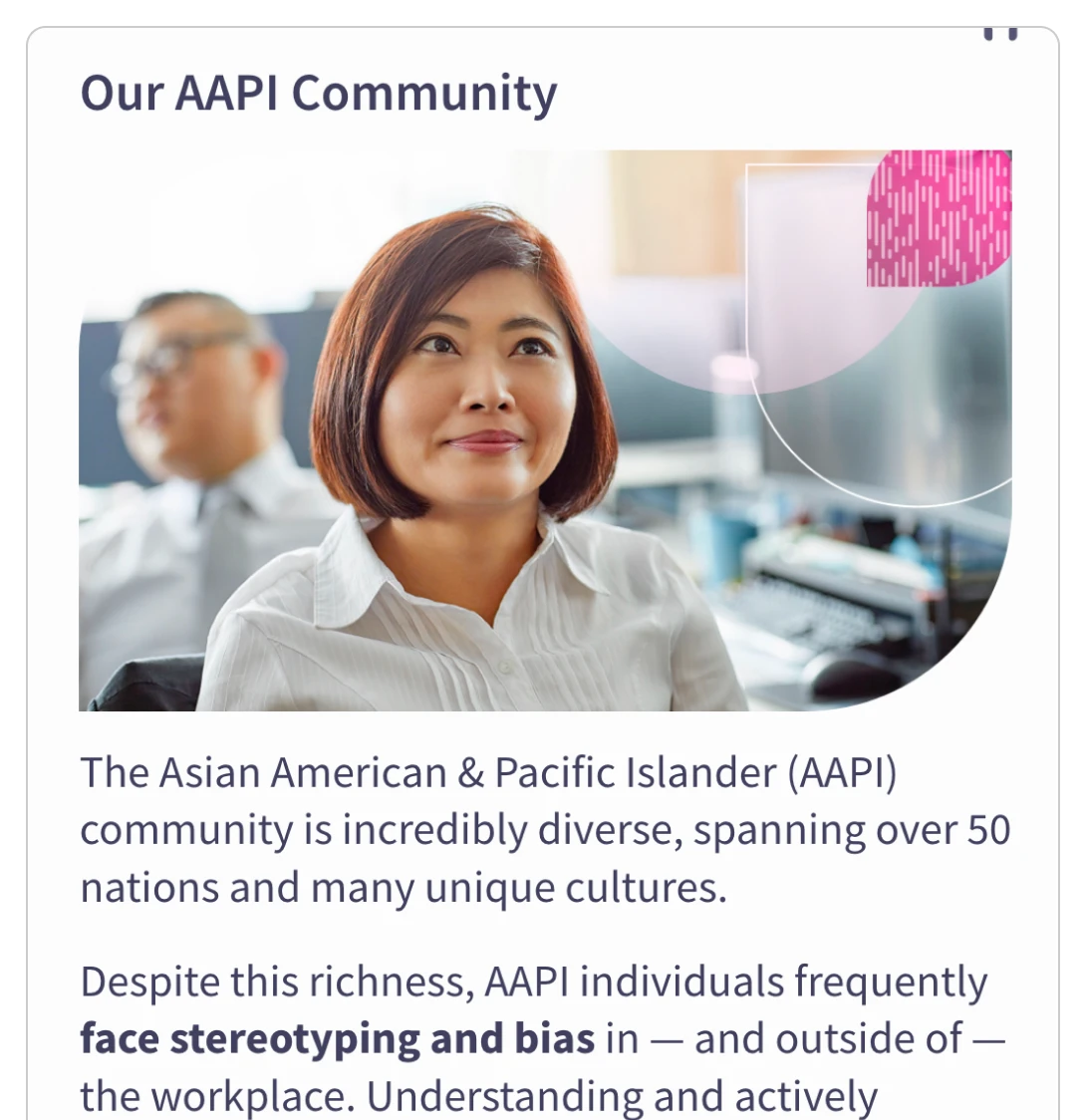
Asian American and Pacific Islander (AAPI) communities reflect a vast range of cultures, histories, and identities—yet in many workplaces, they’re still treated as a single monolithic group. This oversimplification fuels stereotypes, including seemingly “positive” ones like the model minority myth, which can create unrealistic expectations, mask real challenges, and silence individual experiences. In today’s workplace, inclusion requires moving beyond assumptions and actively learning about people as individuals.
Microlesson Description
This microlesson helps employees understand the diversity within AAPI communities and recognize how bias, microaggressions, and stereotype-driven behavior show up in everyday interactions. Learners will practice examining their own assumptions, listening with empathy, and stepping in when they witness problematic or biased comments. The goal: foster a culture where AAPI colleagues feel respected, seen, and supported—not reduced to stereotypes..Key Concepts
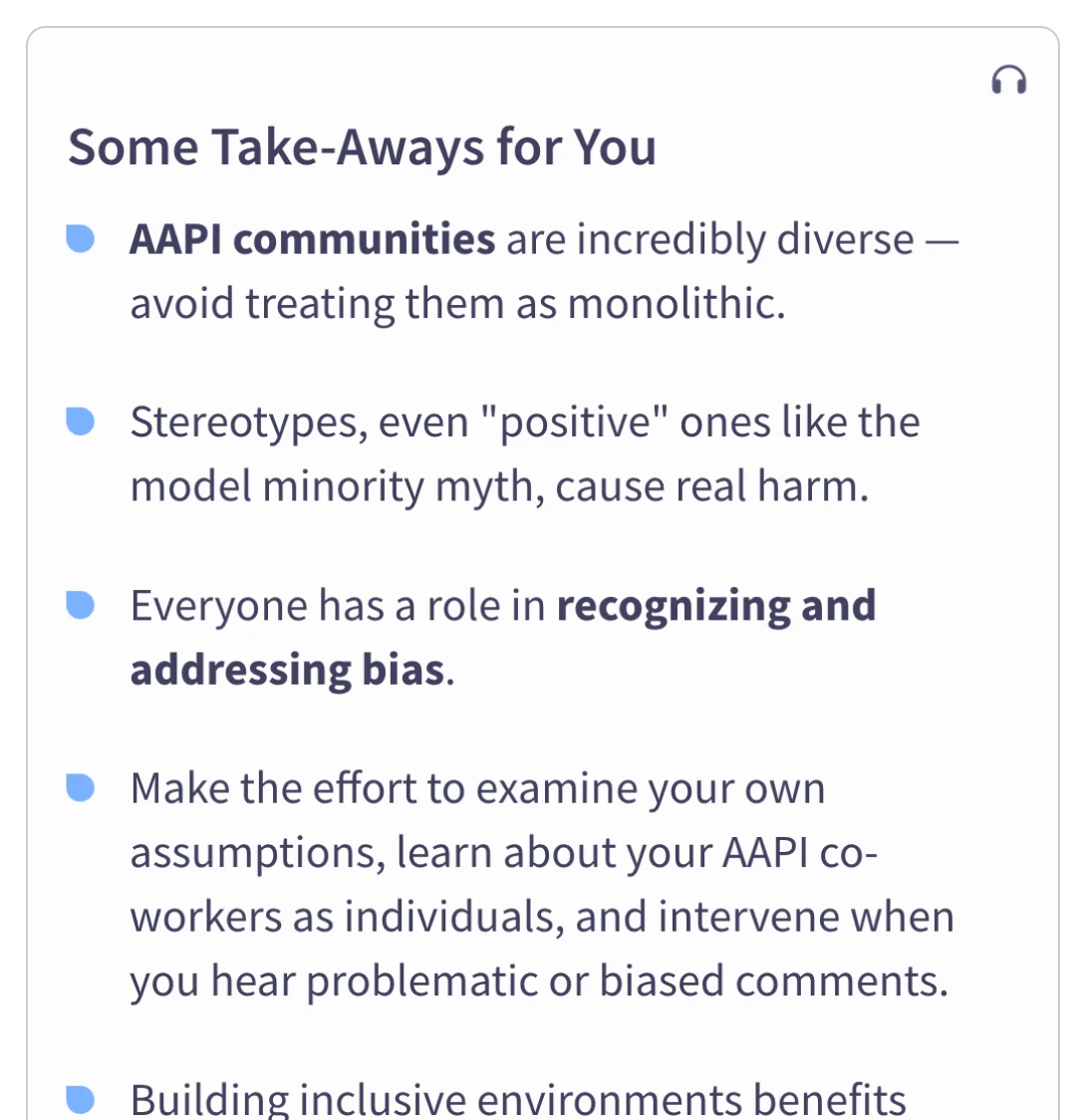
- AAPI communities are incredibly diverse—avoid treating them as monolithic.
- Stereotypes, including “positive” ones like the model minority myth, cause real harm.
- Everyone has a role in recognizing and addressing bias.
- Inclusion takes awareness and action: examine your assumptions, learn about AAPI coworkers as individuals, and intervene when needed.
Microlesson Features
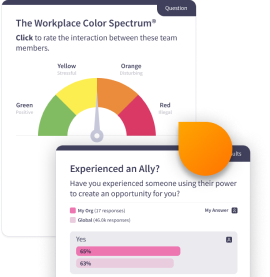
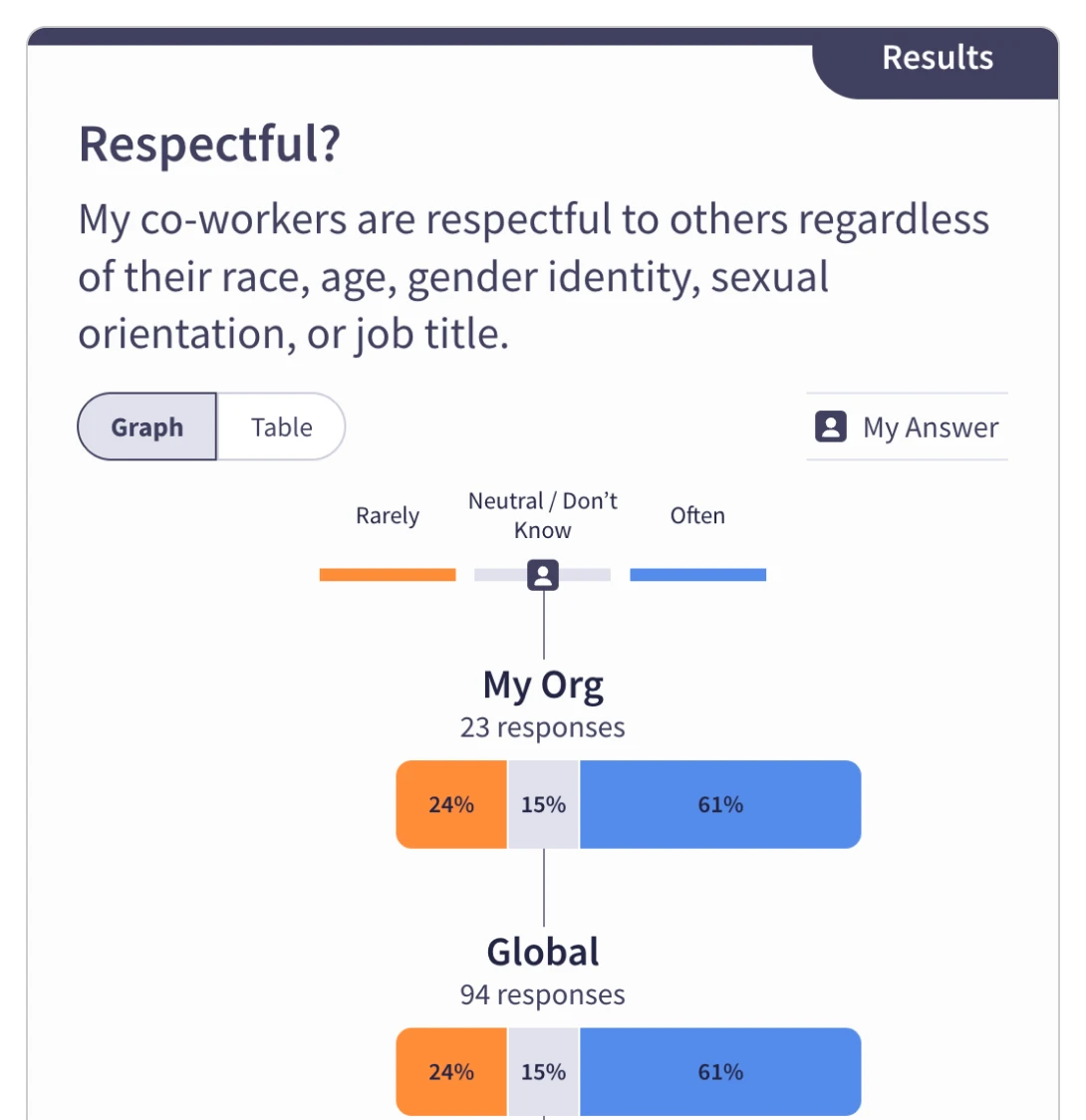
- Employee sentiment pulsing questions that provide leaders with insights into their workforce's core cultural competencies
- Emtrain's Expert Answers tool, enabling employeees to submit anonymous questions about sensitive issues.
- Rich, contemporary video scences illustrating key concepts through realistic scenarios
- A data driven, skill-based approach to eLearning that establishes a shared language for employees.
Build Awareness, Challenge Assumptions, and Strengthen Inclusion
Related Resources
Related Trainings
Frequently Asked Questions
Below are answers to common questions that employees and managers have about this topic. These FAQs provide a preview of what you’ll learn in this microlesson and why it matters.
Q
Why is it important to understand the diversity within the AAPI community?
The AAPI community includes more than 50 distinct ethnic groups, each with unique histories and experiences. Recognising this diversity helps prevent monolithic assumptions and supports a more inclusive workplace.
Q
What is the harm in treating AAPI colleagues as a single group?
Viewing AAPI colleagues as a monolithic group erases individual identities and can reinforce stereotypes. This limits opportunities, undermines inclusion, and contributes to systemic barriers at work.
Q
How does the 'model minority' myth negatively impact AAPI employees?
The model minority myth creates unrealistic expectations and minimises real challenges faced by AAPI individuals. It can also reduce access to support, overlook discrimination, and silence employees’ lived experiences.
Q
What role do employees play in addressing bias towards AAPI colleagues?
All employees share responsibility for recognising biased comments, challenging harmful assumptions, and promoting an environment where AAPI colleagues feel respected and valued.
Q
How can I become more aware of my own assumptions about AAPI colleagues?
Reflect on your perceptions, seek out diverse perspectives, and engage in continuous learning. Asking thoughtful questions and listening without judgement helps challenge unconscious bias.