




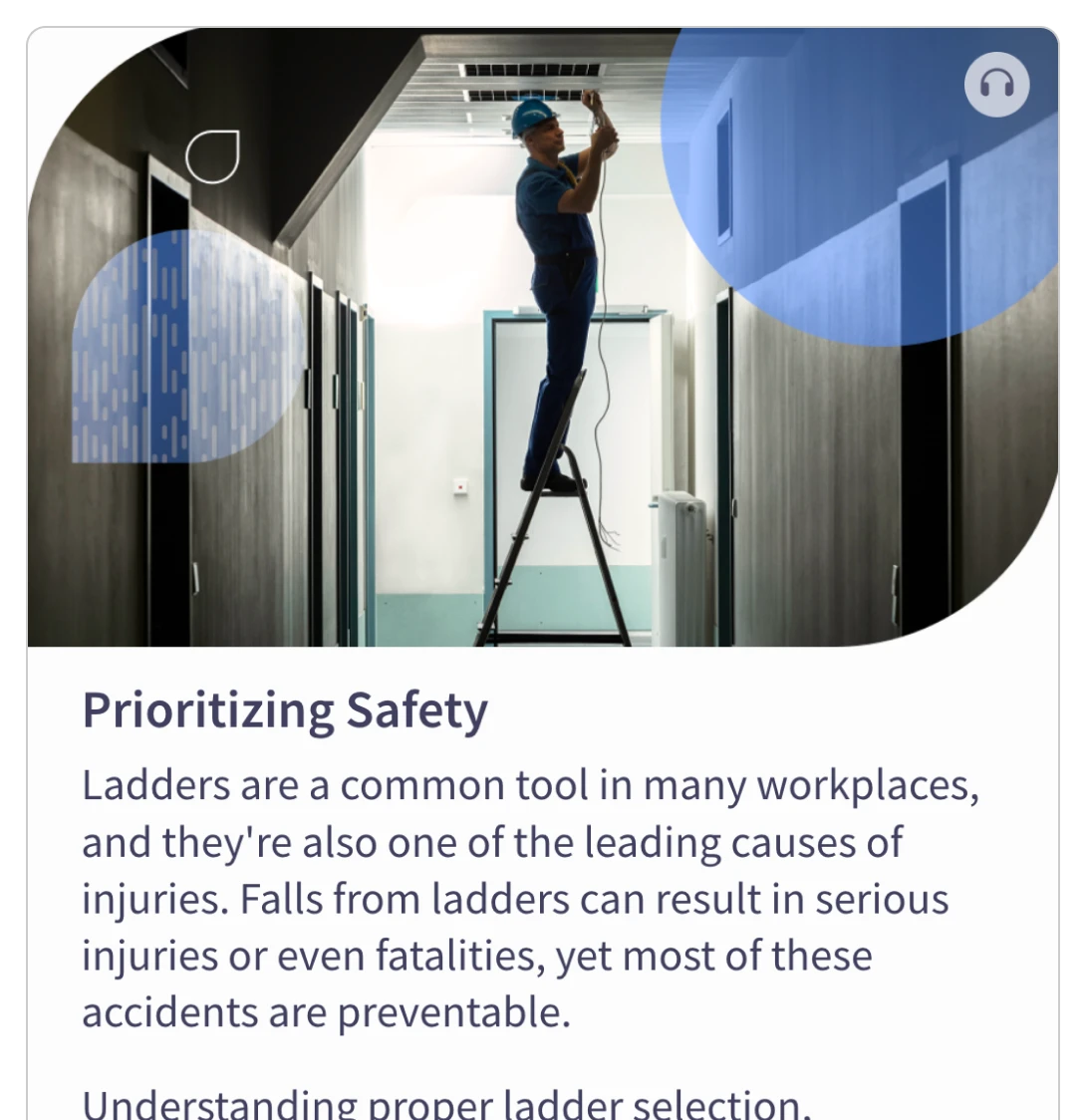
Ladders are a common tool in many workplaces, yet falls from ladders remain one of the leading causes of serious injuries and fatalities. These incidents often happen during routine tasks when hazards are overlooked or proper setup is rushed. Ladder Safety focuses on building awareness of stability, balance, and preparation so employees understand how small decisions—like ladder selection and positioning—can have major safety consequences.
Microlesson Description
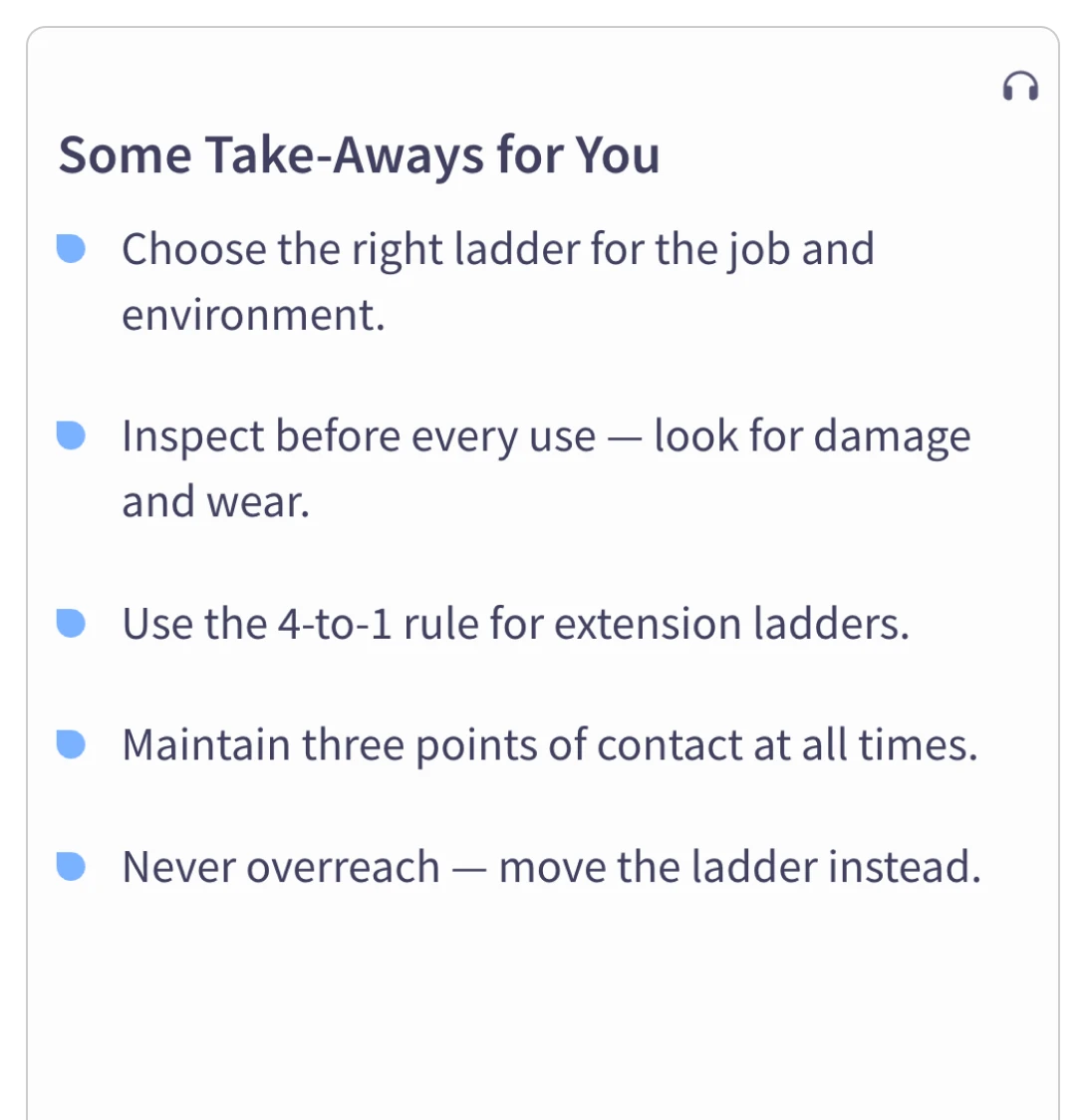
The Ladder Safety microlesson provides a practical guide to selecting, inspecting, and using ladders safely in a variety of work environments. Learners gain an understanding of different ladder types, common hazards, and the importance of pre-use inspections. The lesson reinforces critical safety techniques such as proper setup, the 4-to-1 rule for extension ladders, and maintaining three points of contact while climbing. By emphasizing deliberate movement and hazard awareness, the lesson helps ensure employees return home safely at the end of every shift.
Key Concepts
- Falls from ladders are a leading cause of serious workplace injuries
- Selecting the right ladder type, height, and duty rating is essential
- Pre-use inspections identify damage that can cause ladder failure
- Common hazards include improper setup, overreaching, and overloading
- The 4-to-1 rule ensures proper angle for extension ladder
- Maintaining three points of contact improves balance and stability
- Overreaching significantly increases fall risk—move the ladder instead
- Special precautions are required near electricity, roofs, and when working alone
Microlesson Features
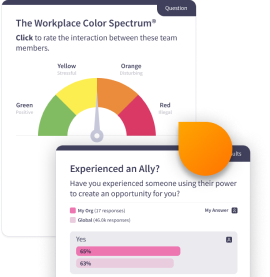
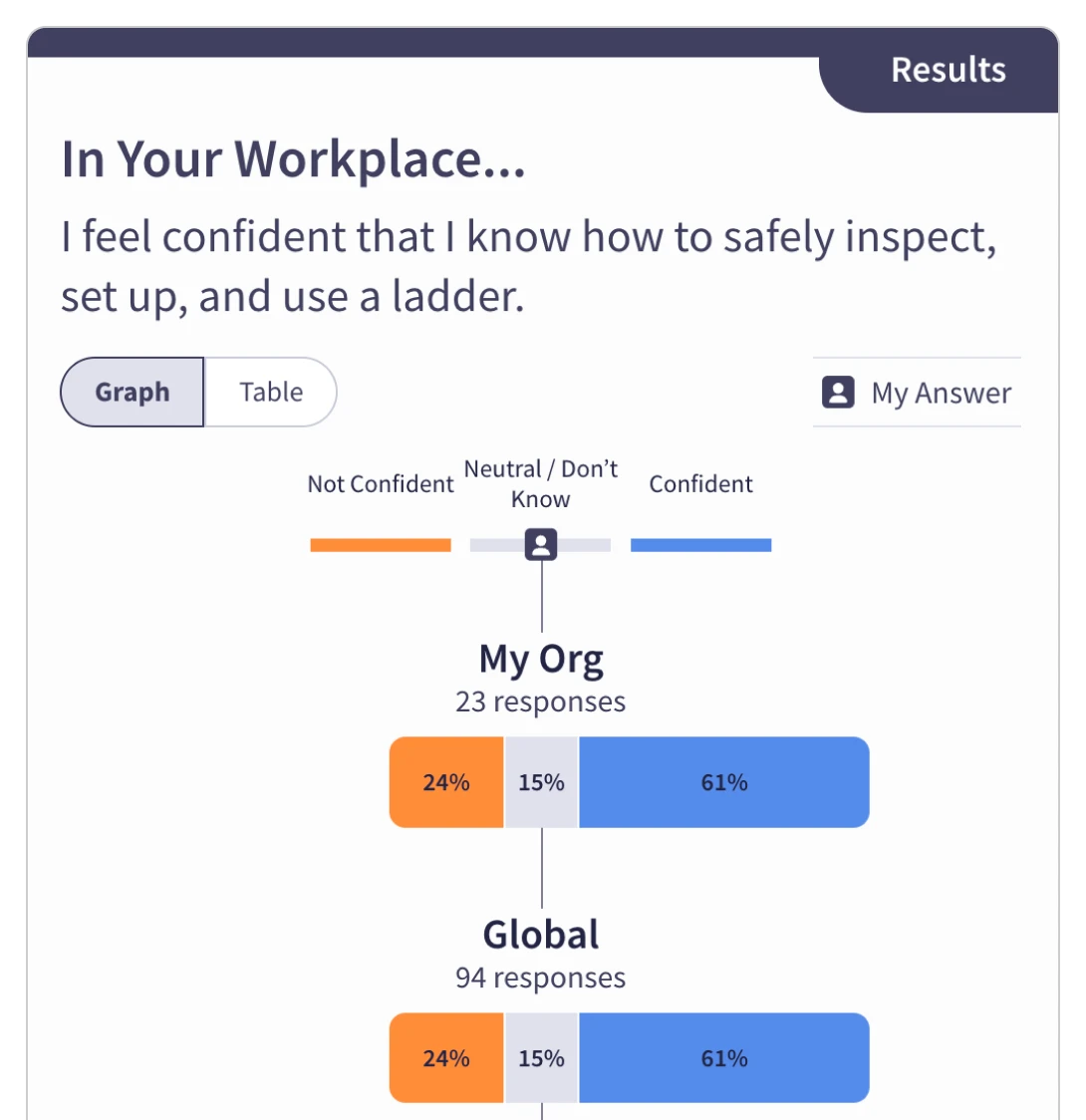
- Employee sentiment pulsing questions that provide leaders with insights into their workforce's core cultural competencies
- Emtrain's Expert Answers tool, enabling employeees to submit anonymous questions about sensitive issues.
- Rich, contemporary video scences illustrating key concepts through realistic scenarios
- A data driven, skill-based approach to eLearning that establishes a shared language for employees.
Related Resources
Related Trainings
Frequently Asked Questions
Below are answers to common questions that employees and managers have about this topic. These FAQs provide a preview of what you’ll learn in this microlesson and why it matters.