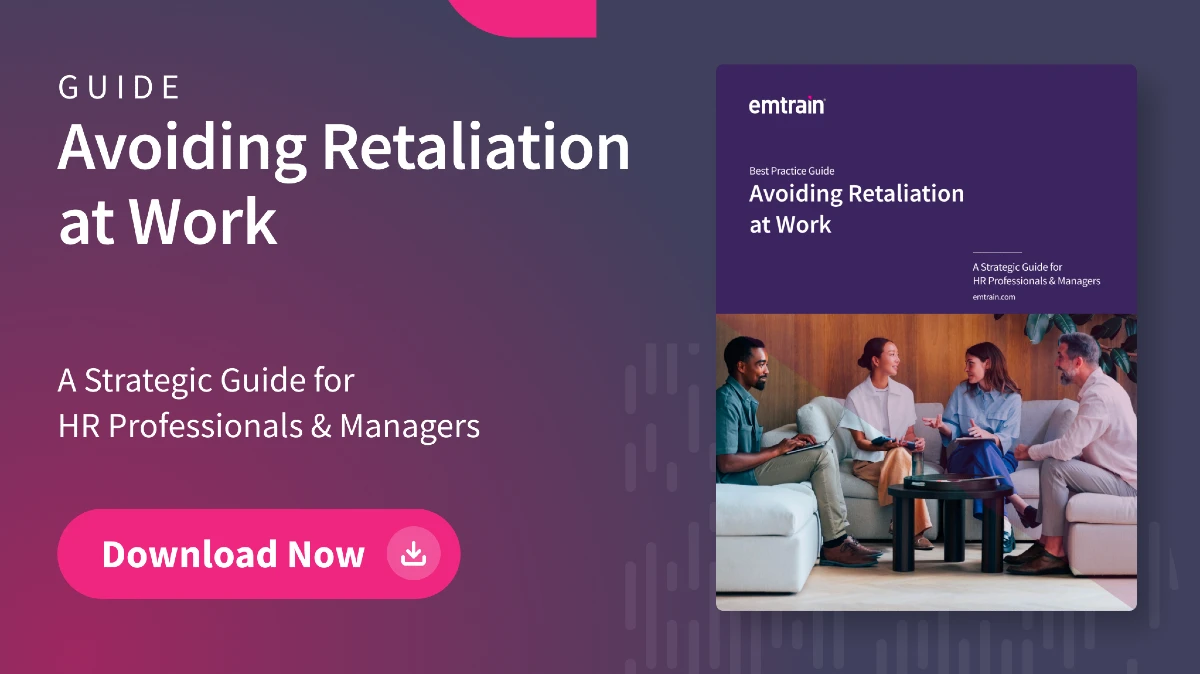
A Strategic Guide for HR Professionals & Managers
Retaliation is the most common workplace complaint filed with the EEOC—and one of the easiest to prove.
Most managers don’t intend to retaliate. They’re trying to solve problems, manage performance, or reduce team conflict. But when employment decisions follow closely after an employee raises a concern, even routine actions can create serious legal exposure and cultural damage.
This practical guide helps leaders understand where good intentions meet bad optics—and how to avoid costly mistakes.
What You’ll Learn in This Retaliation Prevention Guide
Inside this resource, you’ll discover:
- What qualifies as protected activity—including informal complaints
- Why retaliation claims are easier to prove than many discrimination claims
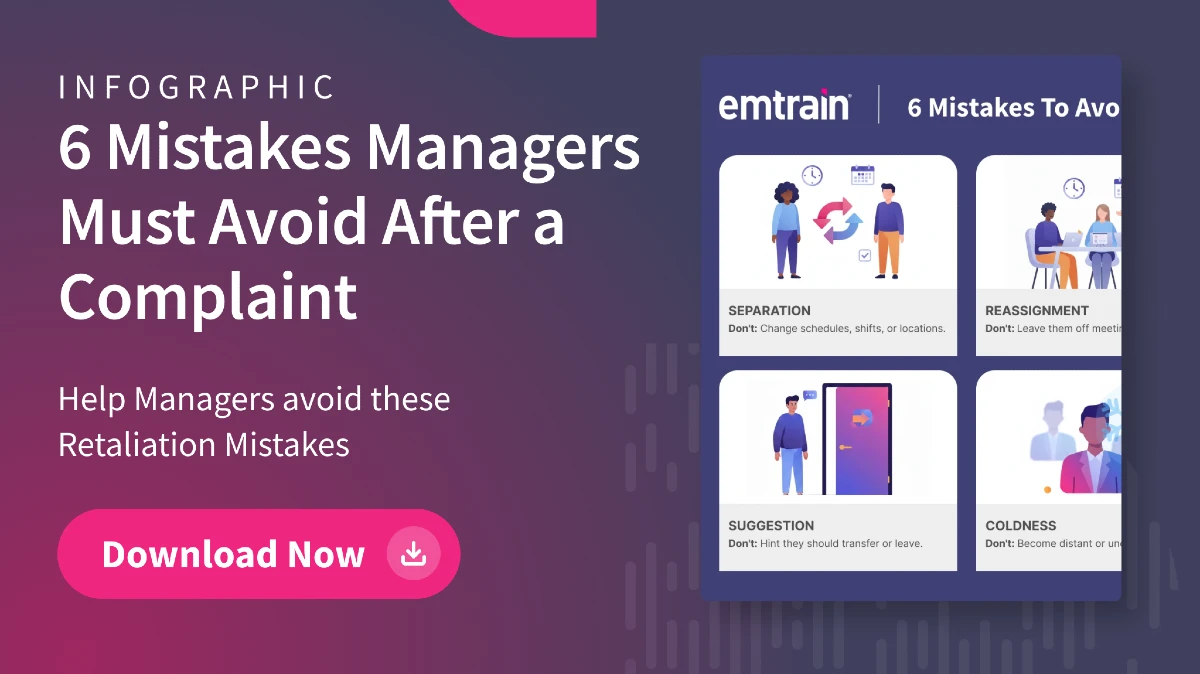
- Real-world workplace retaliation examples and management mistakes
- How to pause management decisions after complaints
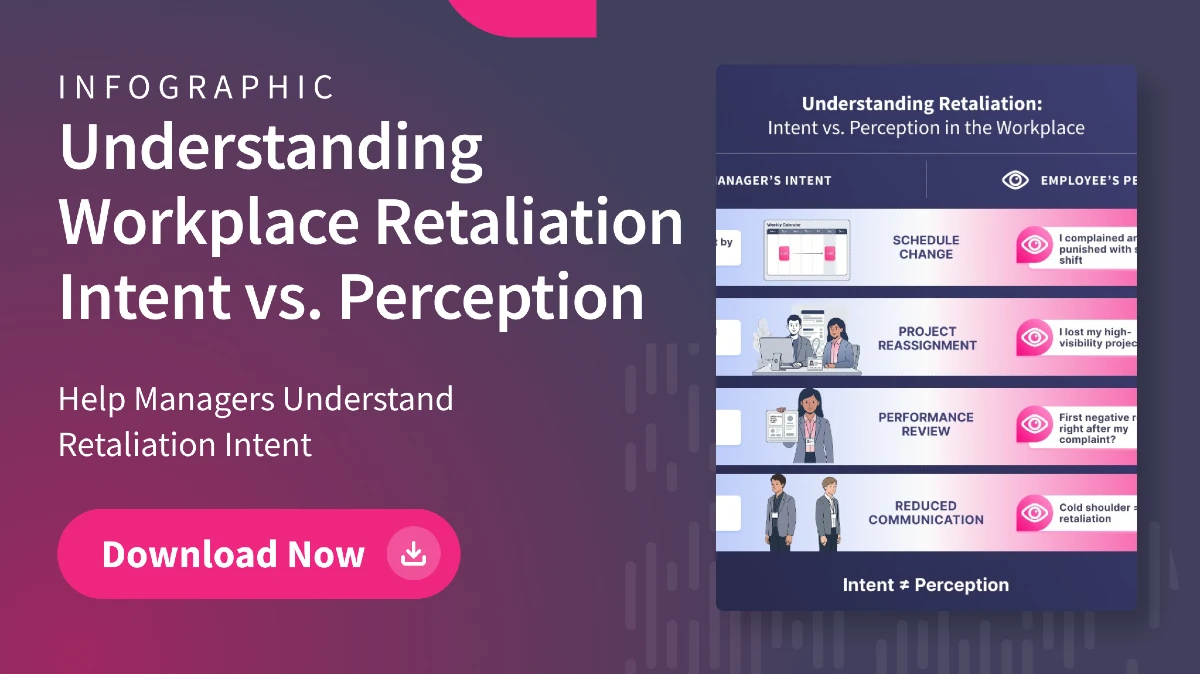
- Why intent matters less than appearance and impact
- Practical strategies to partner effectively with HR
This guide includes video scenario-based examples that show how common management decisions—schedule changes, role reassignments, exclusion from meetings, documentation shifts—can unintentionally become retaliation.
Why This Guide Matters for Managers
Retaliation doesn’t just create legal risk.
It destroys psychological safety.
It silences employees from raising concerns.
It allows harassment and discrimination to escalate.
It damages culture and trust.
When employees believe speaking up leads to negative consequences, they stop reporting problems. That silence increases organizational risk.
Managers need clarity. HR needs consistency. Organizations need defensible processes.
This guide provides all three.
Who Should Download This Resource?
This guide is ideal for:
- HR leaders and HR business partners
- Compliance and legal teams
- Frontline managers and supervisors
- Executive leaders
- Multi-state employers navigating complex retaliation standards
If your organization is focused on reducing EEOC exposure, strengthening harassment prevention training, or building a speak-up culture, this guide is essential.
Strengthen Compliance and Culture at the Same Time
Avoiding retaliation isn’t just about following the law—it’s about fairness.
When managers respond consistently and consult HR before acting, employees feel safer raising concerns. Early reporting prevents larger problems later.
Equip your leaders with the awareness and discipline needed to manage effectively without creating retaliation risk.