A Practical Checklist for Managers
When an employee raises a concern, your response matters. Retaliation claims are one of the most common employment risks facing organizations today. Even well-intended decisions can be perceived as retaliation if they negatively impact an employee after a complaint. This Preventing Workplace Retaliation Checklist for Managers gives leaders a clear, step-by-step framework to respond appropriately, reduce legal exposure, and protect workplace trust.
What This Checklist Helps You Do
This practical resource guides managers through:
- Building a retaliation-free culture before a complaint occurs
- Responding correctly in the first 24–48 hours
- Partnering effectively with HR
- Avoiding subtle retaliation behaviors
- Protecting both employees and the organization
It covers what to do — and just as importantly — what not to do after someone raises a concern.
Why This Resource Matters
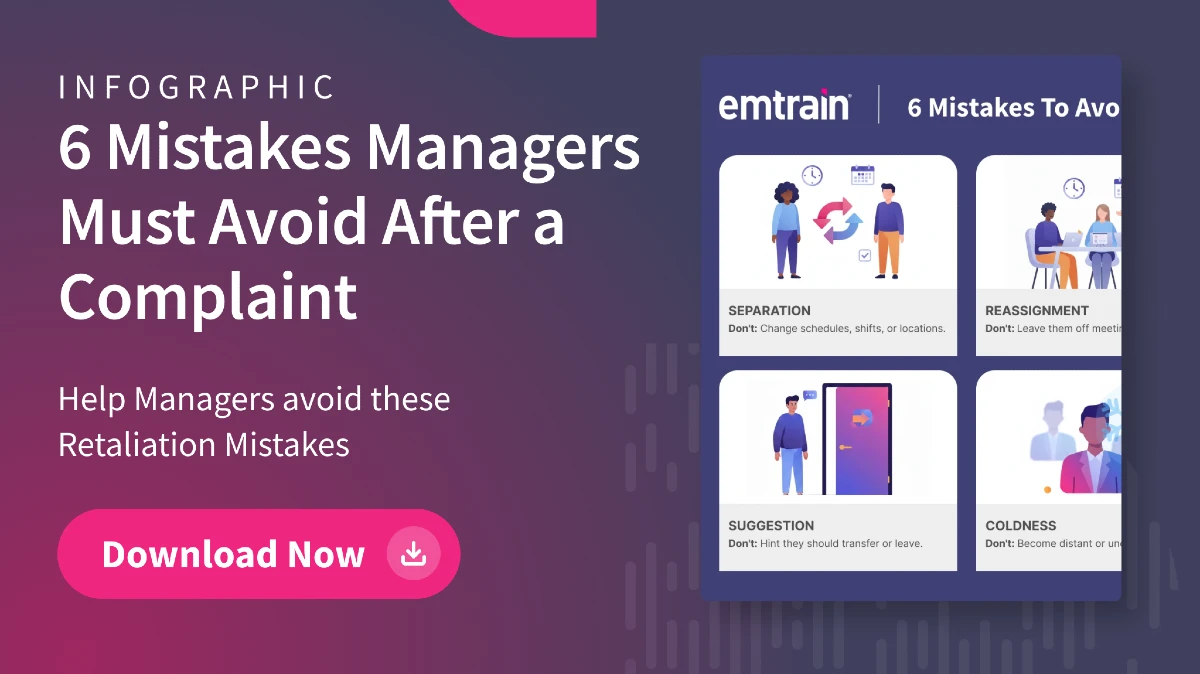
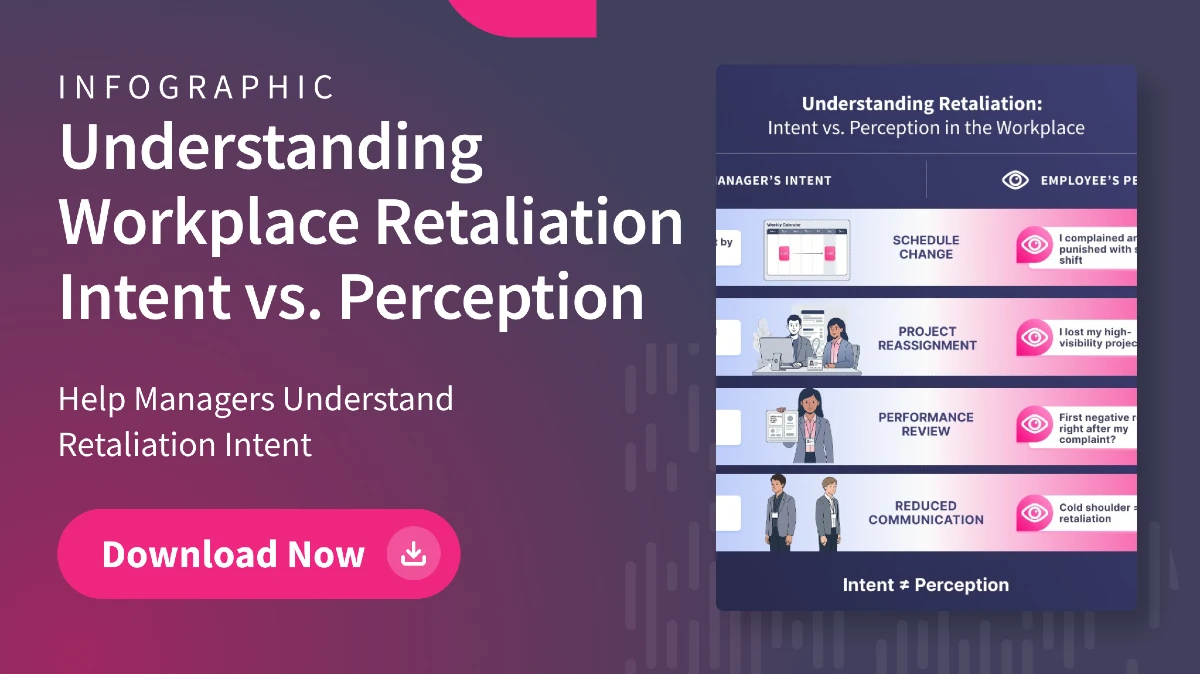
Retaliation does not require bad intent. Schedule changes, increased scrutiny, exclusion from meetings, or sudden documentation can all appear retaliatory — even when business needs are legitimate. Managers need clarity. HR needs consistency. Organizations need defensible processes.
This checklist helps ensure that:
- Protected activity is recognized properly
- Employment decisions are paused and reviewed
- Business justifications are documented
- Subtle retaliation risks are monitored
- HR is consulted before action is taken
When managers respond consistently, employees feel safer speaking up — and early reporting prevents bigger risks later.
Who Should Download This?
This checklist is designed for:
- Frontline managers and supervisors
- HR business partners
- Compliance leaders
- Executive teams
- Multi-state employers navigating complex retaliation standards
Whether you’re reinforcing harassment prevention training or strengthening investigation protocols, this tool provides immediate, practical guidance.
Strengthen Compliance and Culture at the Same Time
Preventing retaliation is not just about reducing claims. It’s about maintaining trust. When employees see concerns handled fairly and professionally, workplace culture improves. Accountability strengthens. Risk decreases. Equip your managers with the structure they need to respond confidently and correctly.