Home » Video Library » Recognizing Retaliation: Manager’s Schedule Change after an Employee Compliant
Every employee has the right to raise concerns, make complaints, or report inappropriate behavior without fear of retaliation. This protection applies whether a complaint is made formally or informally, whether it is substantiated or not, and whether the employee intended to “file a complaint” or was simply speaking up in the moment. Retaliation undermines trust, discourages reporting, and exposes organizations to significant legal and cultural risk.
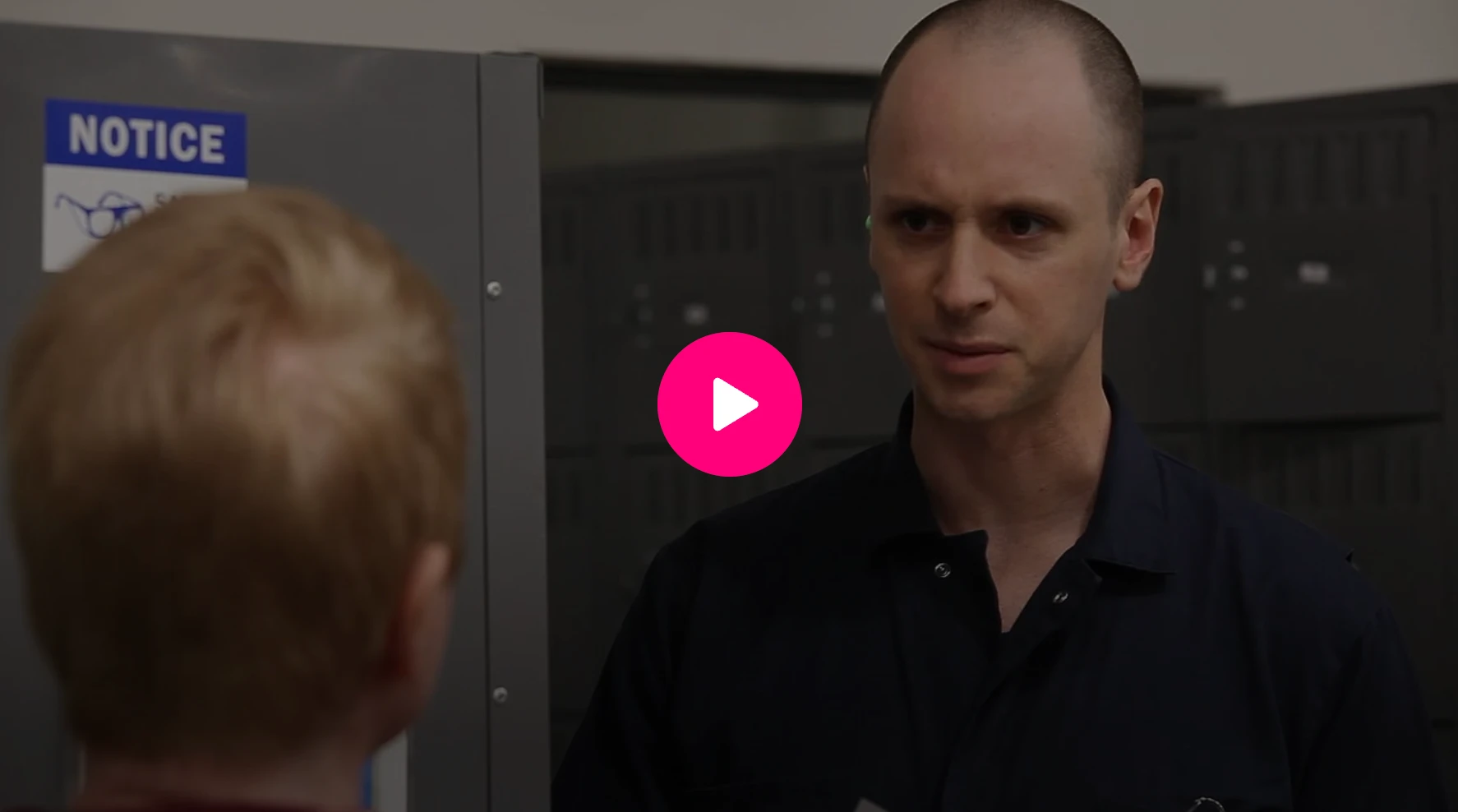
This video scenario, illustrates how a manager’s attempt to solve a problem quickly—without proper consideration—can result in retaliation. It reinforces a critical lesson from Emtrain’s Preventing Workplace Harassment course: even well-intentioned actions can be unlawful if they negatively impact an employee because they engaged in protected activity.
The scene opens in a manufacturing workplace. As employees are working, a woman walks by. Ryan, a coworker, whistles at her and follows her with his eyes, making a clear catcall. The woman reacts subtly and keeps walking.
Ash, who witnesses the behavior, immediately looks up and confronts Ryan, telling him to stop and expressing embarrassment. Ryan tries to deflect responsibility by whistling “Happy Birthday,” pretending the behavior was harmless.
Ash turns to their manager, Al, who is working nearby, and says clearly: “I’d like to make a complaint. It’s about Ryan. This isn’t the kind of place I want to be working at.” Al responds dismissively with, “Okay, Ash. Noted,” and returns his attention to his computer.
Ash presses further, asking whether Al is going to do anything. Al, visibly irritated, says he’ll get back to him and walks away, offering no guidance, no reassurance, and no indication that the complaint will be addressed. Another coworker later tells Ryan, “Not cool, man,” but Ryan brushes it off as joking.
Later that same day, as employees are clocking out, Al approaches Ash with a clipboard and announces a scheduling change. Due to increased production, Ash will be moved to swing shift for the next two months. Ash is confused and asks why the change was made without discussion.
Al explains that Ash “made it clear” he didn’t like working with Ryan, and the schedule change will keep them apart. When Ash points out the unfairness—complaining and then being punished with an undesirable schedule—Al frames the decision as a neutral management action tied to production needs.
Ash sees the situation for what it is: he spoke up about misconduct, and he is now the one bearing the consequences, while Ryan’s behavior remains unaddressed.
Retaliation occurs when an employee experiences a negative job action because they engaged in a protected activity, such as reporting harassment or inappropriate conduct.
To establish retaliation, three elements must be present:
Because all three elements are present, this situation would almost certainly be interpreted as retaliation, making the correct Workplace Color Spectrum® rating as red.
Al’s response demonstrates several common but serious managerial missteps:
By acting this way, Al reinforced the message that speaking up leads to punishment—one of the most damaging signals a manager can send.
One of the key lessons in this scenario is that complaints don’t always sound like formal reports. Employees often raise concerns casually, emotionally, or in the heat of the moment. Ash’s statement—“This isn’t the kind of place I want to be working at”—is still a complaint and must be treated as such.
Managers must stay alert to:
Missing these moments increases risk and harm.
This scenario highlights one form of retaliation, but retaliatory behavior can take many forms, including:
Anything that could discourage an employee from raising concerns in the future may be considered retaliation.
A common misconception is that employees are only protected if their complaint is substantiated. That is not true. Employees have the right to raise concerns without retaliation even if the complaint turns out to be unfounded.
What matters is the employee’s right to speak up—not whether management agrees with the outcome.
Emtrain’s Preventing Workplace Harassment course emphasizes that retaliation often causes more legal exposure than the original misconduct. When managers respond poorly to complaints, they escalate risk, damage culture, and silence employees.
This video reinforces that:
This scenario demonstrates how a scheduling change—framed as a simple solution—can become a serious violation when it follows protected activity. By failing to address the misconduct and shifting the burden onto the reporting employee, the manager creates retaliation and sends a chilling message to the entire team.
Preventing retaliation requires managers to slow down, take complaints seriously, and respond thoughtfully. Organizations should incorporate a Harassment Prevention Policy that Managers and Employees can follow. When employees trust that speaking up won’t lead to punishment, organizations build safer, stronger, and more respectful workplaces.