
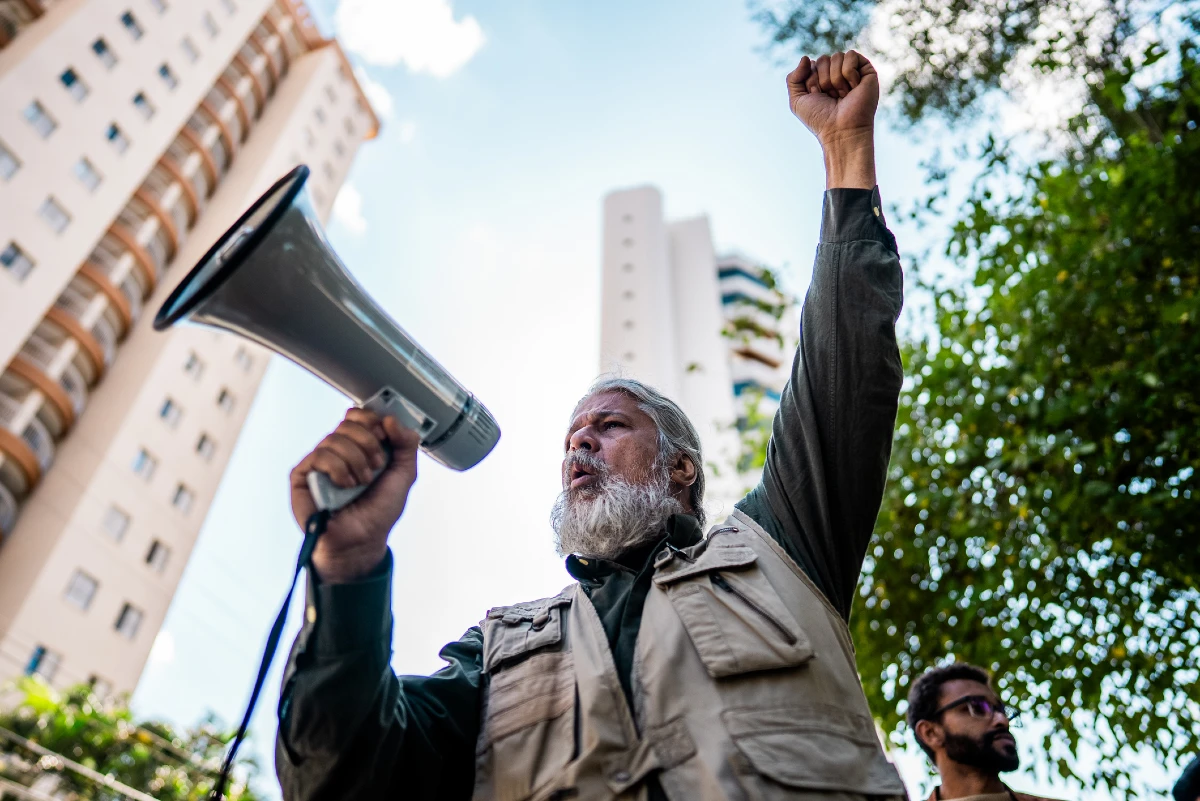
Each year, we celebrate Black History Month to remember and honor the amazing black citizens who shaped our society. This year is different. This year Black History Month represents a playbook for the strategies, sacrifices, and moral courage needed to change institutions and transform society. As we face rising authoritarianism, the erosion of the rule of law, and disintegrating constitutional rights, the lessons of the 1960s civil rights movement and its fearless leaders have never been more important.
The Architecture of Moral Resistance
The civil rights leaders of the 1960s understood something profound: unjust laws demand civil disobedience – not compliance. When Rosa Parks refused to give up her seat, when John Lewis and hundreds of others marched across the Edmund Pettus Bridge into a wall of state violence, when students sat at segregated lunch counters—they weren’t simply protesting. They were demonstrating that there are principles worth suffering for, that dignity cannot be legislated away, and that ordinary people possess extraordinary power when they mobilize.
Dr. Martin Luther King Jr. articulated this clearly in his “Letter from Birmingham Jail“: “One has a moral responsibility to disobey unjust laws.” But he also understood that civil disobedience requires discipline, organization, and a willingness to accept consequences. The movement’s power came not from chaos, but from its moral clarity and strategic precision.
Lessons for February 2026
Today, as we witness state sanctioned murder of U.S. citizens, the arrest of a prominent journalist, federal disregard for the Constitution, and the government’s casual brutality towards anyone and everyone, we have reached a moment of acute clarity this February that our democracy is dying. So this year’s Black History Month is not a celebration. It is a playbook of civil disobedience to teach this generation of Americans–regardless of color or socio-economic status–since no one is free in an authoritarian state.
The civil rights movement offers us a blueprint:
- Organize locally, think nationally.
The Montgomery Bus Boycott succeeded because of meticulous organization—carpools, communication networks, community meetings. Today’s resistance requires the same infrastructure: know your neighbors, build mutual aid networks, create rapid response systems for ICE activity. - Document everything.
The images of police attacking peaceful protesters in Selma shocked the nation’s conscience. In our age of smartphones and social media, documentation remains crucial—but so does protecting those who document and those being documented. - Different communities need to unite together and mobilize.
The civil rights movement succeeded when it united people across race, faith, and geography around shared values. Today’s threats to democracy and human rights affect different communities in different ways, but everyone is vulnerable; everyone is under threat. - Combine direct action with legal strategy.
While the NAACP fought in courtrooms, activists sat in at lunch counters. Both were necessary. Today, we need lawyers and legal observers alongside those willing to physically protest. - Practice nonviolence, but understand its cost.
Civil rights activists trained rigorously in nonviolent tactics, knowing they would face violence. This wasn’t passivity—it was strategic discipline that exposed the brutality of the system they opposed.
What Civil Disobedience Looks Like Now
Modern civil disobedience takes many forms:
- Unsubscribe from every company that is financially supporting this administration. See https://www.resistandunsubscribe.com/
- Coordinate with neighbors to prevent ICE violence
- Organize workers to protect vulnerable colleagues
- Organize teachers to protect students and families
- Organize lawyers to protect and represent victims of this administration
- Each act of conscience, large or small, contributes to a broader movement for justice.
The Long Arc of Justice Requires Our Participation
The civil rights movement didn’t end in the 1960s—it established principles and tactics for each generation to use. Black leaders showed us that change doesn’t come from moral outrage or appeals to peoples’ better nature. Change comes from making injustice impossible to ignore and too costly to maintain.
As authoritarianism grows and our society faces increasing threats, we must ask ourselves: What would John Lewis do? What would Diane Nash do? What would Roy Wilkins do?
They would strategize, organize and resist. They would act with courage born from love of the democracy they were fighting to make real.
Black History Month this year comes at an opportune moment as we fight to retain our democracy; retain our rule of law; fight for our constitutionally protected civil liberties. This February, Black History Month is a practical playbook to guide our actions.
This Black History Month, consider: What specific action can you take to resist authoritarianism? How can you build networks of mutual aid and resistance?
The legacy of Black civil rights leaders isn’t just to be honored—it’s to be lived.