Home » Concepts » Health & Safety » Safety
Workplace safety refers to the proactive systems, behaviors, and conditions that protect employees from physical harm, psychological injury, and preventable risk while performing their job. It extends beyond compliance with regulations to include hazard prevention, injury response, employee awareness, and a shared responsibility for creating environments where people can work confidently without fear of injury or harm.
In modern organizations, safety is not limited to hard hats, warning signs, or emergency exits. It includes how workspaces are designed, how equipment is maintained, how stress and fatigue are managed, and how quickly organizations respond when something goes wrong. A truly safe workplace is one where risks are anticipated, employees are empowered to speak up, and leadership consistently reinforces that safety is a core operational priority—not an afterthought.
Emtrain’s harassment training course is engaging, interactive, and designed to spot and reduce EEO risk.
Workplace safety regulations emerged largely in response to industrial-era injuries, unsafe factories, and high-risk labor environments. In the United States, this led to the creation of the Occupational Safety and Health Administration (OSHA) in 1970, which established enforceable standards to reduce workplace injuries, illnesses, and fatalities. Since then, safety expectations have evolved alongside new industries, remote work models, and a deeper understanding of psychological and ergonomic risk.
Today, safety matters not only because of legal obligations, but because workplace injuries carry long-term consequences for employees and organizations alike. Slips, falls, repetitive strain injuries, and stress-related conditions can permanently alter a person’s ability to work, earn income, or maintain quality of life. For employers, poor safety practices result in lost productivity, workers’ compensation claims, reputational damage, and increased turnover.
Authoritative research from organizations such as the Occupational Safety and Health Administration (OSHA) and the National Institute for Occupational Safety and Health (NIOSH) consistently shows that proactive safety programs reduce injury rates, lower costs, and improve employee engagement. Universities and public health institutions also emphasize that safety culture—not just rules—determines whether policies actually prevent harm in real workplaces.
Safety issues often surface in everyday moments rather than dramatic emergencies. A wet floor without proper signage can cause a slip that leads to a lifelong injury. Poorly adjusted workstations can result in chronic pain that builds quietly over months. Excessive noise, stress, or rushed deadlines can increase the likelihood of accidents and burnout.
Consider an employee who slips on a wet floor due to inadequate maintenance. What may initially appear as a minor fall becomes a lasting shoulder injury, limiting mobility and affecting their ability to perform routine tasks both at work and at home. This scenario highlights how preventable hazards—cluttered walkways, poor lighting, or lack of reporting—can escalate into serious, life-altering outcomes.
Emtrain’s safety content also addresses less visible risks, such as stress, fatigue, and psychological safety. Employees who feel pressured to “push through” pain or hesitate to report hazards often face greater risk over time. When organizations normalize hazard reporting and reinforce shared accountability, safety becomes embedded into daily behavior rather than enforced only after incidents occur.
Effective safety programs balance structure with culture. Policies alone are not enough; employees must understand risks, recognize hazards, and feel confident taking action when something feels unsafe. Regular training, clear reporting channels, and visible leadership commitment all play a role.
Organizations that succeed in safety prevention focus on early intervention—addressing hazards before injuries occur. This includes maintaining clean and accessible workspaces, designing ergonomically sound environments, and training employees to identify risks specific to their roles. Encouraging near-miss reporting, rather than punishing mistakes, helps surface issues before they cause harm.
Equally important is ensuring employees know how to respond when incidents do occur. Clear guidance on injury reporting, emergency response, and first aid reduces confusion and ensures timely care. Emtrain’s guidance on reporting injuries at work and employer safety programs reinforces that safety is a continuous process, not a one-time checklist.
Emtrain approaches safety through a behavior-based, risk-aware lens that connects compliance with real-world decision-making. Rather than focusing solely on rules, Emtrain training helps employees understand why safety matters, how injuries happen, and what actions prevent harm.
Through comprehensive Workplace Safety Training, targeted microlessons, and scenario-based learning, Emtrain equips employees to recognize hazards, respond appropriately, and take responsibility for their own safety and the safety of others. Topics such as manual handling, tool safety, fire safety, ladder safety, basic first aid, hearing protection, and psychological safety ensure coverage across both physical and mental risk factors.
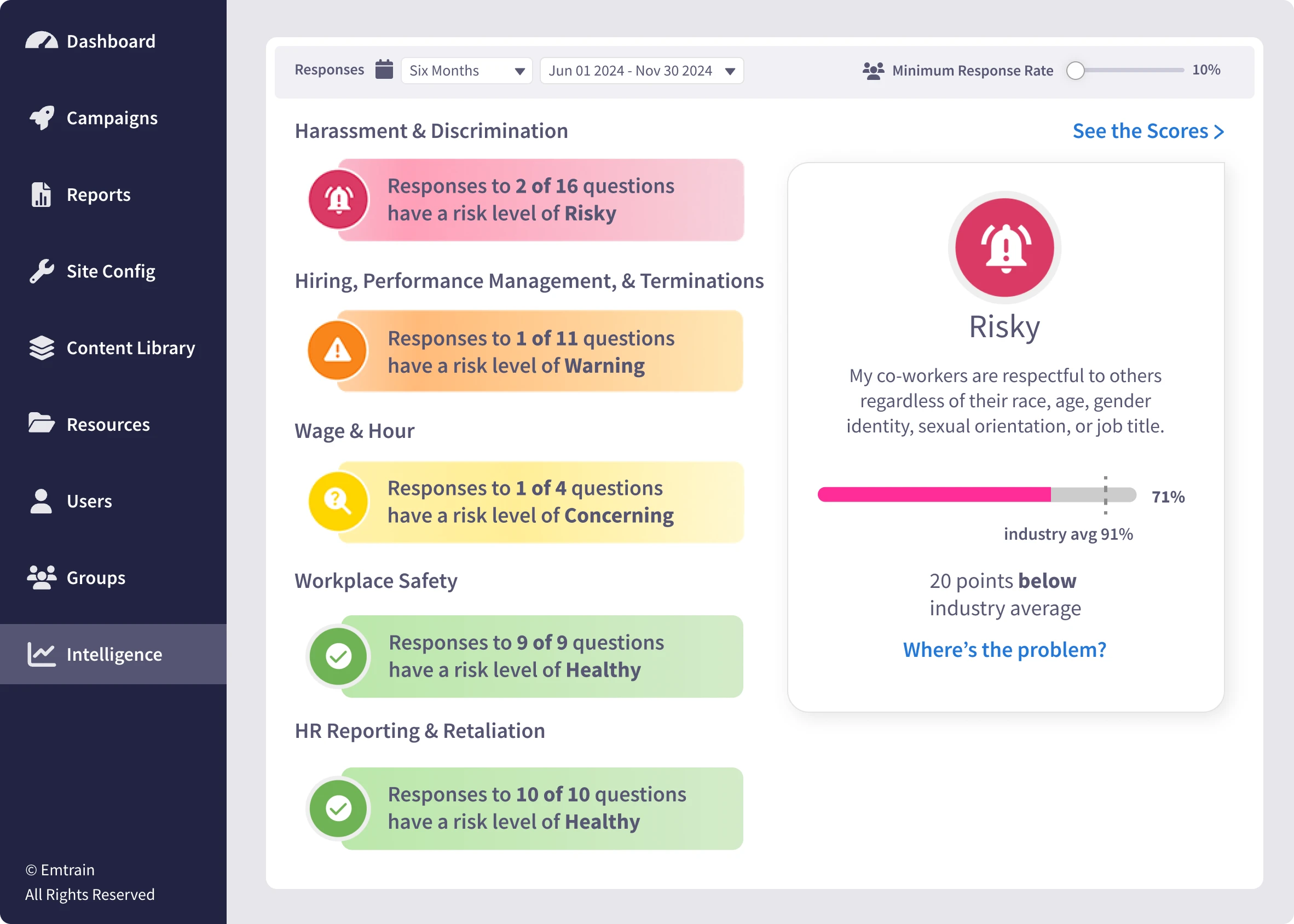
Emtrain Intelligence™ further strengthens safety outcomes by helping organizations monitor workplace safety risk trends, identify hotspots, and proactively address issues before they escalate. This data-driven approach transforms safety from a reactive obligation into a measurable component of organizational health.
Workplace safety is not just about preventing accidents—it is about protecting people, sustaining trust, and reinforcing organizational values. When safety is embedded into daily decisions, supported by meaningful training, and reinforced by leadership, it becomes a powerful driver of both compliance and culture.
By investing in proactive safety education and risk monitoring, organizations send a clear message: employee well-being matters, and preventable harm is never acceptable.
Situation: An employee suffers a lasting shoulder injury after slipping on a wet floor at work. What began as a routine day becomes a long-term physical limitation affecting both job performance and daily life.
This scenario illustrates how common safety hazards—wet floors, poor maintenance, and lack of visibility—can result in serious, preventable injuries. Slips, trips, and falls remain among the most frequent workplace incidents, yet they are often overlooked until harm occurs.
Emtrain’s safety videos emphasize practical prevention strategies, employee awareness, and shared accountability. By showing realistic consequences, these scenarios reinforce that safety is not theoretical—it directly impacts people’s lives.