

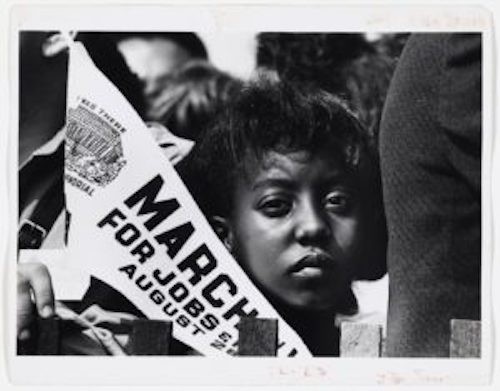


Celebrating Contributions and Achievements
Updated with 2026 theme: A Century of Black History Commemorations
Black History is American History and will continue to impact how we communicate and behave with each other in the workplace. Our teaching and education don't end when we get our degrees; it's a continuous cycle to help us be understanding, knowledgeable, and socially aware.Microlesson Description
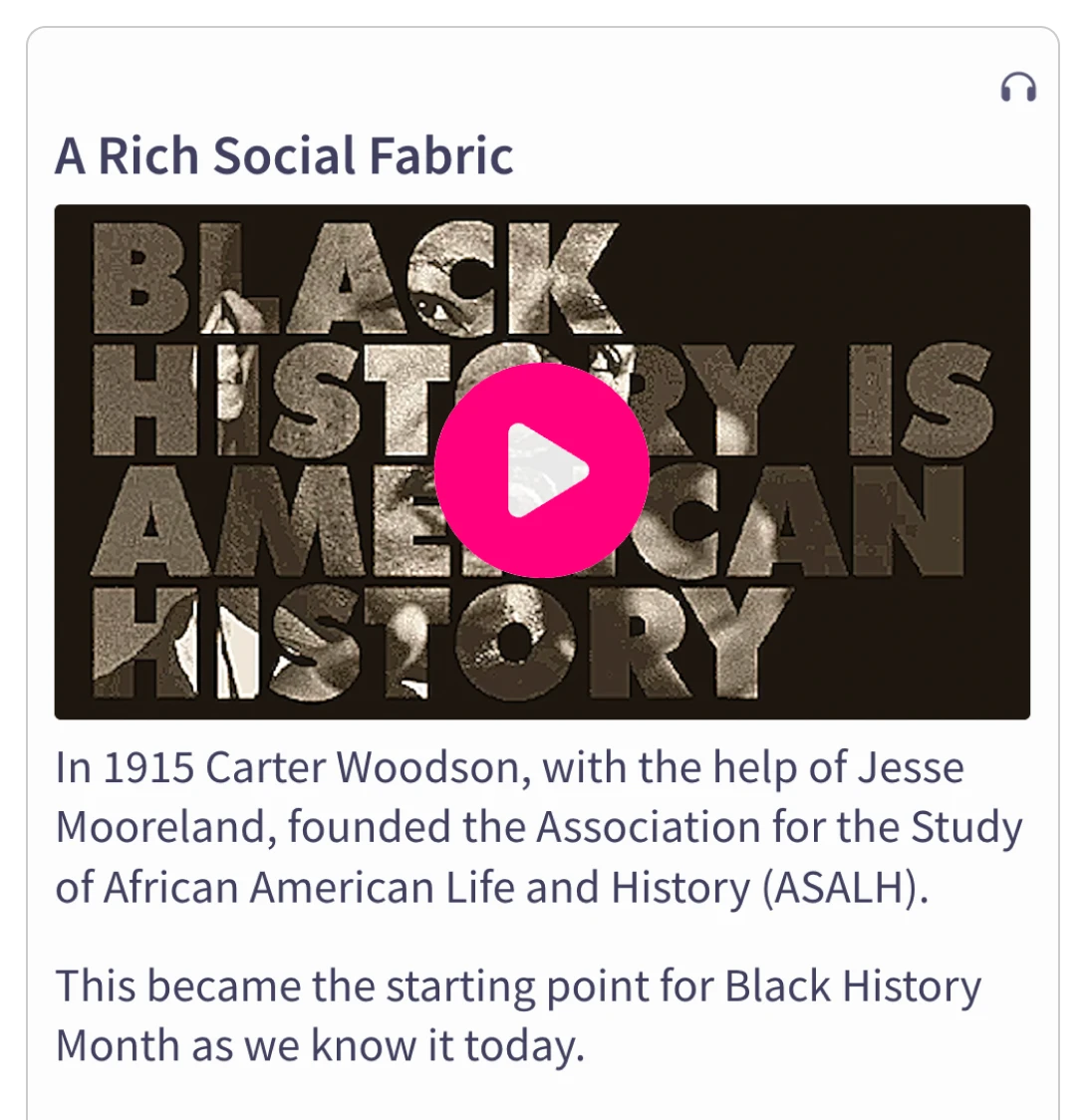
In this microlesson, we provide an overview of Black History Month, how essential its History is to our social fabric, and its relevance to our society today, to every corporate culture, and overall American History. The microlesson also introduces this year's Black History Month theme, A Century of Black History Commemorations, to managers and employees, as a precursor to dive deeper in February and beyond.Key Concepts
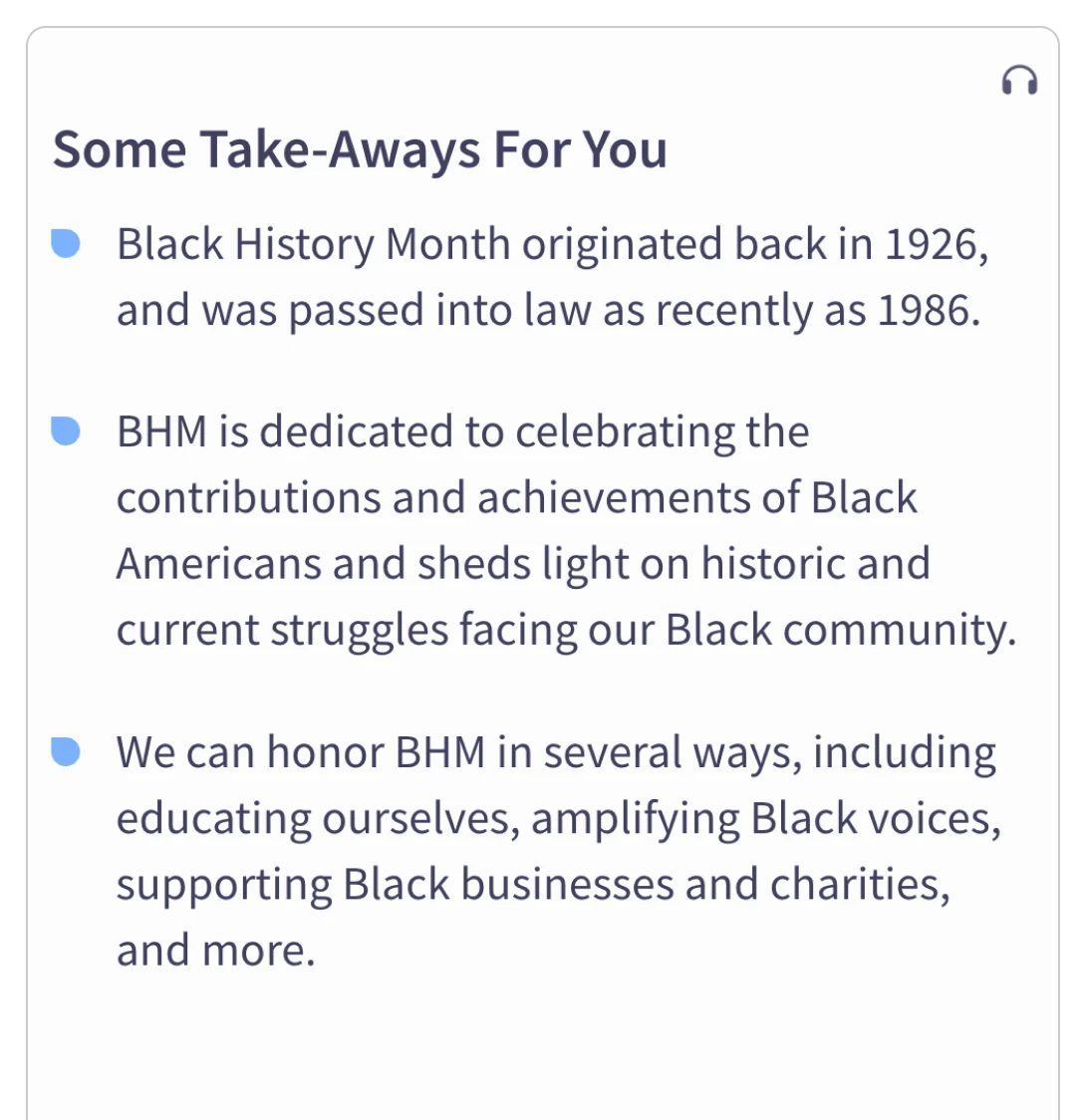
- The history and importance of Black History Month.
- Black History Month’s dedication to celebrating the contributions and achievements of Black Americans.
- How to honor Black History Month by education, amplifying Black voices, supporting Black businesses and charities, and more.
Microlesson Features
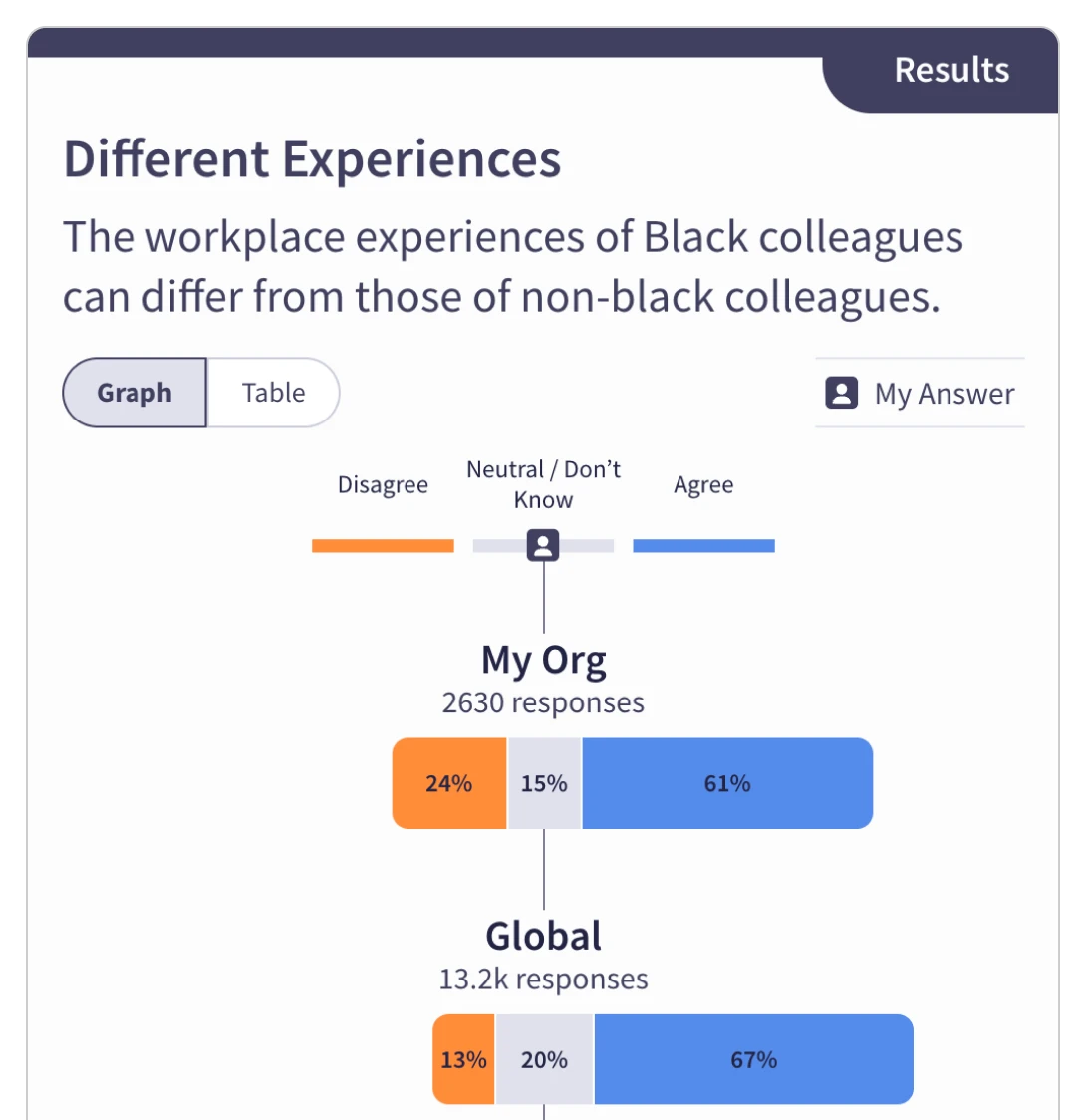
- Employee sentiment pulsing questions that provide leaders with insights into their workforce's core cultural competencies
- Emtrain's Expert Answers tool, enabling employeees to submit anonymous questions about sensitive issues.
- Rich, contemporary video scences illustrating key concepts through realistic scenarios
- A data driven, skill-based approach to eLearning that establishes a shared language for employees.
Related Resources
Related Trainings
Frequently Asked Questions
Below are answers to common questions that employees and managers have about this topic. These FAQs provide a preview of what you’ll learn in this microlesson and why it matters.
Q
Why should organizations highlight Black History Month?
Highlighting Black History Month is important because it recognizes cultural heritage, affirms identity, and demonstrates an organization’s commitment to visibility and inclusion.
Q
How does recognizing heritage improve workplace culture?
Recognizing heritage improves workplace culture by validating employees’ experiences, sparking dialogue, and building stronger connections across diverse teams.
Q
What risks arise if cultural milestones are ignored?
Ignoring cultural milestones risks employee disengagement, reputational harm, and the perception that diversity and inclusion commitments are performative or shallow.
Q
How can managers celebrate Black History Month without tokenizing?
Managers can celebrate Black History Month without tokenizing by engaging employee resource groups, hosting authentic storytelling events, and tying recognition to year-round DEI initiatives.
Q
Why does visibility of Black employees matter for inclusion?
Visibility of Black employees matters for inclusion because it signals equity in representation, affirms belonging, and demonstrates that leadership values diverse contributions at every level.