
AI is reshaping work faster than most organizations are ready for. Here’s how HR leaders can stay ahead of the disruption — and become the strategic partner their businesses need.
I started Emtrain as a practicing employment lawyer. I spent years breaking up workplace brawls – navigating complaints, mediating conflict, watching good organizations come apart at the seams over preventable problems. What I eventually realized was that there are no inherently good or bad people. There are just people. We’re all works in progress. And the managers who generated the fewest complaints were simply the ones who had developed better skills for communicating, listening, and supporting their teams.
That insight shaped everything I built at Emtrain. And it’s more relevant than ever in 2026, as AI fundamentally reshapes the nature of work – rapidly, and with very little warning for the employees experiencing it.
The scale of change coming this year is significant. AI is generating new efficiencies at every level of the organization, which will lead to consistent re-organizations, role changes, and layoffs throughout the year. Just as the internet breakthrough of the 1990s triggered a wave of employee claims, union organizing, and declining trust, we should expect similar consequences now. The question for HR leaders is: how do you support your people through that while still driving business performance?
Here are the four priorities I believe matter most.
1. Start with your own team – and get everyone using AI now
Before you can lead workforce transformation across the organization, you have to live it yourself. Make sure every person on your HR team is actively using at least one AI tool in their daily work and help them overcome that fear of change of new technology. Then start clocking it: how long did a task take before? How long does it take now? How many people were needed versus today?
Once you have that data, you have credibility – and a model to take into the rest of the business. Push for AI upskilling and retooling in every team and department. HR leaders who are ahead of this curve will be far better positioned to guide the transformation conversations happening in their C-suites.
2. Instrument the business – and get proactive about reorganization
Track the speed of work deliverables across your organization. Where is automation already reducing time-to-output? Which workflows could be handed to an AI agent entirely? Once you start mapping this, you’ll have what you need to do something far more strategic: proactively recommend restructuring before leadership hands it down to you.
For decades, HR leaders have wanted a genuine seat at the business table. This is that moment. Go role by role through your organization. Redesign around the new realities of what automation can and can’t do. Bring those proposals to your C-suite before they come to you. That’s what true HR business partnership looks like in 2026.
3. Invest seriously in management training – your managers are the glue
Managers hold organizations together during turbulent times. But in our work at Emtrain, we see significant skill gaps across the board – just on basic management responsibilities. Over 85% of millions of learners in our platform could not correctly identify a retaliation scenario. More than 50% under-assessed an off-duty harassment situation.
Help your Managers to Recognize Retaliation with our Infographic Reminder
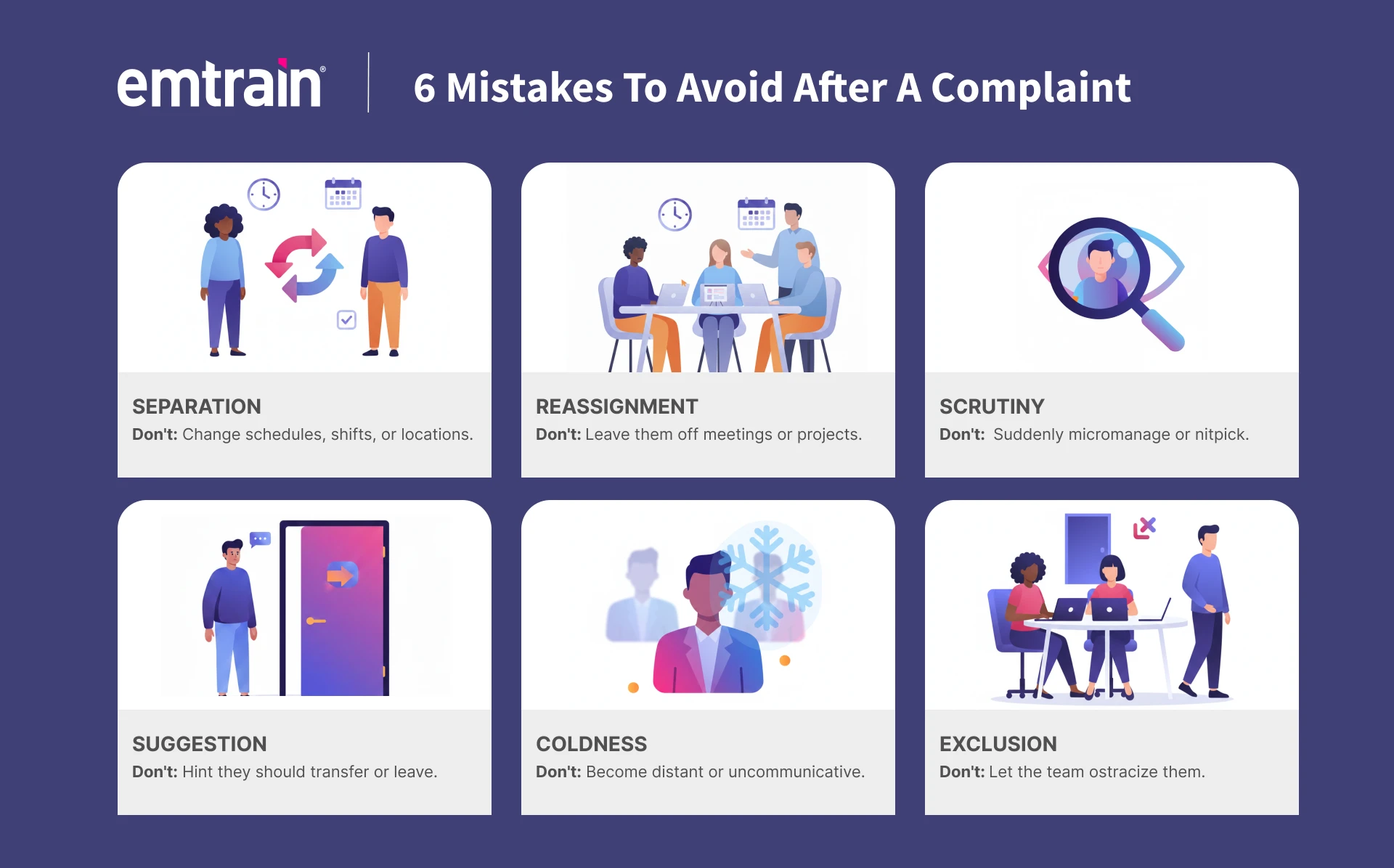
As AI accelerates layoffs and reorgs, your managers will be on the front lines. Can they handle those conversations legally and humanely? Can they spot a request for reasonable accommodation or leave? Can they lead a multi-generational team through rapid change and still make each person feel heard and supported?
These are skills – learnable, measurable, improvable. And skills like active listening, facilitating for inclusion, and change management, result in teams that are adaptable: primed for innovation and transformation. Leadership training targeting respect, inclusion, belonging, and ethics isn’t soft: it’s what separates organizations that retain trust and momentum through disruption from those that don’t.
4. Protect your culture – it will be under pressure
Culture is going to take a hit this year. That’s not pessimism; it’s pattern recognition. When work changes fast and people feel uncertain, behavioral norms slip. Patience thins. Conflict spikes. Claims follow.
Your best defense is integration. Most companies have a culture survey, a manager training program, an annual compliance course, a whistleblower hotline, and a case management system — and almost no one who runs these programs knows the others exist. Connect that data. AI makes this kind of integration far more achievable than it was even two years ago. Use it.
And don’t underestimate the basics: patience, empathy, appreciation, and genuine support for employees who are impacted by change.
The Opportunity in the Disruption
I’ve been through business transformation before. It’s hard. People get hurt. Trust erodes. And then — if you do it right — something better emerges on the other side. The technology available today is genuinely extraordinary. The efficiencies it creates are real. But the human cost of getting it wrong is also real, and HR leaders are in a unique position to make the difference.
“This is the year to be the strategic HR business partner. Not in a title — in practice. The data is there. The moment is here. Lead into it.”
Get your team using AI. Map the business. Invest in your managers. And hold the line on culture. Those four things won’t eliminate the disruption — but they’ll give your organization the best possible chance of navigating it with trust and performance intact.