Home » Concepts » Discrimination & Harassment » Accessibility
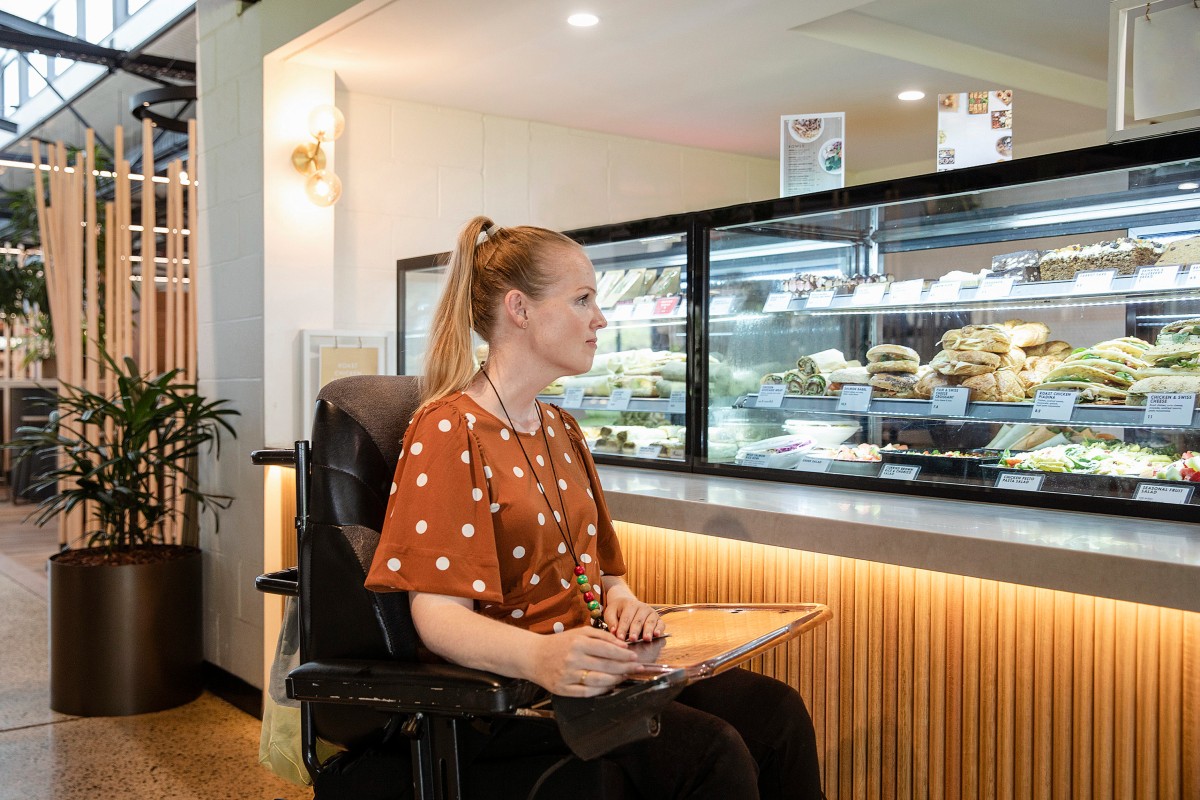
Accessibility in the workplace means removing physical, digital, and communication barriers so employees of all abilities can fully participate at work. It ensures people can access job opportunities, perform essential duties, and engage in the culture without obstacles.
Accessible workplaces prioritize clear communication, inclusive tools, and environments that support everyone—from mobility and sensory disabilities to neurodiversity. Emtrain’s Accessibility in the Workplace Training teaches teams how to recognize barriers and support an equitable, compliant work environment.
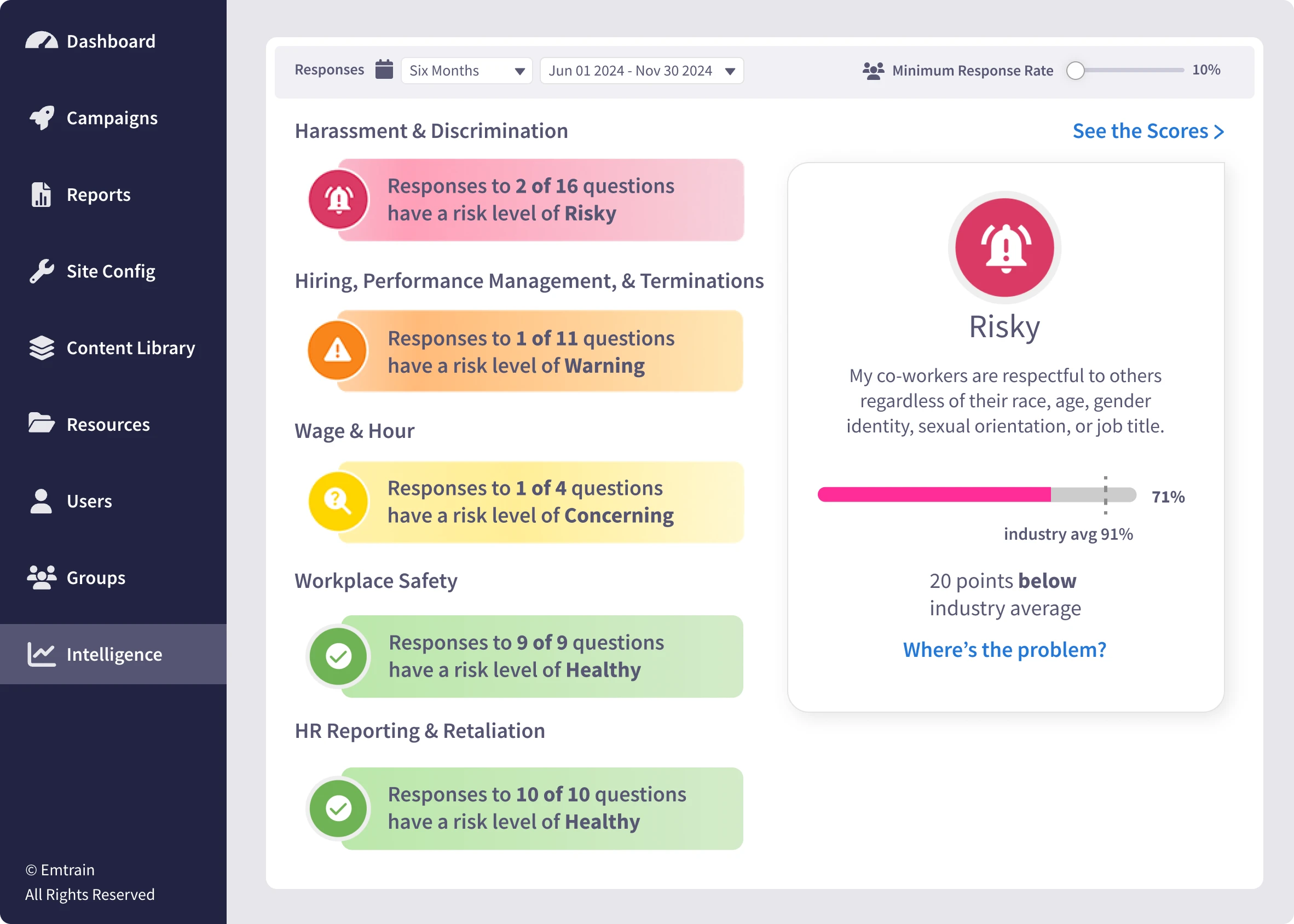
Emtrain’s harassment training course is engaging, interactive, and designed to spot and reduce EEO risk.
Workplace accessibility has progressed significantly over time through civil rights movements, disability advocacy, and legal reforms. Foundational laws such as the Americans with Disabilities Act (ADA) established equal access as a national priority, prohibiting discrimination and requiring reasonable accommodations. Similarly, global frameworks like the Accessible Canada Act (ACA) and AODA expanded access standards internationally.
For historical and legal context, see:
Today, accessibility is a core part of organizational culture. When workplaces remove barriers and design environments inclusively, they improve employee engagement, reduce ER risk, support compliance, and foster innovation.
Employees and managers should be able to recognize everyday situations where accessibility barriers can appear. These scenarios help identify when someone may be facing an obstacle that limits their full participation in the workplace.
Physical barriers can prevent employees from moving comfortably and safely throughout the workplace. Narrow walkways, inaccessible restrooms, non-adjustable desks, or equipment that doesn’t accommodate mobility needs can all limit someone’s ability to do their job effectively. Ensuring adaptable layouts and ergonomic options supports full participation.
Some employees may require communication support such as ASL interpreters, captions on videos, written summaries, or assistive devices. Clear, structured communication and multiple formats (visual, written, verbal) help prevent misunderstandings and ensure everyone receives the information they need.
Employees may rely on trained service animals or assistive devices for mobility, medical alerts, or sensory regulation. Understanding appropriate boundaries, permitted questions, and how these tools function helps create a respectful and compliant workplace.
Managers should focus on essential job functions—not assumptions—when assessing an employee’s ability to perform their role. Misunderstanding what a job truly requires can lead to unfair judgments or missed accommodation opportunities.
When an employee raises a barrier or requests support, leaders must engage in a collaborative, respectful conversation. Asking clarifying questions, exploring options together, and documenting decisions appropriately ensures consistency and trust.
Medical information must be kept confidential and stored separately from personnel files. Sharing details casually—whether in conversation, messaging platforms, or documentation—can violate privacy and erode trust.
Sometimes performance challenges stem from inaccessible environments rather than skill or motivation. Managers should consider whether:
Creating an accessible workplace goes beyond legal compliance—it requires designing environments, systems, and daily interactions that anticipate diverse needs and reduce barriers for everyone. The following best practices help organizations build a culture where employees feel supported, respected, and empowered to do their best work.
Workspaces, tools, and processes should be usable by as many people as possible without requiring individual modifications. Universal design reduces friction, supports independence, and minimizes the need for later retrofitting.
Digital tools are now core to workplace communication and job performance. Organizations should ensure that learning platforms, HR systems, onboarding materials, and internal tools align with WCAG accessibility standards. Regular audits help identify barriers early—such as missing captions, poor color contrast, or documents incompatible with screen readers.
Employees must feel comfortable raising concerns about accessibility without fear of judgment or negative consequences. Encouraging open dialogue, responding respectfully to requests, and avoiding assumptions all help reduce stigma and foster trust.
Managers should learn to pause and consider whether a performance concern may be related to:
Taking time to understand the root cause prevents misunderstandings and promotes equitable treatment.
Employees should know how to request support and what to expect throughout the process. Transparent procedures reduce confusion and ensure accommodations are handled fairly and consistently across teams.
Small behaviors—tone, body language, offering assistance appropriately, using preferred communication methods—can significantly impact whether someone feels included. Reinforcing respectful habits helps create a culture where accessibility is a shared responsibility.
When organizations embrace accessibility as a core cultural value—not just a compliance requirement—they build workplaces where everyone can thrive. Emtrain’s courses provide the frameworks, scenarios, and behavioral guidance leaders need to:
By integrating lessons on equal access, interpreters, communication needs, service animals, reasonable accommodations, and confidentiality, we help teams build the skills required for an accessible workplace.
To further strengthen your culture of accessibility, explore:
Building accessible workplaces is a shared responsibility—and with the right training, tools, and behaviors, every organization can move closer to a more inclusive, equitable future.
Video Preview — Example of an Emtrain Course Scenario on Accessibility between a Manager and a Employee:
In this scenario, a manager meets with an employee who has Autism to discuss concerns about their work environment. The employee explains that loud noises, bright lights, and frequent interruptions in their office make it difficult to focus and stay comfortable. The manager initially responds by highlighting teamwork expectations and noting that colleagues often stop by simply to be friendly. However, after listening more closely, the manager recognizes that the employee’s needs require thoughtful support. Together, they begin exploring reasonable adjustments—such as modifying lighting, reducing disruptions, or establishing communication norms—to help the employee feel more at ease while still maintaining strong team relationships.