Home » Concepts » Ethics & Compliance » Politics
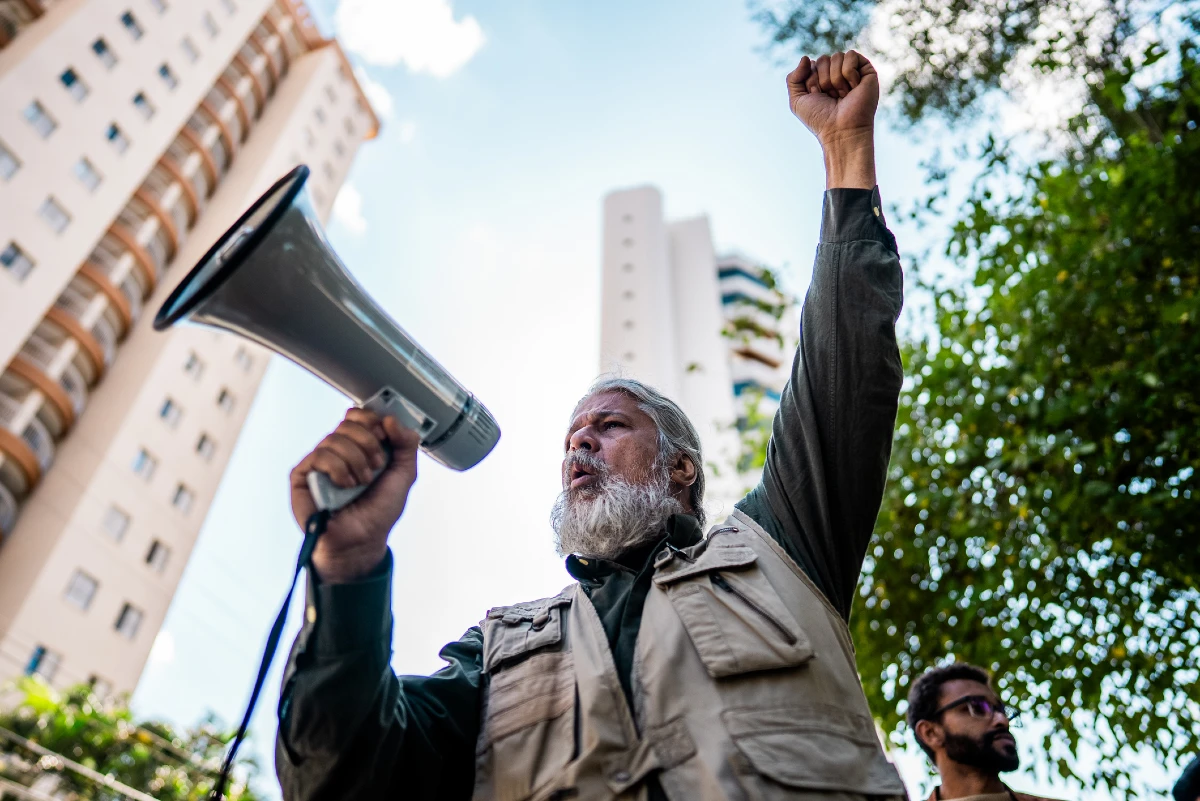
Politics in the workplace refers to conversations, behaviors, and interpersonal dynamics related to political beliefs, public policies, government decisions, elections, and social issues. People bring their whole selves to work—including their viewpoints shaped by personal experience, community, identity, and exposure to news cycles. Because political identity is closely tied to values and emotions, even casual comments can spark misunderstandings or escalate into conflict.
Rather than attempting to eliminate political topics entirely, modern workplaces must understand how these conversations arise, how they affect teamwork and trust, and how to guide employees toward civility and professionalism.
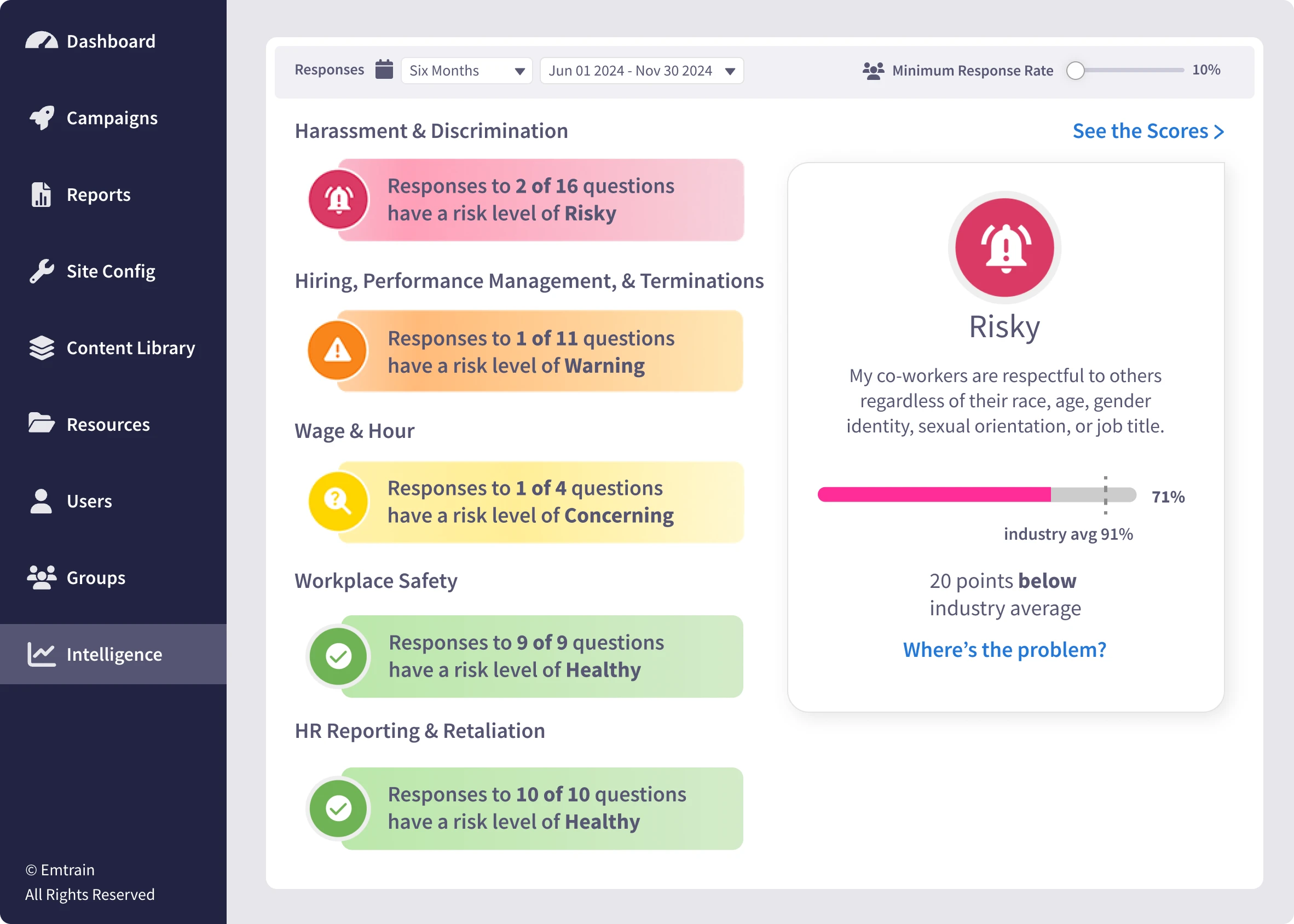
Emtrain’s harassment training course is engaging, interactive, and designed to spot and reduce EEO risk.
Political discourse has always shaped workplace dynamics, from labor movements to civil rights, generational shifts, and global turning points. But today’s environment is uniquely charged. Constant news updates, social media amplification, personal branding, and heightened polarization mean people are regularly exposed to political content that follows them into work—whether on Slack, in meetings, or in everyday interactions.
According to the Society for Human Resource Management (SHRM), political tension at work has risen sharply, with more than half of workers reporting political disagreements that impact morale and productivity.
Research from the National Library of Medicine and academic institutions like Harvard University highlights another trend: people now view political identity as a core part of who they are, which makes disagreement feel personal rather than intellectual.
When political friction goes unchecked, it can manifest as incivility, exclusion, reduced collaboration, or perceived bias. Organizations that recognize this dynamic early and provide structure, expectations, and training are better equipped to maintain psychological safety and healthy team dynamics.
Politics rarely enters the workplace as a formal debate—it often surfaces through small, unplanned moments:
A quick comment about a new law turns into a tense exchange when one coworker questions its legitimacy. A meme or TikTok shared in a chat thread unintentionally offends colleagues who interpret it through their own political lens. A manager, without intending to, expresses a political viewpoint that causes employees to wonder whether their own views could affect performance evaluations. Or two employees who normally collaborate well suddenly find it difficult to work together after a heated disagreement about elections or a recent court ruling.
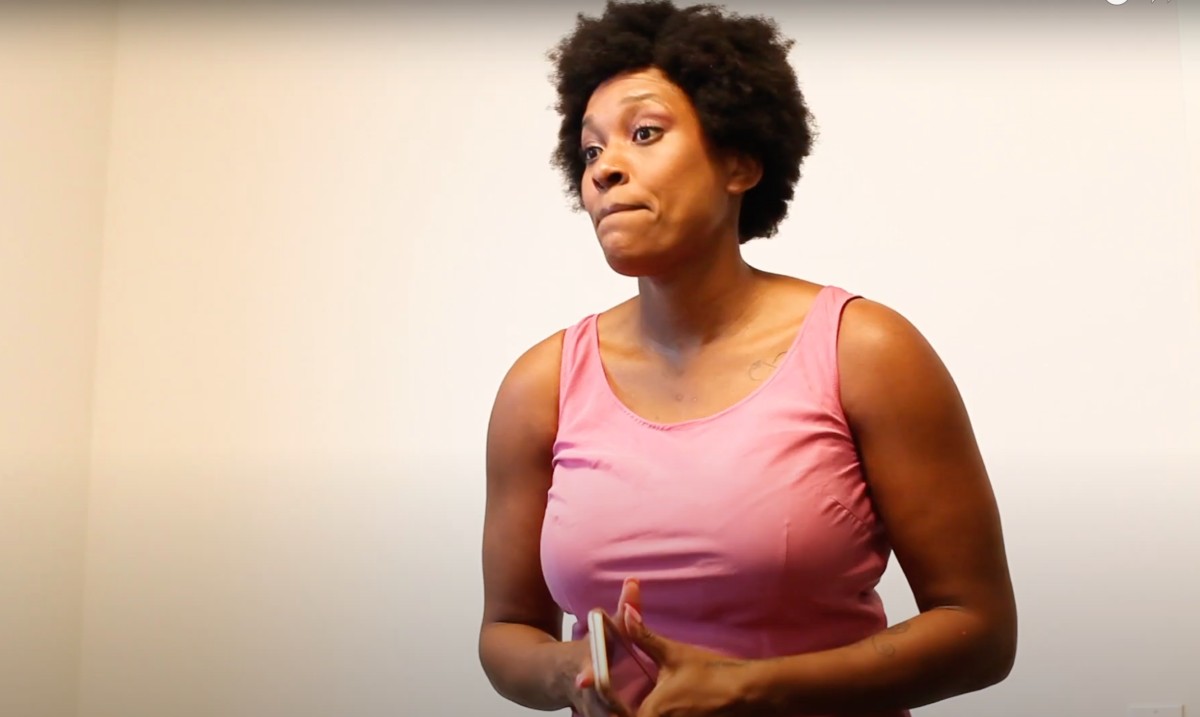
Emtrain’s Social Movements, Empathy, and Professional Dialogue Microlesson showcases how employees can navigate socially and politically charged moments with emotional intelligence, even when discussing sensitive topics like protests, legislation, global conflicts, or human rights. The lesson demonstrates that political tension isn’t always about the issue itself—but about how people communicate, listen, and respond under stress.
These moments become turning points: Will the interaction build trust, or fracture it? Will empathy guide the conversation, or will assumptions and judgment take over?
One of the most important skills employees can develop is the ability to recognize when a political conversation is appropriate—and when it can disrupt psychological safety or working relationships. Not every environment or audience is conducive to political dialogue, and not every colleague is comfortable participating.
Employees who navigate these conversations effectively tend to do a few things well. They pause before reacting, and they consider impact over intent. They avoid trying to “convert” others and instead prioritize shared goals and professionalism. They set healthy boundaries (“I’d prefer not to get into political topics at work”), and they maintain a tone that preserves dignity even when perspectives differ.
Managers play an additional role: modeling neutrality, encouraging respect, and knowing how to redirect conversations that are veering off-course. They have to be particularly sensitive to how power dynamics shape political dialogue. When leaders express strong political views, employees may feel alienated or unsafe disagreeing—even unintentionally.
The emphasis is not on policing beliefs, but on reinforcing a culture where people treat one another with empathy, awareness, and discretion.
Emtrain teaches politics-related culture skills in depth through lessons such as:
These Microlessons use real-world scenarios—messy, human, and emotionally complex—so learners can practice handling politically charged moments before they occur. This approach builds cultural awareness and reduces the likelihood of conflicts, complaints, and breakdowns in trust.
By strengthening communication, empathy, and civil dialogue, organizations cultivate workplaces where employees can disagree without damaging collaboration or psychological safety.
Political issues aren’t going away—and neither are the emotions they bring. But workplaces can set the tone for how people engage with one another. When teams have the tools to remain respectful, grounded, and aware of context, political conversations become manageable rather than disruptive. Organizations that invest in civility, communication skills, and behavioral norms not only reduce risk, but also build healthier, more inclusive cultures.
The goal isn’t to suppress viewpoints; it’s to create an environment where differences don’t erode trust, and where employees feel safe, supported, and aligned around shared purpose.
How to Respond to Incivility Due to Social or Political Issues
Social Movements, Empathy, and Professional Dialogue (Microlesson)
Summary:
Two coworkers sit down for lunch and casually chat about the weather. One jokingly ties it to global warming, and the other quickly challenges the idea. What begins as small talk becomes an emotionally charged debate about science, beliefs, and intelligence. Each pushes harder, and the conversation spirals until feelings are hurt and respect is strained. Viewers reflect on whether they would have introduced a political topic in a casual moment, and how they might manage personal beliefs without damaging workplace relationships.