




Practical Strategies to Stay Focused and Resilient in Times of Change
Organizational change—whether restructures, layoffs, leadership shifts, or new priorities—creates stress and uncertainty for everyone. While the disruption can feel overwhelming, change follows a predictable process, and the difficult Transition phase is a normal part of it. This microlesson helps employees understand where they are in the change cycle and provides practical strategies to stay grounded, focused, and well during periods of instability.
Microlesson Description
Learners will explore how to manage stress by focusing on what they can control, avoid unproductive speculation, and ask clarifying questions about evolving responsibilities. The lesson also reinforces the importance of boundaries—taking breaks, fully logging off, and creating small daily habits that restore stability and a sense of agency in uncertain times.
Key Concepts
- Organizational change is a predictable process; understand that the difficult Transition phase is normal.
- Manage stress by focusing only on your circle of control, such as your attitude and work output.
- Avoid speculation and ask clarifying questions about your new priorities and role.
- Protect your well-being by maintaining strict boundaries, including taking breaks and logging off completely.
- Commit to one small action (like a dedicated walk or work block) to stabilize your routine.
Microlesson Features
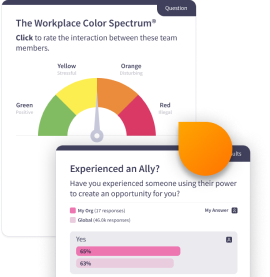
- Employee sentiment pulsing questions that provide leaders with insights into their workforce's core cultural competencies
- Emtrain's Expert Answers tool, enabling employeees to submit anonymous questions about sensitive issues.
- Rich, contemporary video scences illustrating key concepts through realistic scenarios
- A data driven, skill-based approach to eLearning that establishes a shared language for employees.


Related Resources
Related Trainings
Frequently Asked Questions
Below are answers to common questions that employees and managers have about this topic. These FAQs provide a preview of what you’ll learn in this microlesson and why it matters.