




Identify Early Stress Signals and Access the Support You Need to Stay Healthy and Productive
Personal stress can make it difficult to stay focused, energized, and effective at work. This microlesson helps learners recognize early signs of burnout, communicate their needs professionally, and access available support resources before challenges escalate.
Microlesson Description
Life outside of work doesn’t pause when professional demands rise—and when personal stressors collide with workplace expectations, performance and well-being can quickly suffer. Recognizing Personal Stress and Seeking Support gives learners the awareness and tools to understand how personal pressures impact their ability to perform and how to take proactive steps to stay healthy and productive. Through relatable scenarios and practical guidance, learners discover the signs that personal stress is affecting their work, how to communicate their needs without oversharing, and how to leverage internal resources such as HR, counseling services, formal leave options, or accommodations. This lesson empowers employees to ask for help early, set reasonable expectations, and take action that supports both their health and their professional responsibilities.Key Concepts
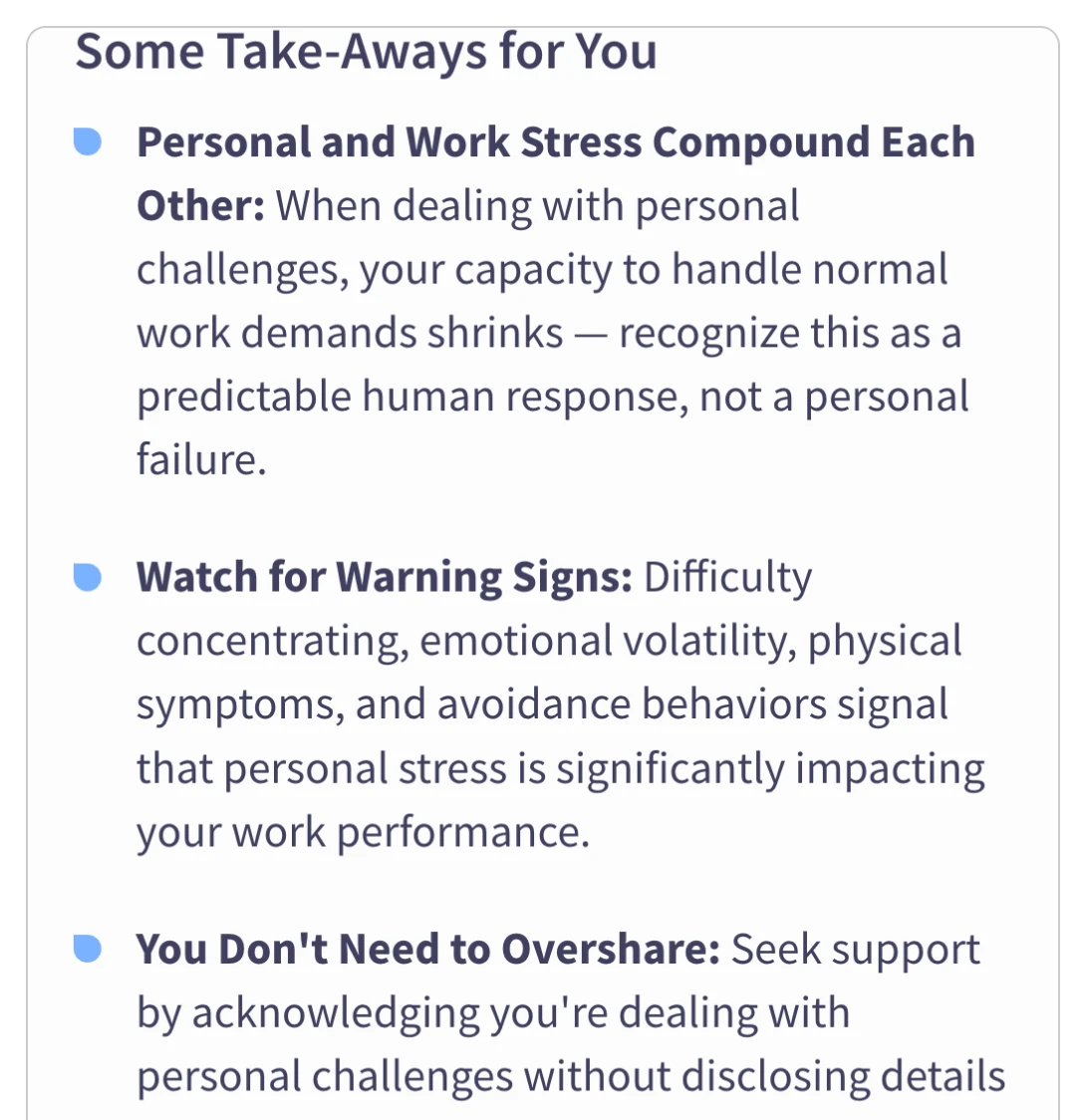
- Personal and Work Stress Compound Each Other: Understand how personal challenges shrink your capacity for normal work demands and why that’s a natural human response.
- Watch for Warning Signs: Recognize the emotional, cognitive, and physical indicators that personal stress is starting to impact your job performance.
- You Don’t Need to Overshare: Learn how to communicate your needs professionally while maintaining privacy and boundaries.
- Use Resources Proactively: Explore how managers, HR, counseling services, and leave options can help you regain stability before stress becomes a crisis.
Microlesson Features
- Employee sentiment pulsing questions that provide leaders with insights into their workforce's core cultural competencies
- Emtrain's Expert Answers tool, enabling employeees to submit anonymous questions about sensitive issues.
- Rich, contemporary video scences illustrating key concepts through realistic scenarios
- A data driven, skill-based approach to eLearning that establishes a shared language for employees.


Related Resources
Related Trainings
Frequently Asked Questions
Below are answers to common questions that employees and managers have about this topic. These FAQs provide a preview of what you’ll learn in this microlesson and why it matters.
Q
How do personal challenges affect my performance at work?
When life outside of work becomes overwhelming, your mental and emotional bandwidth shrinks, making it harder to focus, make decisions, or manage normal workloads—this is a predictable human response, not a personal failure.
Q
What are early warning signs that personal stress is impacting my job?
Trouble concentrating, irritability, emotional swings, physical symptoms, declining work quality, or avoiding tasks can all signal that stress is affecting your performance.
Q
How can I ask for support without oversharing personal details?
You can simply say you're dealing with personal challenges and explain what you need—such as time, flexibility, or workload adjustments—without discussing private information.
Q
When should I talk to my manager about personal stress?
If stress is affecting your ability to meet expectations or stay focused, it’s the right time to initiate a respectful, solutions-oriented conversation with your manager.
Q
What company resources can support me during personal hardships?
HR, employee assistance programs, counseling services, accommodations, and formal leave options like PTO or FMLA can help you recover without jeopardizing your job.